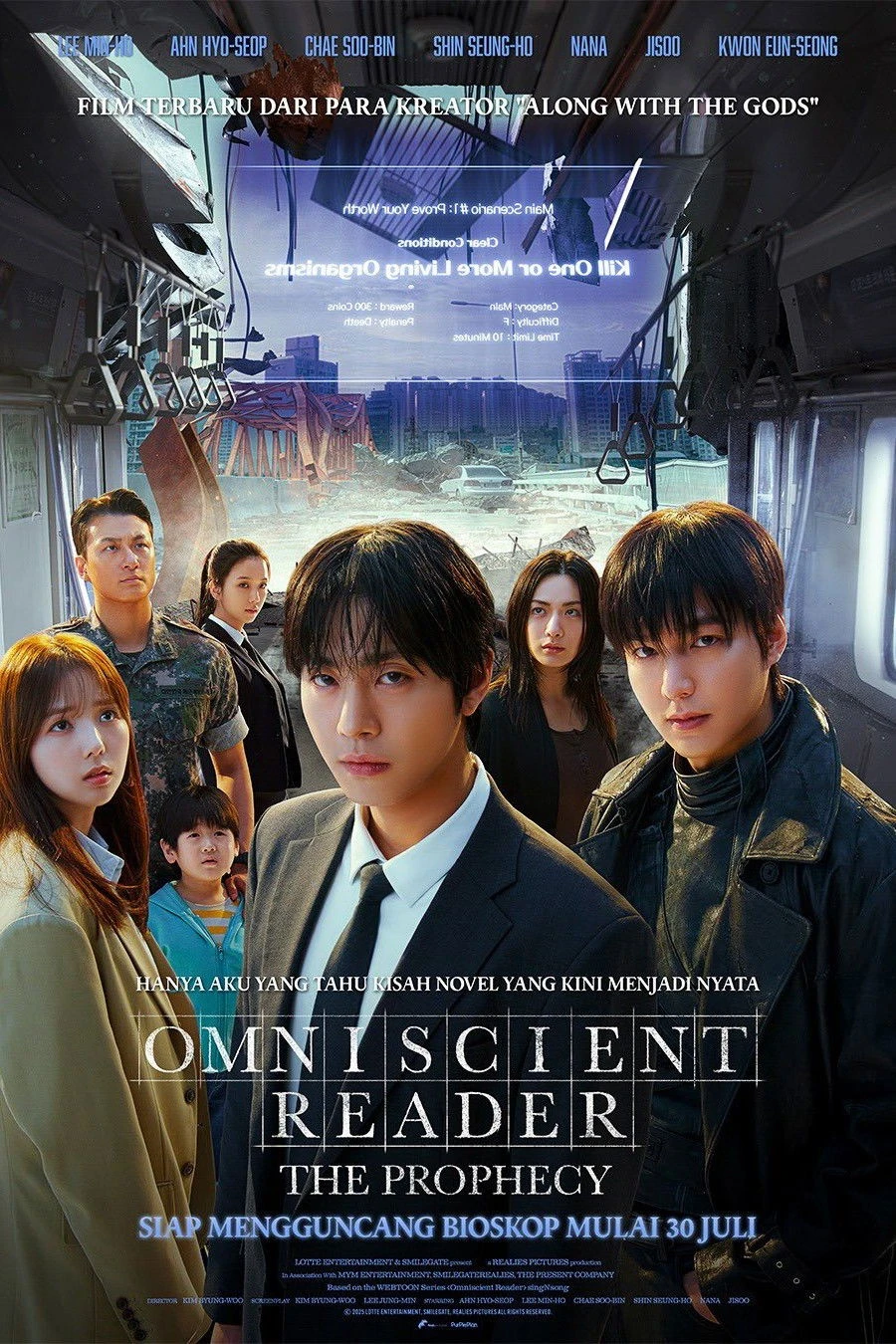
Omniscient Reader: The Prophecy
🎬 Film Overview
Kim Dok-ja is a quiet, contract office worker with one defining obsession: for over ten years, he has been the only devoted reader of an obscure web novel called “Three Ways to Survive the Apocalypse.” He knows every character, every plot twist, every death. When he finishes the final chapter, reality itself begins to mirror the story — supernatural beings force humanity into a brutal survival game governed by god-like entities. Dok-ja alone knows exactly what happens next. Now he must decide: use his foreknowledge to survive alone, or risk everything to rewrite the ending.
⚡ Quick Verdict
One box. Everything you need to decide.
· IMDb
· 7.2 / 10 MDL
· 37% RT Audience
▶ Official Trailer
🎭 Cast & Characters
Twelve performances across 116 minutes of Korean apocalypse fantasy.

Lead

Lead

Supporting

Supporting

Supporting

Supporting

Supporting
Supporting

Supporting

Supporting

Supporting

Supporting
🍿 Where to Watch
Stream Omniscient Reader: The Prophecy on these platforms.
📖 The Story
No spoilers — just enough to know if this is your film.
Kim Dok-ja exists at the quietest edge of Seoul — a contract worker whose employment is about to expire, whose colleagues barely register his presence, whose daily commute is indistinguishable from anyone else’s. The one thing that makes his life his own is a web novel called “Three Ways to Survive the Apocalypse,” a sprawling fantasy epic he has followed obsessively for over a decade. He is its only devoted reader, front to back, every update, every side chapter. He knows every character’s name, every scenario, every tragic turn — a private mythology living entirely inside a phone screen. When the final chapter posts and he closes the app on his subway home, it feels less like finishing a book and more like losing the one thing that ever made him feel like he understood the world.
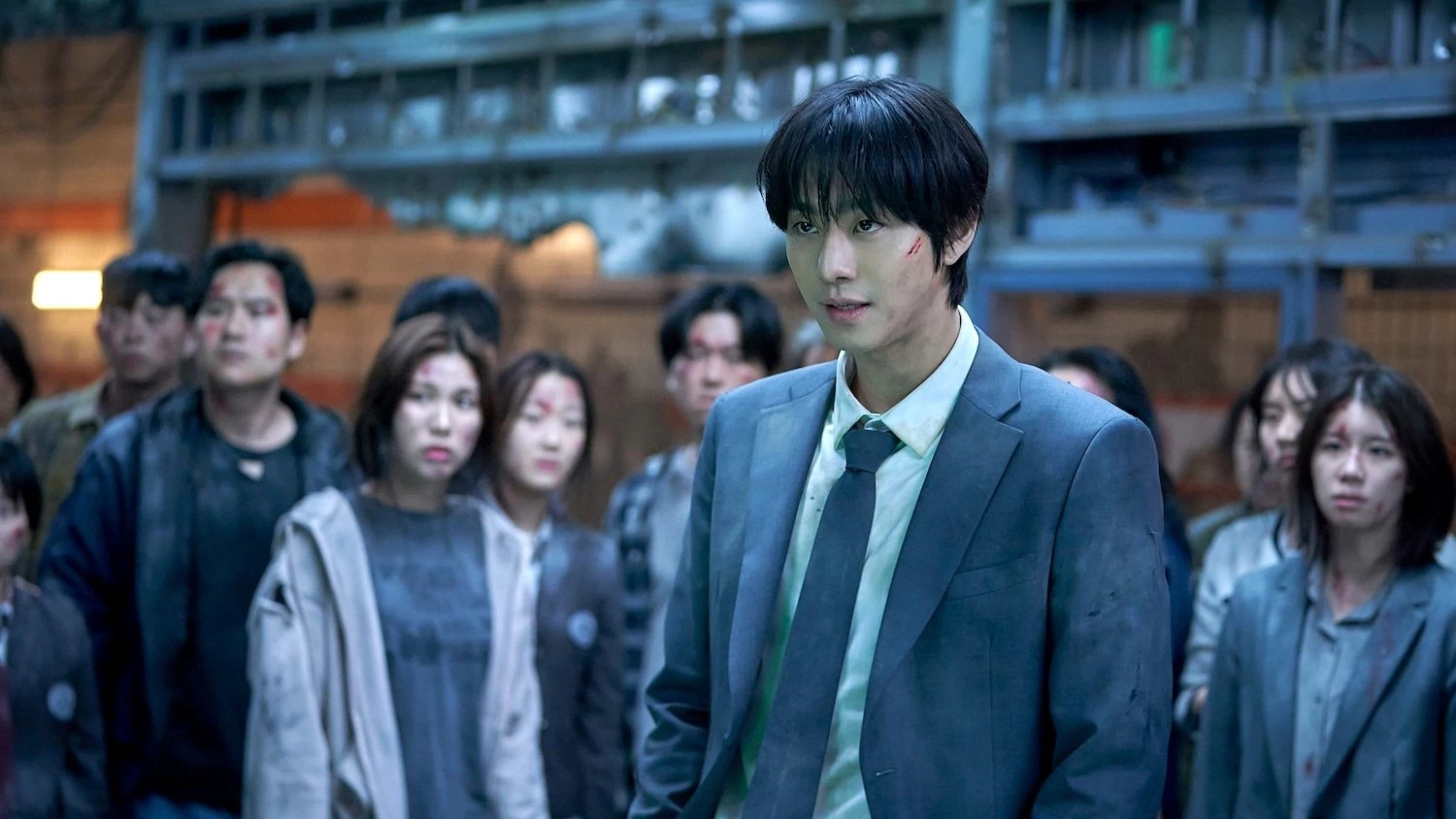
Then the train stops. A mischievous supernatural being called a dokkaebi materializes and announces, with almost cheerful indifference, that humanity must now participate in a series of lethal “scenarios” — kill or be killed, governed by ancient cosmic forces known as constellations. The other passengers dissolve into confusion and terror. Dok-ja recognizes the scene instantly: it is the exact opening event of the novel, unfolding in real time around him. He is the only person on the train — possibly the only person on earth — who already knows what happens next, what monster appears, what the dokkaebi wants, and what the rules of this game are. The advantage is staggering. The weight of it is immediate.
The emotional core of the film is not survival. It is identity. Dok-ja has spent his entire adult life as a reader — an outside observer who witnesses stories without being part of them. Now he is the protagonist of the narrative he knows best, and that transition is vertigo-inducing in a way the film captures with unusual specificity. He can use his foreknowledge to survive alone, following the novel’s trajectory where the ultimate hero endures after everyone else falls. Or he can try to alter the ending, which means forming real bonds with people whose fates he already knows — and living with the knowledge that every choice he makes risks destroying the very foresight keeping him alive.
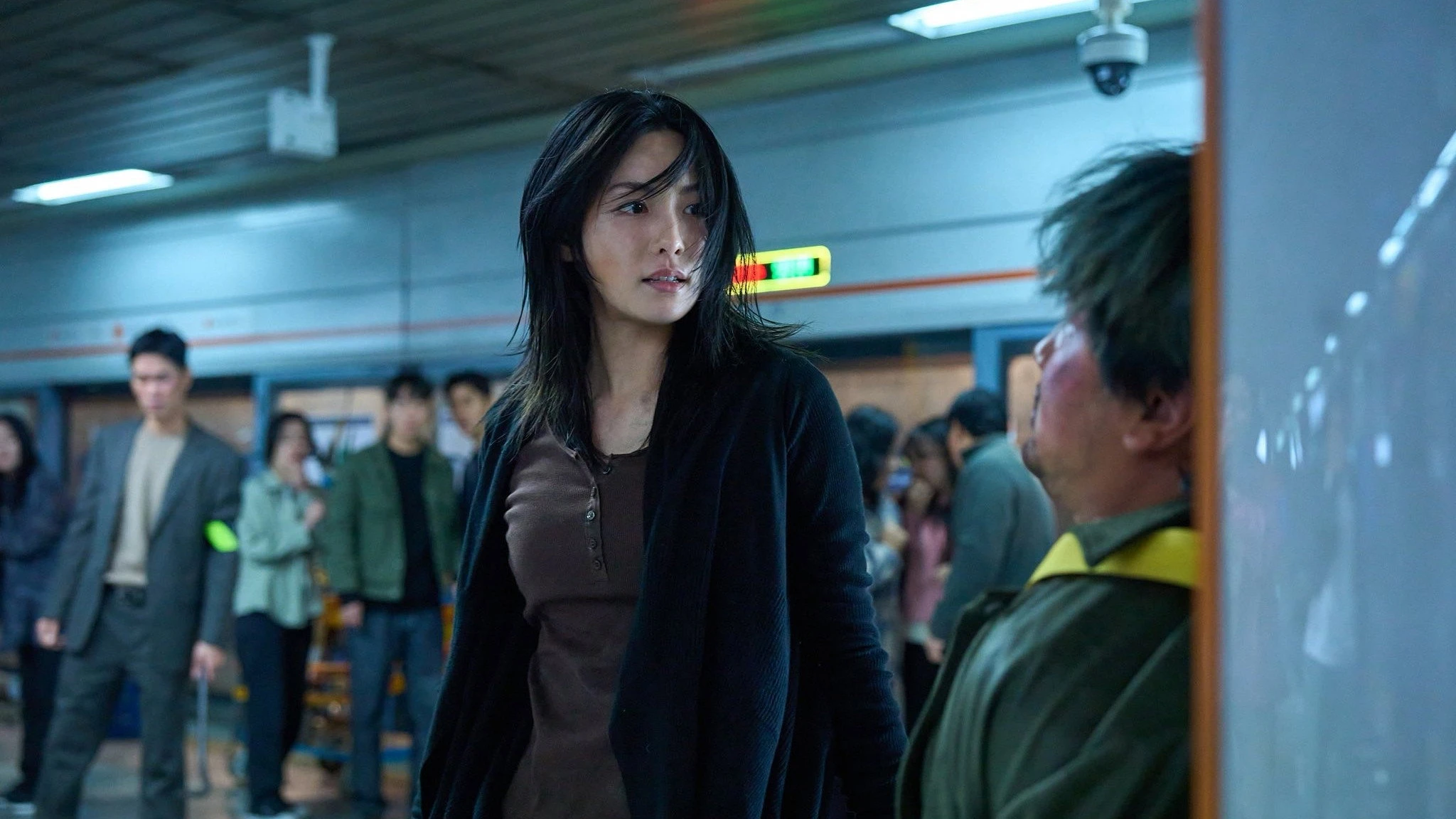
The relationship between Dok-ja and Yoo Jung-hyuk — the novel’s actual protagonist, brought to life as a real person — forms the emotional backbone of the film. Jung-hyuk is everything Dok-ja is not: physically formidable, cold, and carrying the particular exhaustion of someone who has already watched everyone around him die across multiple timelines. He has, essentially, given up on humanity. Around them gathers a fragile group of survivors: Yoo Sang-ah, Dok-ja’s warm-hearted colleague who becomes the emotional conscience of the group; Lee Hyeon-seong, a former soldier recalibrating after trauma; Jung Hui-won, fiercely principled and unwilling to compromise her ethics even when survival demands it; and Lee Gil-yeong, a teenager whose stubborn refusal to become cynical becomes a recurring test for every adult around him. Each relationship pushes Dok-ja toward a different version of what it means to protect someone you can’t afford to lose.
What separates this film from standard Korean apocalypse cinema is its metatextual premise: the protagonist’s only weapon is narrative knowledge. Dok-ja cannot fight. He has no supernatural abilities granted by the constellations. He has the entire script of reality memorized — but reality is already beginning to deviate from that script the moment he starts interfering. Every decision he makes risks unraveling the very foreknowledge that keeps him alive. The film is essentially about a reader trying to become a writer, and the terrifying gap between knowing how a story ends and having the power to change it. It is a premise that sounds like a device and turns out to be an emotional argument.
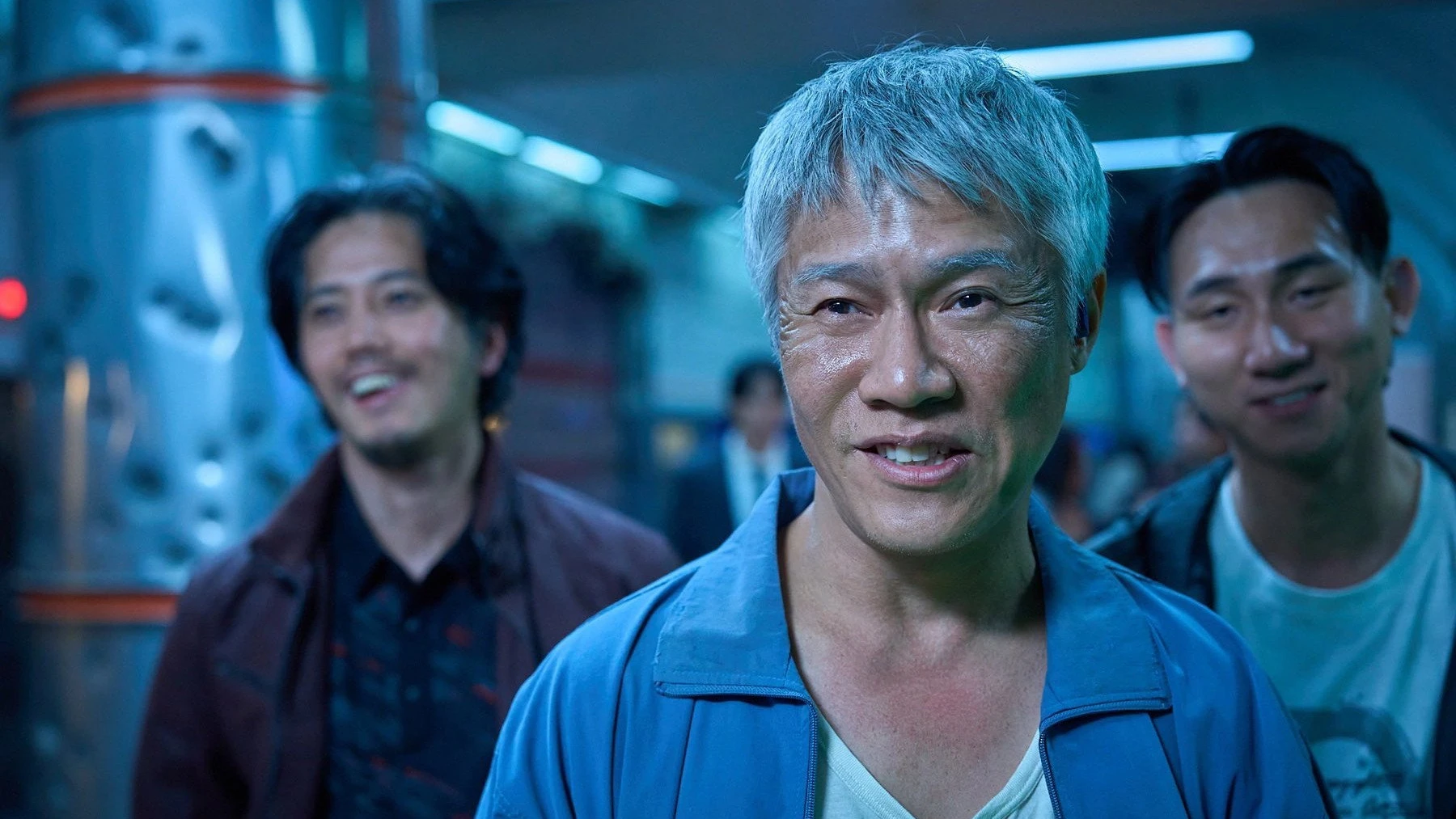
The film carries the kinetic, slightly overwhelming energy of a summer blockbuster designed to fill the largest screen available — fast-moving, visually dense, and clearly built to thrill. The action sequences are large in scale and staged with bombastic confidence, while the CGI creatures and dokkaebi figures give the world a vivid, video-game-like texture that suits the source material. Beneath the spectacle, however, there is a quieter register that occasionally surfaces to surprising effect: the small, almost tender moments between Dok-ja and his companions feel genuinely earned, and Ahn Hyo-seop plays the calculating, bewildered protagonist with a restrained warmth that keeps the film grounded when everything around him is exploding.
The web novel “Omniscient Reader’s Viewpoint” by Sing Shong is one of the most beloved properties in modern Korean internet culture, accumulating over 10 million cumulative views on the platform Munpia before any adaptation was announced. It belongs to a distinctly Korean storytelling tradition sometimes called “regression fantasy” — stories where a protagonist armed with knowledge of a previous timeline must relive catastrophic events with the goal of changing them. The genre reflects something embedded in Korean cultural consciousness: the weight of historical trauma, the idea of second chances, and the question of whether knowing a terrible outcome in advance is truly a gift or simply a different kind of suffering. For international audiences, the film arrives in the lineage of Squid Game and Train to Busan — but its heart is drawn from something more intimate, a specifically Korean conversation between a writer and the only reader who ever truly paid attention.
🏁 Ending Explained
Full spoilers ahead — what happens, what it means, and what the theories say.
Full Spoilers Ahead — This section covers the complete ending of Omniscient Reader: The Prophecy. Stop here if you haven’t watched.
The climax converges on the Fire Dragon scenario at Chungmu-ro. Dok-ja devises a coordinated plan to destroy a catastrophically powerful creature that, in the original novel’s timeline, kills Yoo Jung-hyuk. The strategy requires assembling the sword “Broken Faith” from the Ether of Faith he has gathered across the film — and using it to shatter the Dragon’s shell at the cost of his own life. Yoo Sang-ah is assigned to restrain the Dragon; Jung Hui-won will deliver the killing blow to its exposed core, which will earn her the “King of No Killing” ability — the only power capable of reviving someone from death. When Jung-hyuk dies before the plan can be fully executed, Dok-ja presses forward regardless, destroys the Dragon, and is revived by Jung Hui-won using her newly earned power. Jung-hyuk is simultaneously revived. The world is saved. In a mid-credits scene, Han Myeong-oh arrives to reveal that Geumho has been destroyed and all its survivors are dead — as a distant train sound signals that the next scenario has already begun.
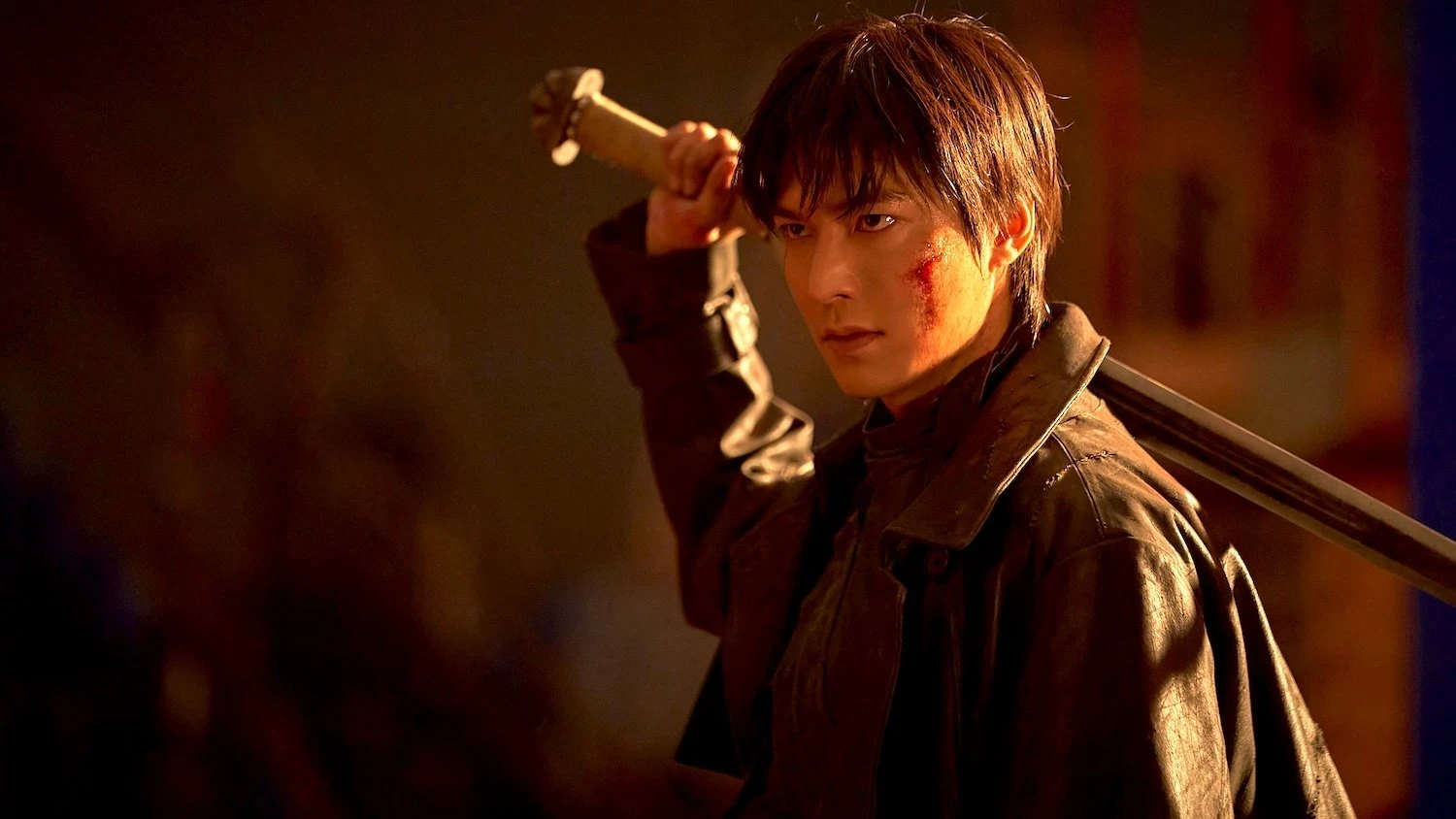
The ending is a direct refutation of the novel’s original conclusion. In the source material, Jung-hyuk survives alone after everyone around him dies — the ultimate expression of the philosophy that survival is a solo endeavor. Dok-ja spent the entire film arguing against that logic. The finale proves his thesis not through argument but through action: the Fire Dragon is only defeated because every member of the group, including unlikely allies like Gong Pil-du and Lee Ji-hye, chose to trust and cooperate. What Dok-ja achieves in the climax is not primarily the destruction of the Dragon. It is convincing people who had given up on each other to try one more time. The film argues that the most powerful thing a reader can ever do is pick up a pen.
The film’s central ambiguity is the identity and nature of the mysterious author “tls123.” The author initiates a critical trade — sending Dok-ja the Ether of Faith at the exact moment the plan would otherwise fail — but their identity and motivation remain deliberately unresolved. Three competing theories emerge: Theory A holds that tls123 is a cosmic observer, a benevolent narrative intelligence who has been guiding Dok-ja the entire time toward a specific outcome. Theory B suggests tls123 is a reader from another timeline, mirroring Dok-ja’s own role as the sole witness to an unfolding catastrophe. Theory C proposes that the novel itself has become sentient in response to Dok-ja’s interference — a story fighting for the right to be rewritten. The mid-credits scene complicates all three by confirming that deaths are now occurring outside the novel’s predicted timeline.
The KDW verdict: Theory A is strongest, but its power lies in what it reveals about Dok-ja. The film plants its thesis early: tls123’s very first message to Dok-ja is “write a new ending yourself.” That is not the instruction of someone trying to preserve a fixed timeline. It is an explicit invitation to authorship. Every subsequent interference — most visibly the Ether of Faith trade — functions as a collaborative edit rather than divine intervention. The strongest reading is that tls123 represents the idea of a story that wants to be better than its original draft, and that chose its reader specifically because he was the only one who ever cared enough to finish it. Dok-ja does not save the world by knowing the story better than anyone else. He saves it by accepting the invitation to become its co-author. The novel ends. The author hands over the pen. Whether it is a gift or a burden depends entirely on how much you loved the story in the first place.
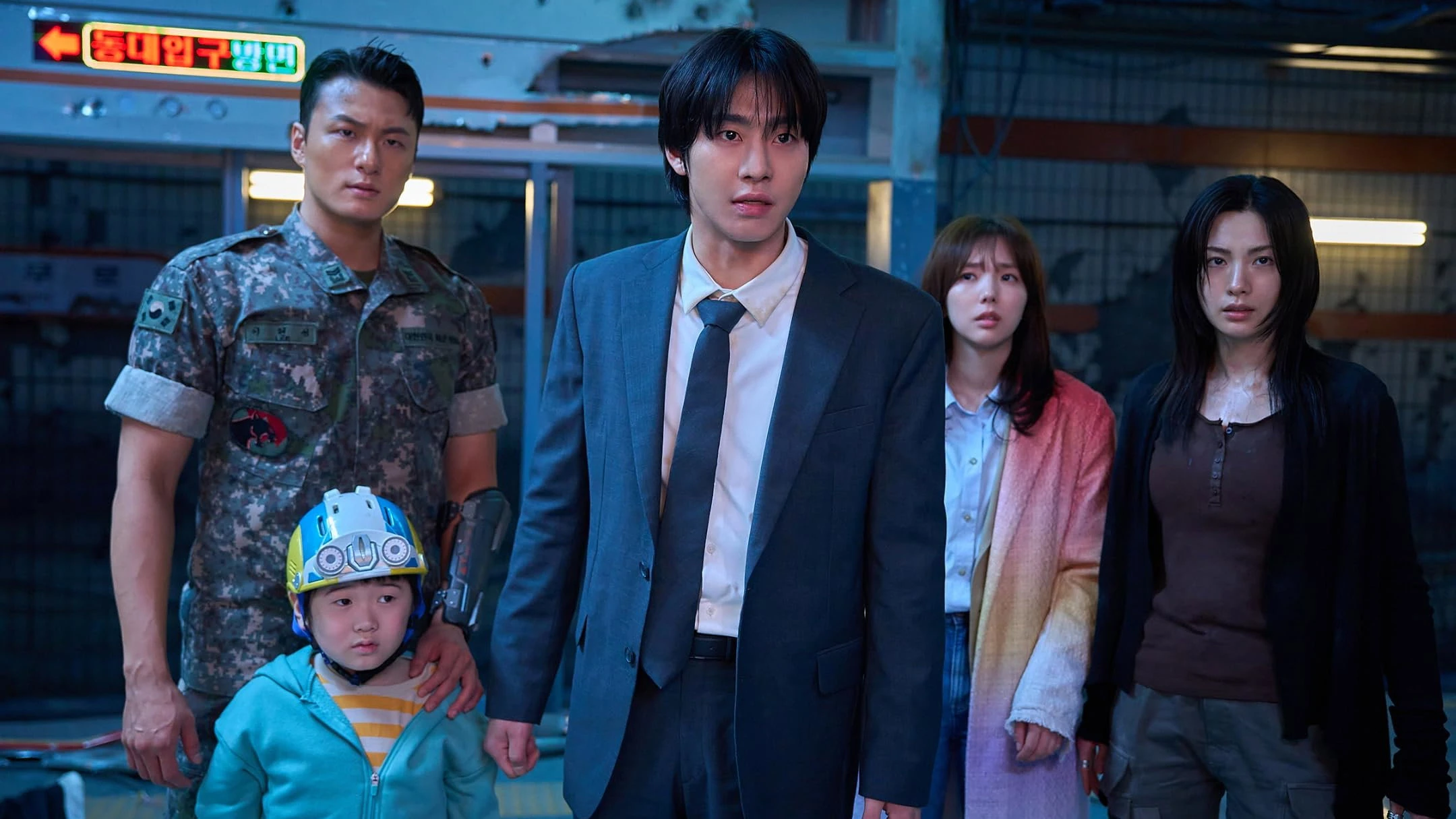
On a second viewing, Dok-ja’s ongoing deception reads entirely differently. Throughout the film, he maintains the fiction that he has “prophetic powers” rather than admit the truth — that he simply read a novel. The first viewing frames this as pragmatic: a way to keep authority without exposing a weakness. On rewatch, knowing that his foreknowledge is already eroding as the timeline diverges, the lie becomes something more tender and more devastating. He is performing certainty he no longer possesses, for the sole purpose of keeping his companions’ hope intact. The moments where he pauses, catches himself, or quietly recalculates in the background are the most revealing in the entire film — a man pretending to be an oracle while slowly realizing he has already become something far more fragile, and far more human.
✍️ KDramaWorlds Editor’s Take
Our honest read on why this film is worth your time — and who it’s for.
Ahn Hyo-seop has the hardest job in this film and makes it look effortless. Kim Dok-ja is not a typical Korean action hero — he cannot fight, he cannot run particularly fast, and his one advantage is something no fight choreographer can visualize for the camera: he read ahead. Ahn Hyo-seop plays the character’s internal calculation as a kind of sustained restrained intelligence, all micro-expressions and deliberate underreaction, while the spectacle detonates around him. It is a performance that would be easy to overlook in a film this visually aggressive, which is probably why the more you watch it, the more you realize he is the reason the film works emotionally at all. The big scenes land because he has made you believe the small ones.
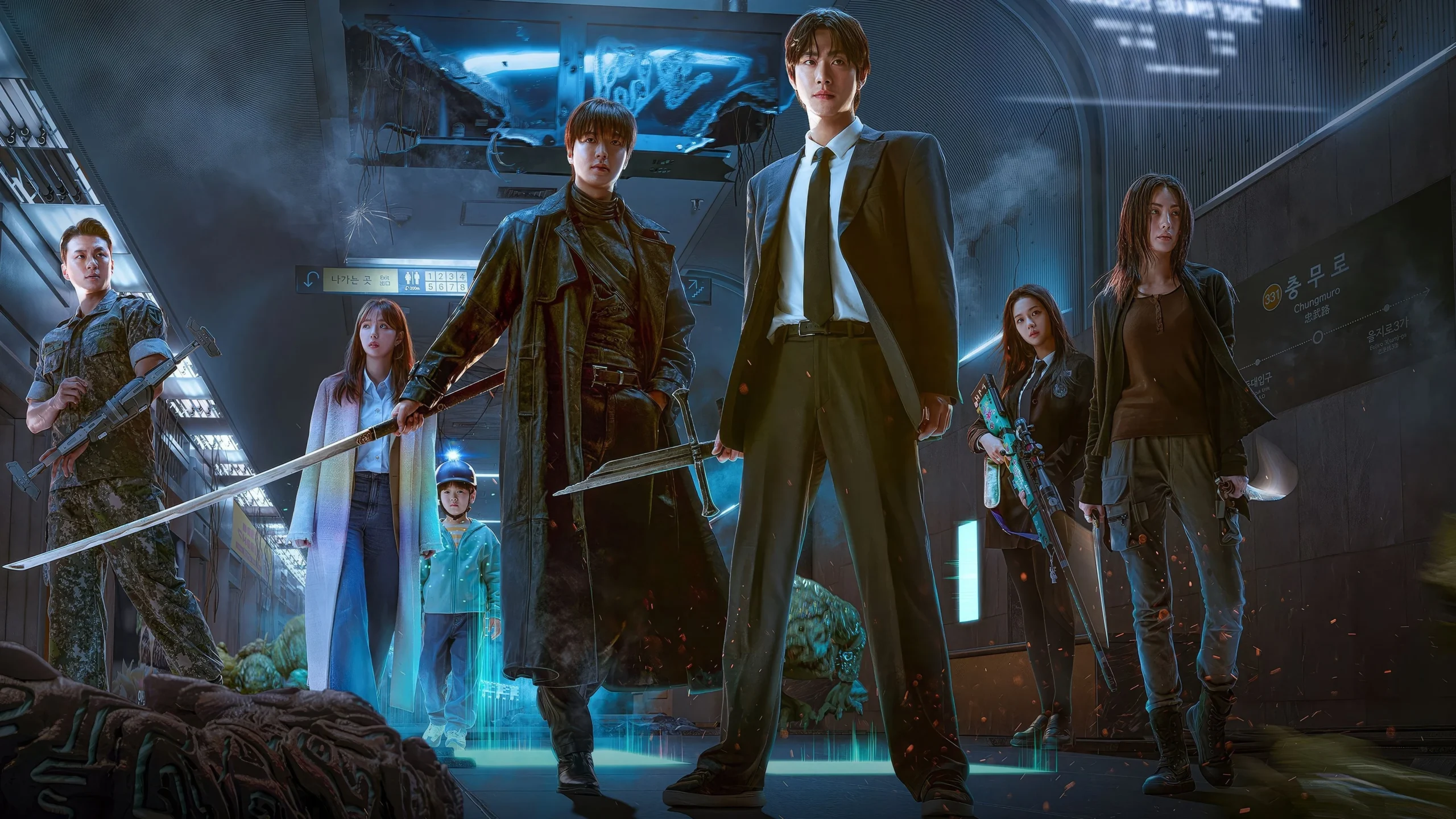
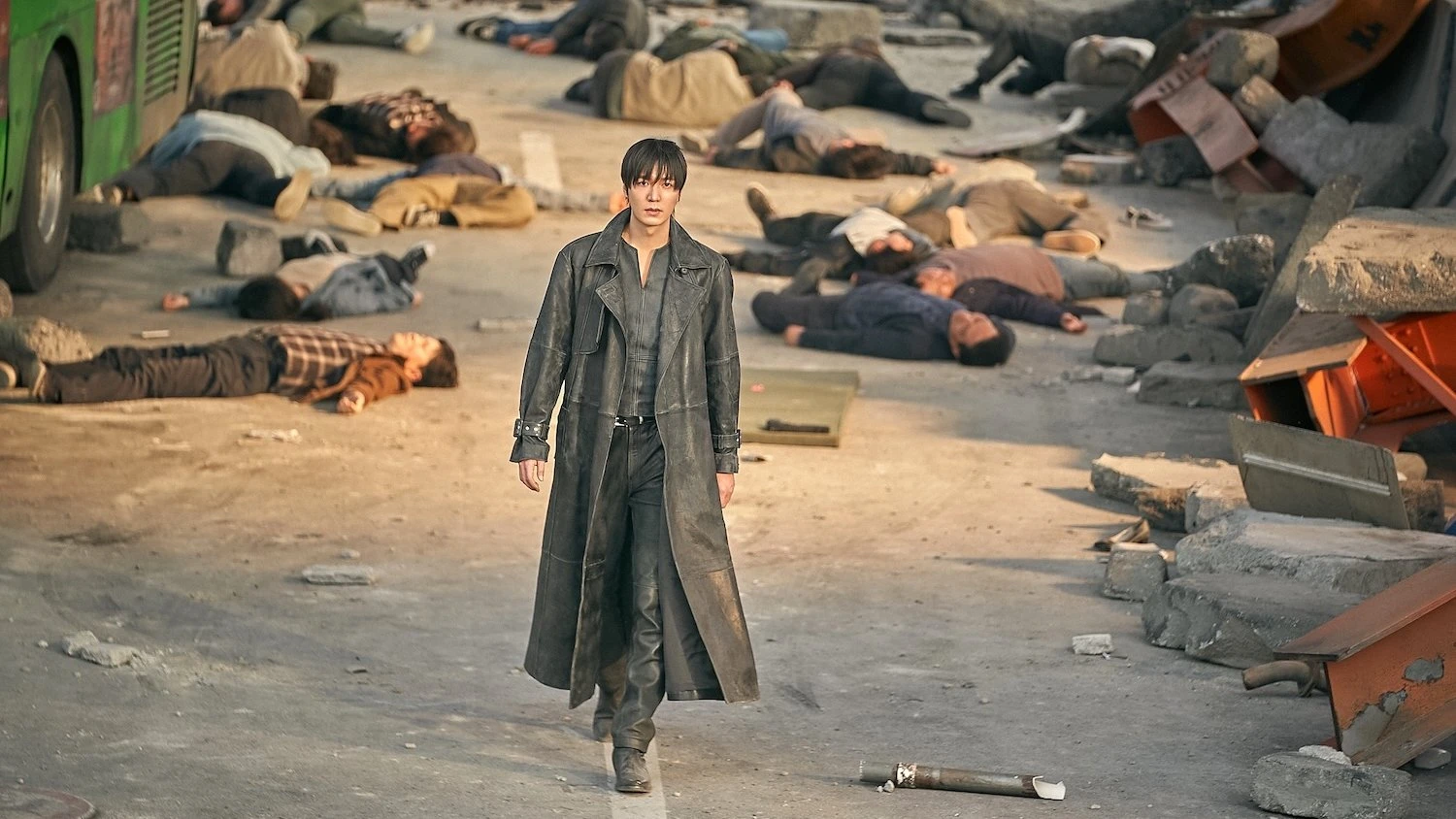
The film’s weakest element is also its most structurally necessary one: the sheer amount of lore. “Omniscient Reader’s Viewpoint” is a multi-volume epic with an enormous cast of constellations, abilities, timelines, and rules — and the film has to establish enough of that infrastructure for the finale to make sense without burying first-time audiences in exposition. It does not always succeed. The mid-sections occasionally feel like a checklist of concepts being introduced rather than scenes that have earned their place. But director Kim Byung-woo’s instinct to keep the human relationships as the throughline — particularly the way Dok-ja gradually allows himself to be genuinely known by his companions rather than simply managed — gives the film a beating heart that the spectacle alone could never sustain. Lee Min-ho’s Jung-hyuk is deliberately underused, which is frustrating from a star-power standpoint and narratively correct: a man who has given up on everyone takes the entire film to begin opening up, and the restraint is earned.
The critical scores on this film are genuinely misleading. A 5.8 on IMDb and 25% on RT Critics represent a mismatch between what critics wanted — a cerebral, emotionally complex literary adaptation — and what the film was always designed to be: a visually spectacular summer event movie for an audience that has already lived inside this story for years. For that audience, it is exactly what they needed. For first-time viewers approaching it without prior knowledge of the novel, it lands closer to a very well-executed entry point to a world that clearly has more to say. The MDL score of 7.2 — from an audience that actually knows the source material — is probably the more useful number. The film knows exactly what it is. The question is whether that is enough for you. 116 minutes. No prior reading required. But it helps if you’ve ever been the only person who finished a story that deserved more readers.
Blockbuster lovers who want spectacle with metatextual depth
Ahn Hyo-seop and Lee Min-ho fans — chemistry-forward casting
Squid Game / Train to Busan fans wanting more Korean apocalypse energy
🎬 You Might Also Like
If you liked Omniscient Reader: The Prophecy, these are your next three watches.
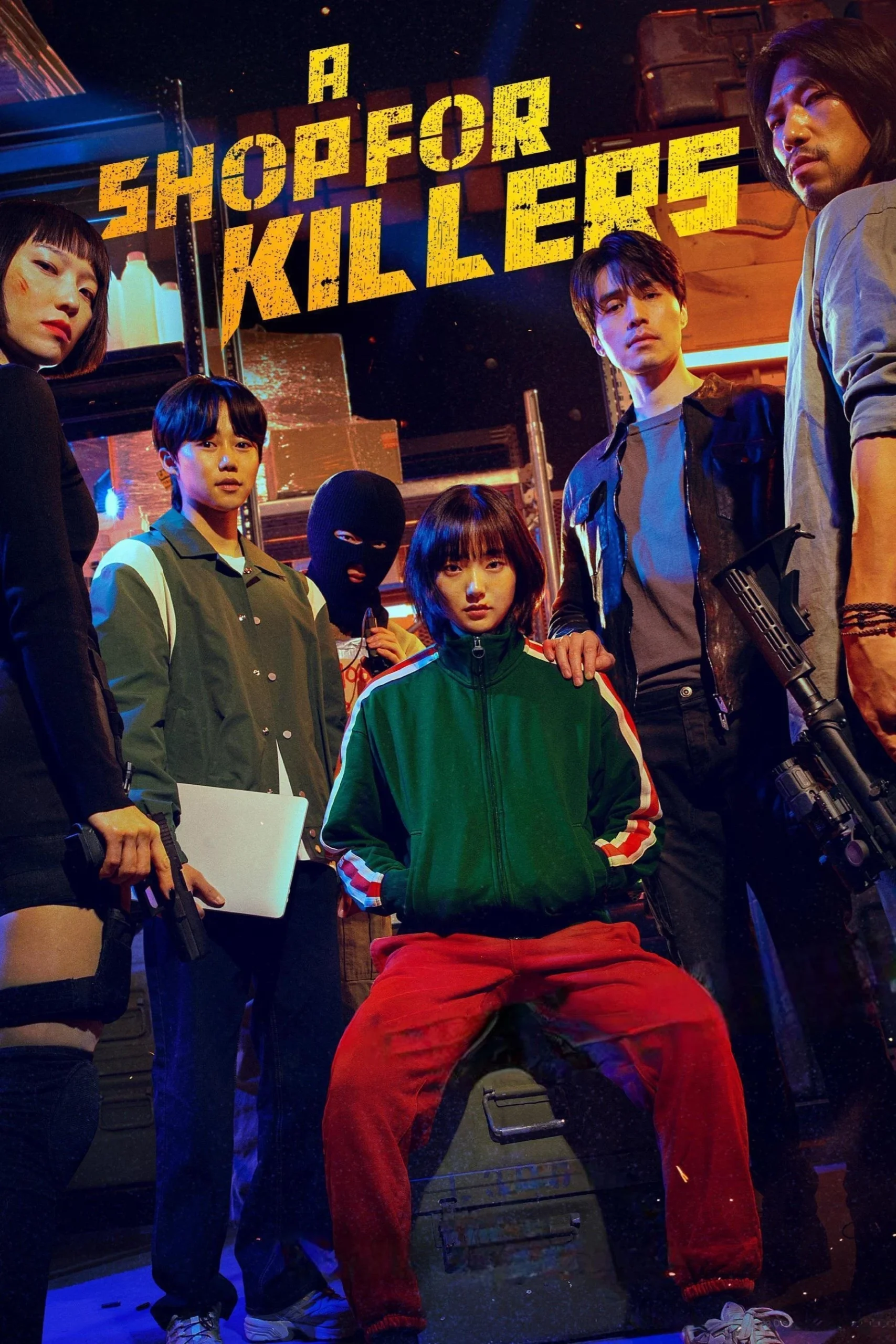 A Shop for Killers (Season 1)
AssassinHidden Past
Read Full Review →
|
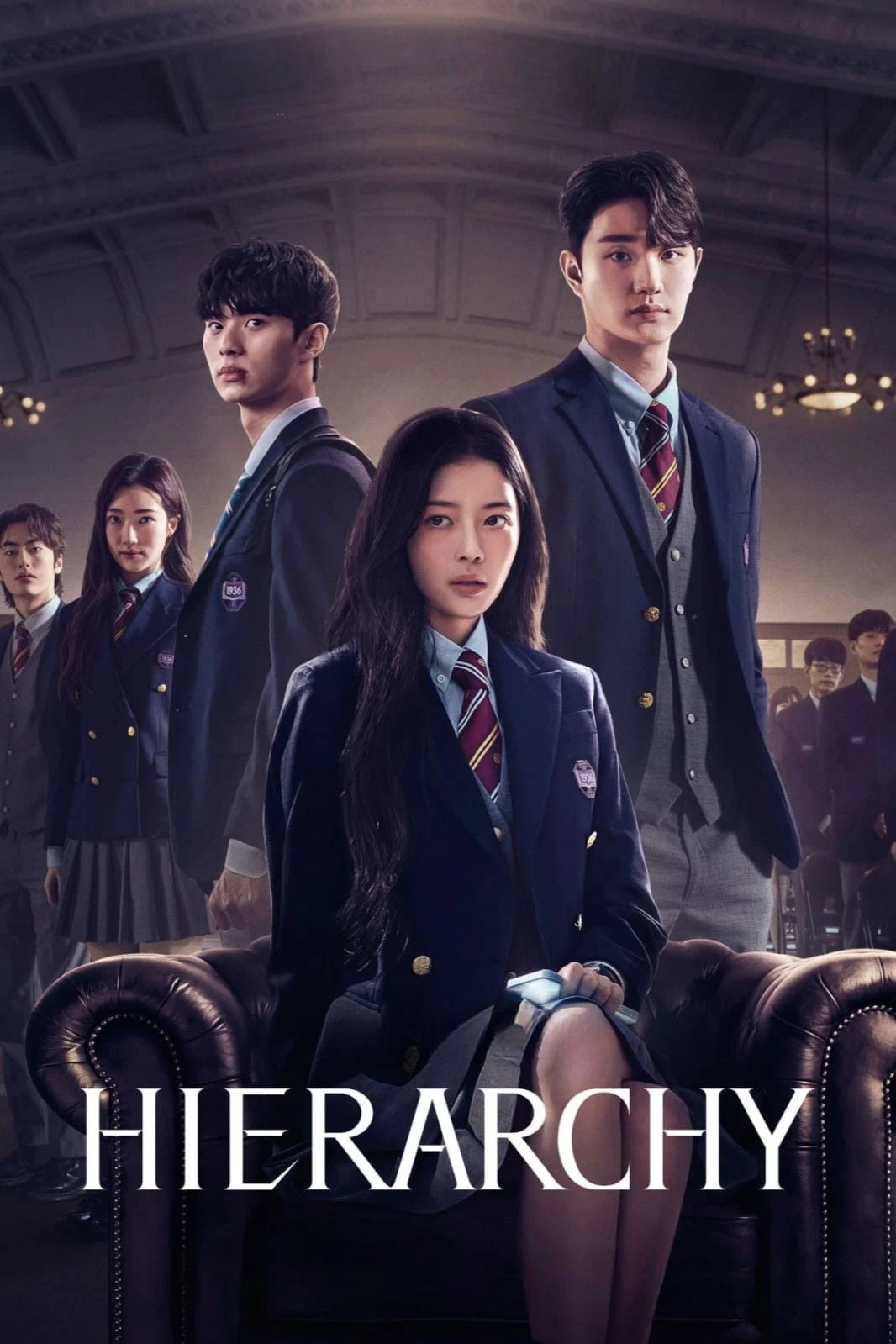 Hierarchy
BullyingChaebol
Read Full Review →
|
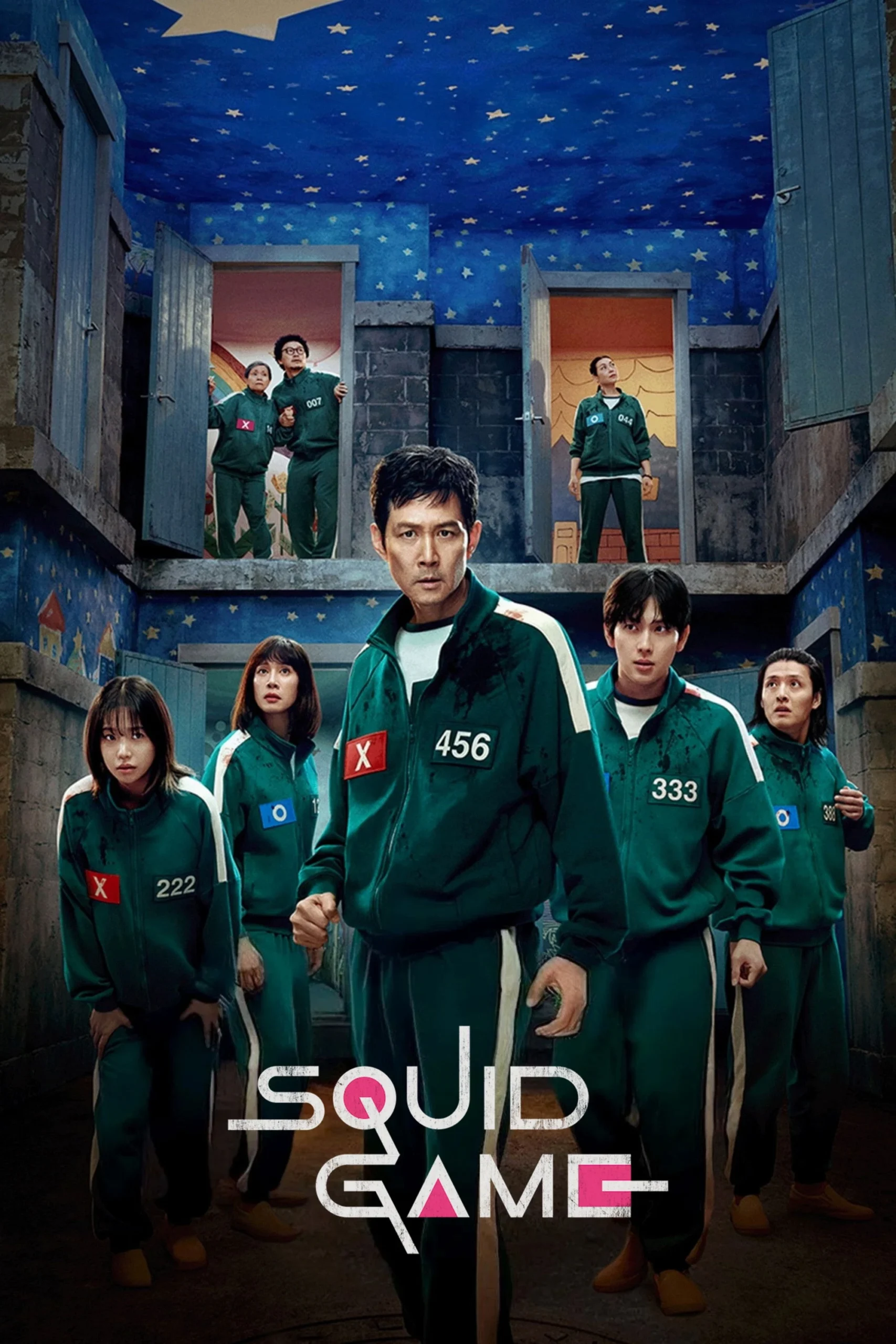 Squid Game (Season 3)
Dark ThemesDystopian
Read Full Review →
|








Keep it kind, skip the harsh language, and please — no spoilers. Everyone's taste is different, and that's perfectly fine.
This space is for real reactions and discussion from other viewers. Help keep it comfortable for everyone by not giving away major plot details.
What do you think of this drama?
Login to share your review or leave a comment.
No email needed — just pick a username & password.