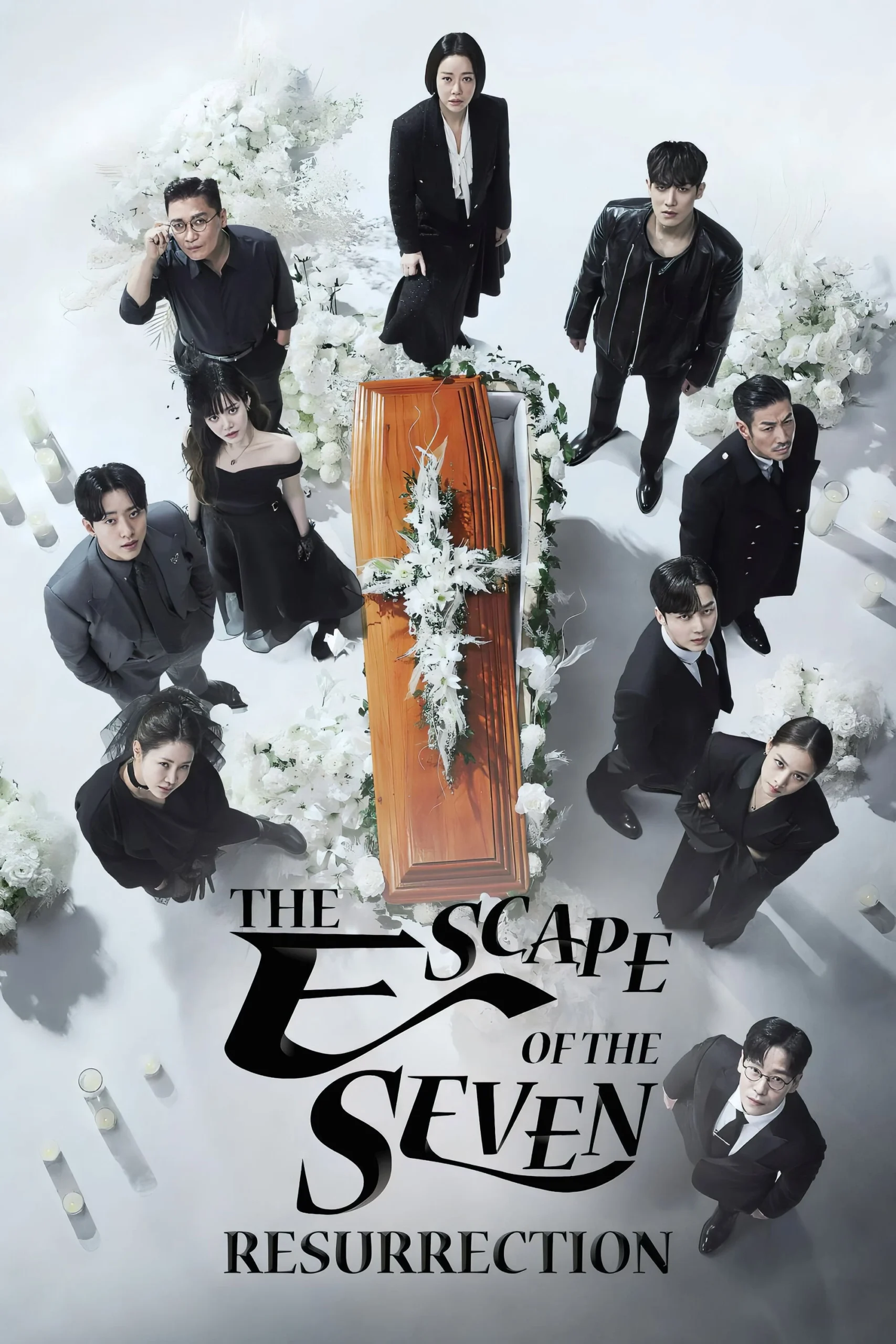
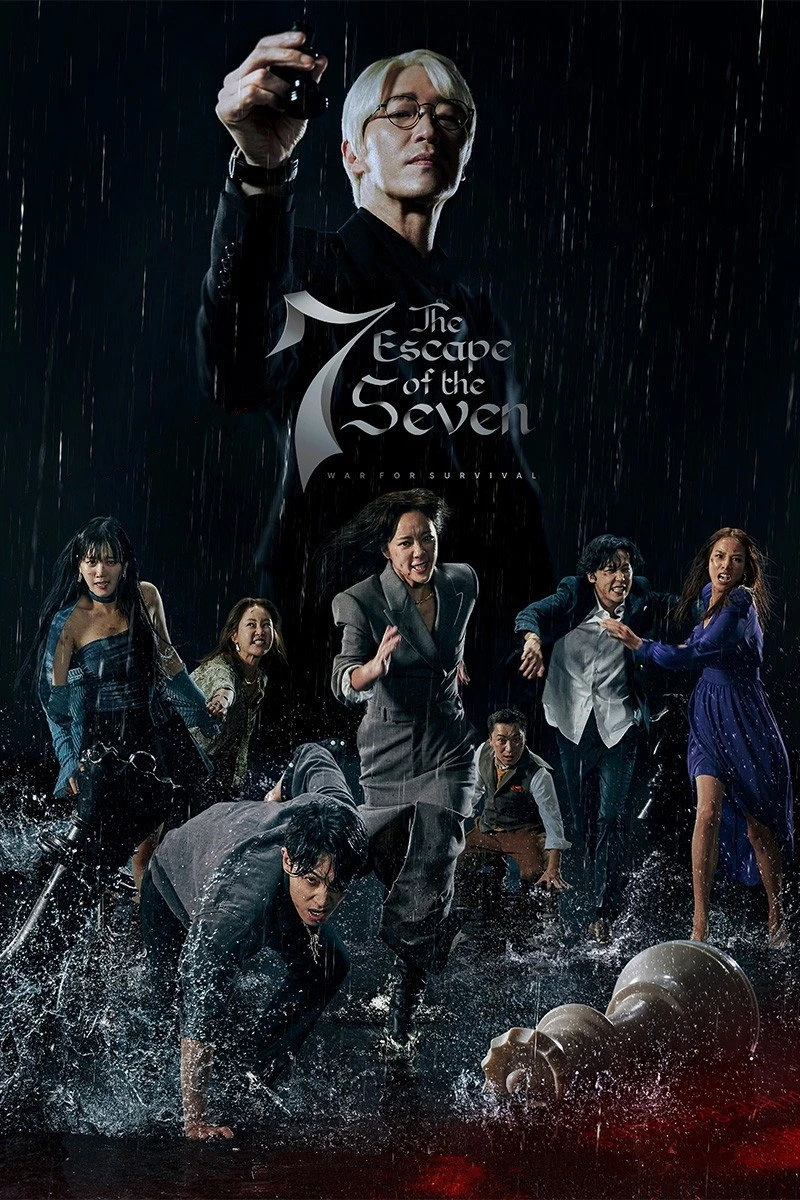
The Escape of the Seven (Season 2)
🎬 SBS · Netflix · Viki · Viu · Kocowa · OnDemandKorea
⭐ 7.8 / 10 MDL 🔞 TV-14
📋 Drama Overview
Quick facts first, before the deep dive.
Min Do-hyuk survives the helipad explosion everyone assumed killed him, and Resurrection opens with him already back to work — aided by Kang Ki-tak and an enigmatic ally calling herself Medusa. Matthew Lee, meanwhile, has kept building under a fabricated identity, chasing full control of the Sungchan Group as if the man he left to die never existed at all.
What made Season 1 a slow-building conspiracy becomes something closer to open war here: alliances reset, old debts come due, and Geum Ra-hee’s own reveal as Medusa turns her from survivor into the season’s most methodical avenger. Every one of the original seven gets pulled back into a game none of them chose to keep playing, and the show is far more interested in what they’ve become since than in simply repeating what already happened to them.
16 / 16 ✅ Completed
⚡ Quick Verdict
Skip the scroll — here’s the verdict in one glance.
· MDL Score · 2,761 ratings
▶ Official Trailer
🎭 Cast & Characters
The survivors are back, the mastermind is still standing, and this time someone actually finishes it.

Lead

Lead

Supporting

Supporting

Supporting

Supporting
🍿 Where to Watch
Stream The Escape of the Seven (Season 2) on these platforms.
📺 Episode Guide
Just enough per episode to remember where things stood.















🏁 Ending Explained
The finale, unpacked in full. Consider yourself warned.
Spoiler Warning — This section covers the full finale of The Escape of the Seven (Season 2). Stop here if you haven’t finished the series.
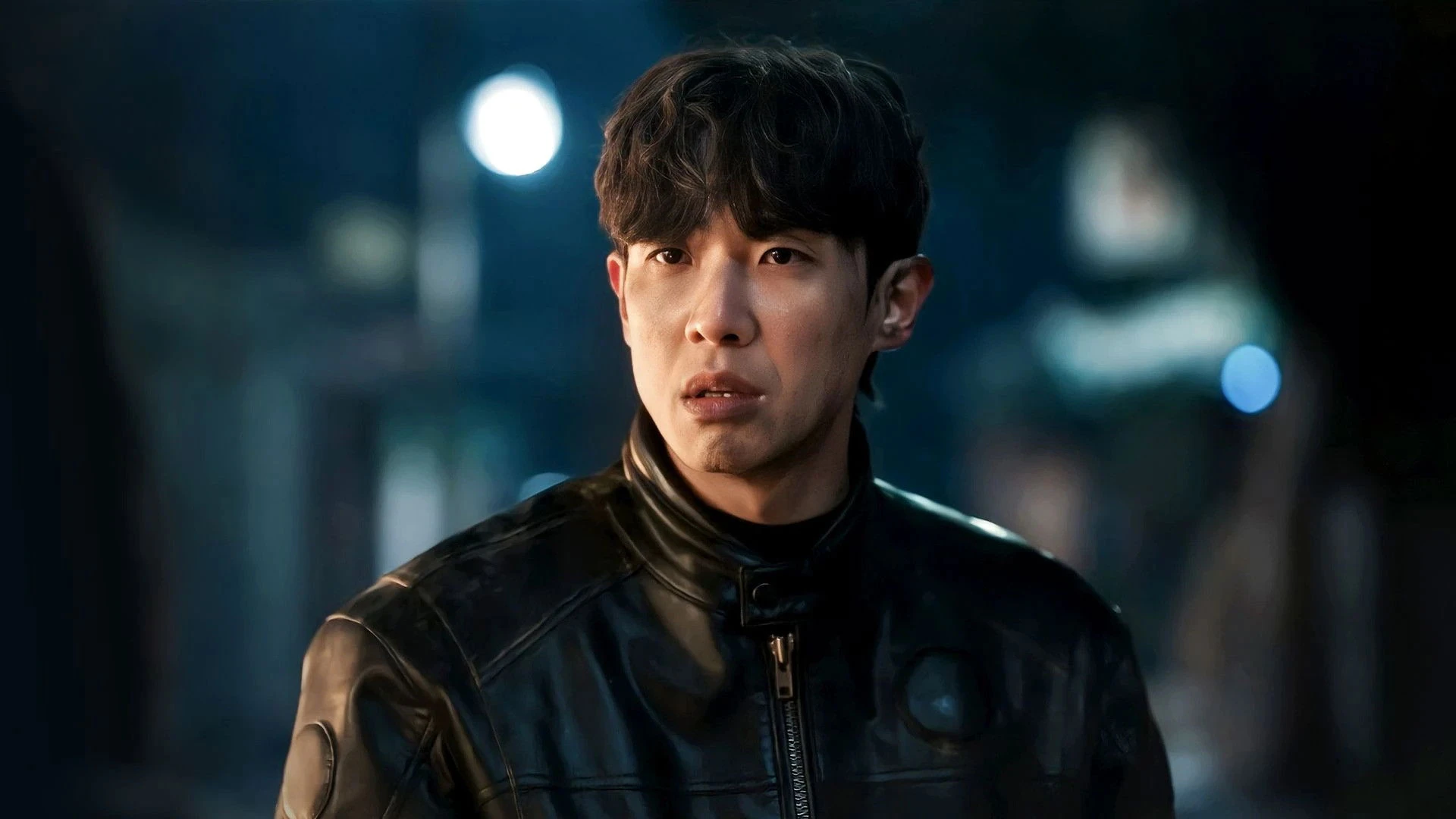
What actually happened Min Do-hyuk hacks into the LUCA system and broadcasts every one of Matthew Lee’s crimes to the public, finally ending the manufactured identity he’d been hiding behind for two seasons. Kang Ki-tak fires the shot that kills Matthew for good. The surviving members of the original seven face consequences that scale to what they actually did — some find something close to redemption, others are left to answer for it — and the season closes out Bang Da-mi’s story with real finality.
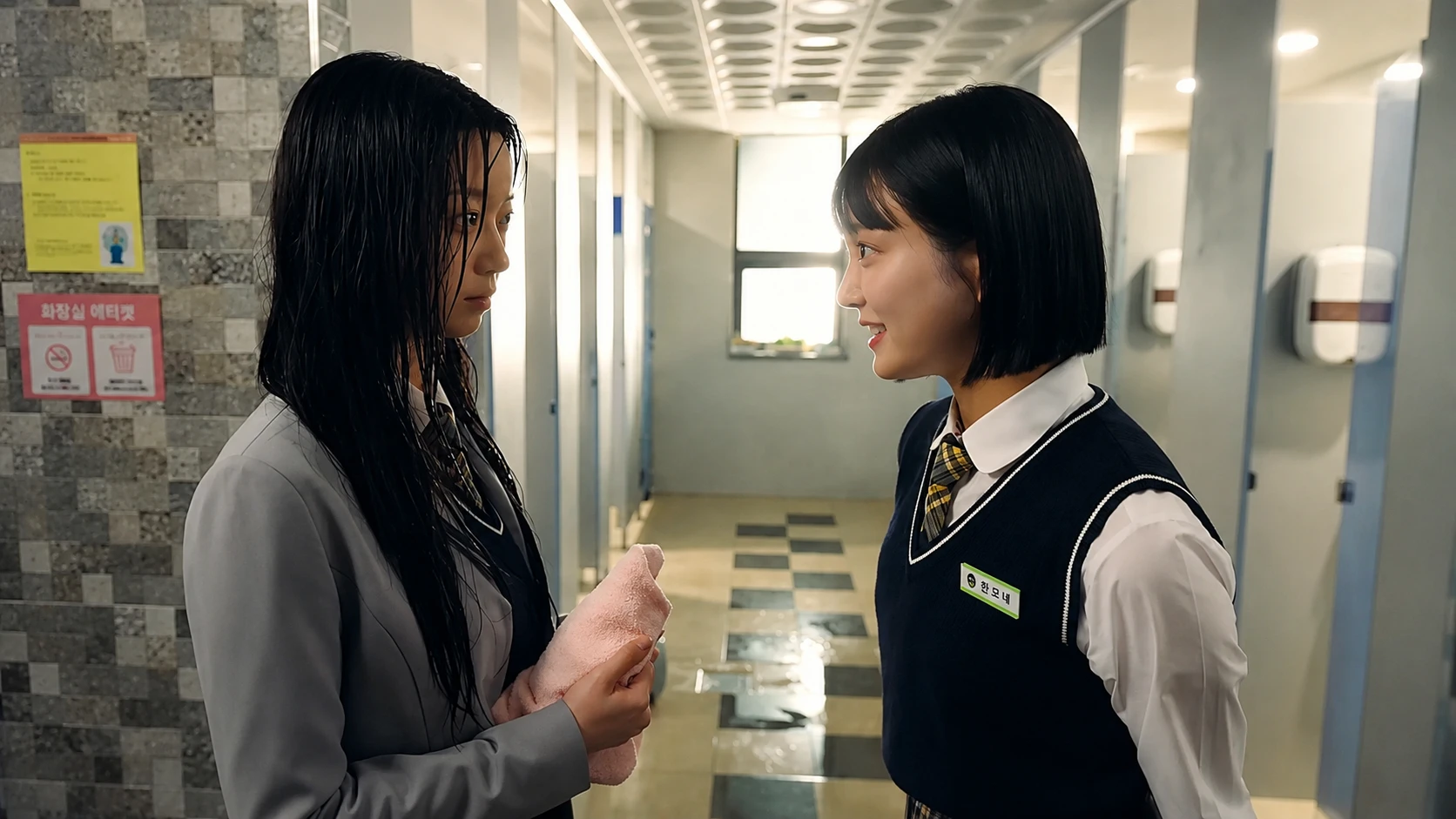
Why Ki-tak is the one who pulls the trigger Ki-tak spends both seasons as the person closest to Matthew’s operation and the most quietly damaged by it, so it tracks that he’s the one who ends things rather than Do-hyuk. It keeps the finale from reading as a clean hero’s victory — the person who finally stops Matthew is someone who spent years being used by him first.
What the public broadcast actually accomplishes Exposing Matthew through the LUCA system rather than a private confrontation matters — it takes the reveal out of the seven’s hands and makes it something the entire public has to reckon with. After two seasons of secrets deciding everyone’s fate, the finale insists on daylight instead.

The uneven cost for the survivors Not everyone gets the same ending, and the show is deliberate about that imbalance — some of the original seven walk away having genuinely reckoned with what they did to Da-mi, others simply run out of road. It’s the clearest evidence that this was never a redemption story for all of them equally.
The KDW verdict The Escape of the Seven spends two seasons building toward spectacle, then closes by refusing to give its villain a spectacular ending — Matthew dies exposed and shot, not in some grand final confrontation, and the survivors get outcomes that are proportionate rather than poetic. It’s not a triumphant ending so much as an accurate one, and after two seasons of makjang chaos, that restraint is the biggest surprise the finale has.

✍️ KDramaWorlds Editor’s Take
Here’s our real take, and exactly who this one’s for.
📡 Public Reckoning
🎯 Loyalty Repaid
⚖️ Proportionate Justice
Kang Ki-tak firing the shot that finally ends Matthew Lee only lands because of everything Season 1 spent establishing about his position inside Matthew’s network — the loyalist who chose to save Do-hyuk instead of fleeing gets to be the one who closes the loop two seasons later. It’s the rare sequel payoff that actually required the setup instead of just referencing it.
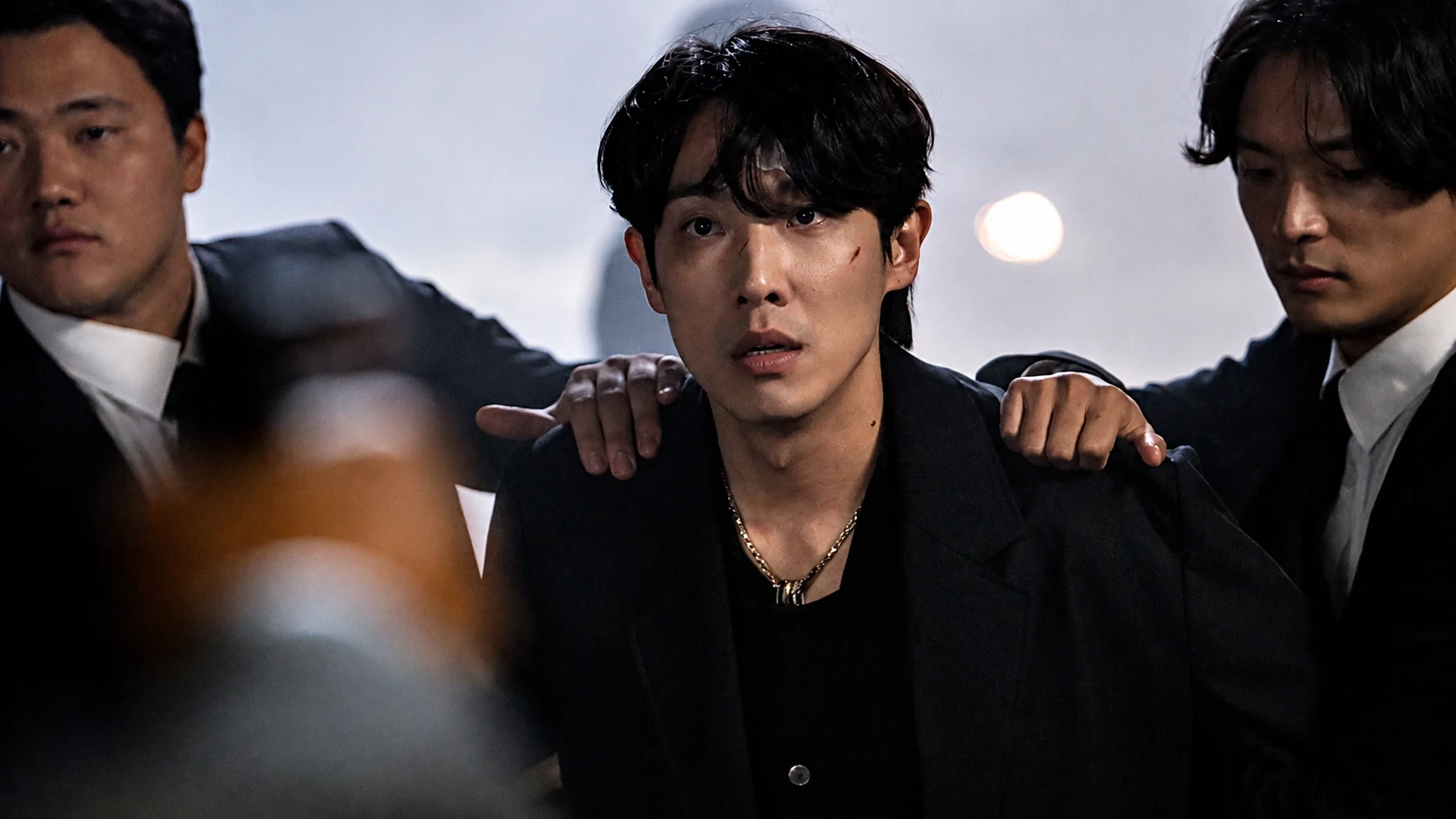
What makes Resurrection more than a victory-lap sequel is its insistence that exposure has to be public to actually mean something — Matthew doesn’t just get caught, he gets broadcast, which is a specifically satisfying version of comeuppance for a character who built his entire identity on controlling narratives. It’s the same instinct for revenge-as-public-reckoning that made Reborn Rich land — both understand that private revenge feels smaller than watching the truth become undeniable to everyone at once.
Sixteen episodes move faster than Season 1’s seventeen, and the compression mostly works — fewer subplots idling, more of the ensemble’s actual reckonings getting screen time. The uneven fates handed to the surviving six by the finale are the season’s strongest choice: this was never going to be a story where everyone gets to walk away clean, and it doesn’t pretend otherwise.
Fans of revenge stories that resolve through public exposure rather than private violence
Anyone who wants a makjang finale that hands out consequences proportionally, not uniformly
🎬 You Might Also Like
If you liked The Escape of the Seven (Season 2), these are your next three watches.
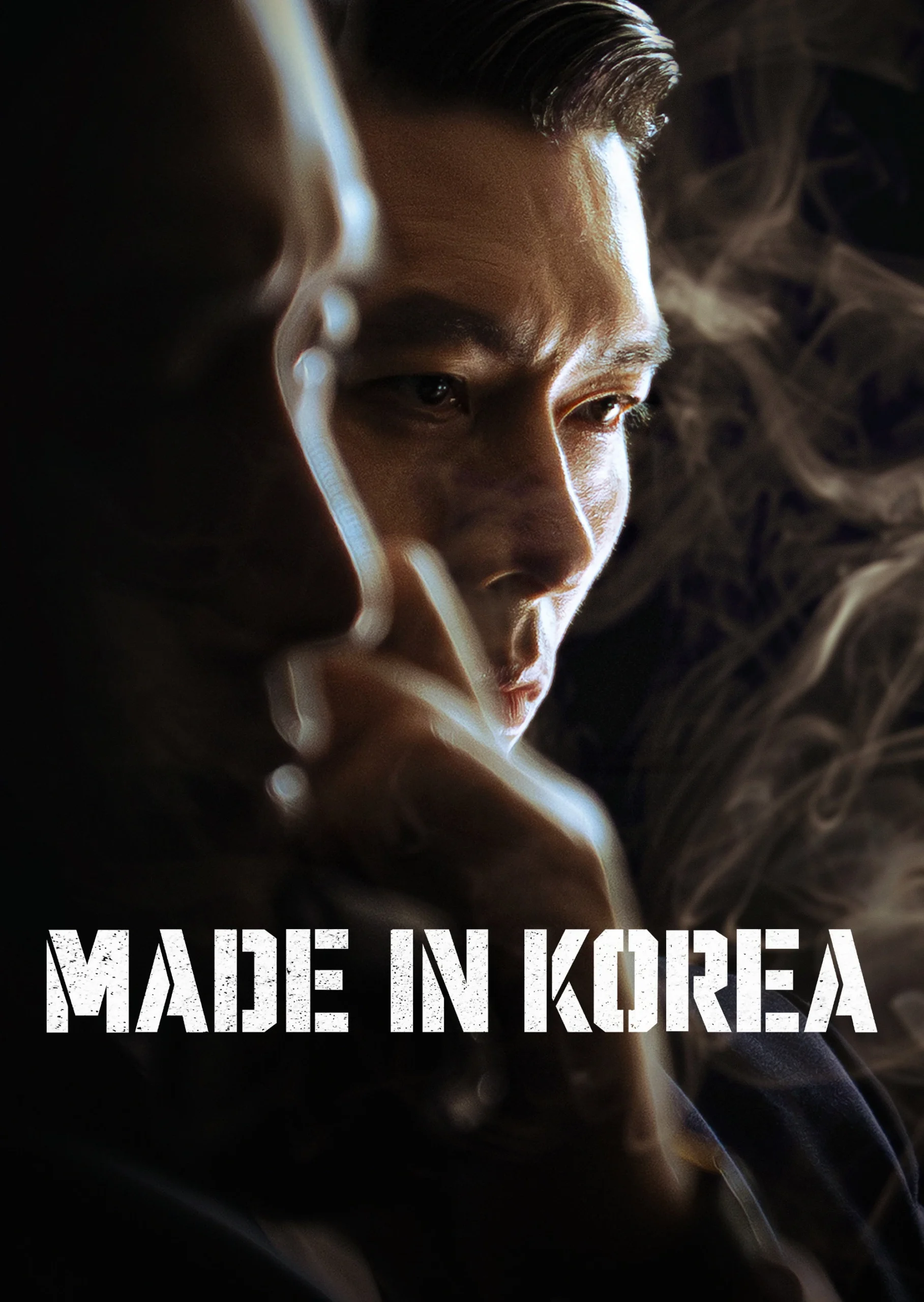 Made in Korea (Season 2)
ActionBrothers Rivalry
Read Full Review →
|
 The First Man
ChaebolDaily Drama
Read Full Review →
|
 Doctor Lawyer
Chaebol CorruptionCorruption
Read Full Review →
|










Keep it kind, skip the harsh language, and please — no spoilers. Everyone's taste is different, and that's perfectly fine.
This space is for real reactions and discussion from other viewers. Help keep it comfortable for everyone by not giving away major plot details.
What do you think of this drama?
Login to share your review or leave a comment.
No email needed — just pick a username & password.