
Heavenly Ever After
📋 Drama Overview
Everything worth knowing, before the opening credits.
Given the choice to be any age she wants for eternity, Lee Hae-sook picks eighty. Her husband once told her she was most beautiful then, and she has carried that one sentence around long enough to build an afterlife on it. Then Ko Nak-joon walks into their reunion at thirty — the age he was before the accident that paralyzed him, restored and almost unrecognizable. Heavenly Ever After opens on that mismatch and refuses to resolve it cheaply.
Kim Hye-ja plays Hae-sook as a woman who spent fifty years as a loan shark keeping her husband alive and has no idea how to stop bracing for the next bill. JTBC’s Heaven is run like a mid-tier government agency — orientation sessions, an infraction ledger tracked in grapes, six strikes and you are deported downward — and the comedy that comes out of all that paperwork buys the show enough goodwill to spend its back half somewhere much darker. By the time Som-i’s identity comes out, the age gap has become the least of what these two are handling.
⚡ Quick Verdict
No scrolling required — the verdict’s right here.
▶ Official Trailer
🎭 Cast & Characters
The souls, the staff, and the cat who came back as a person.
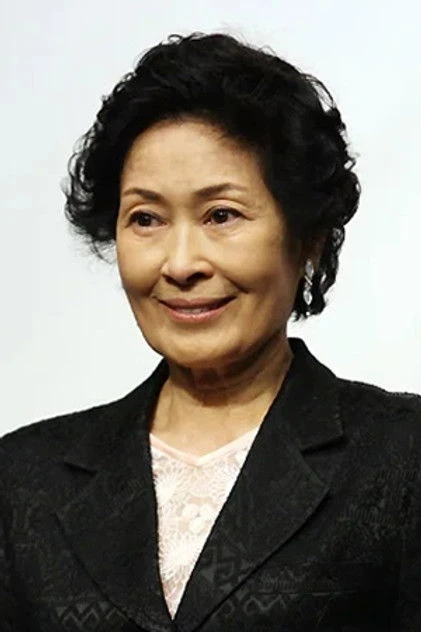
Lead

Lead

Supporting

Supporting

Supporting

Supporting

Supporting

Supporting

Supporting

Supporting

Supporting

Supporting
📺 Episode Guide
A spoiler-light refresher, episode by episode.
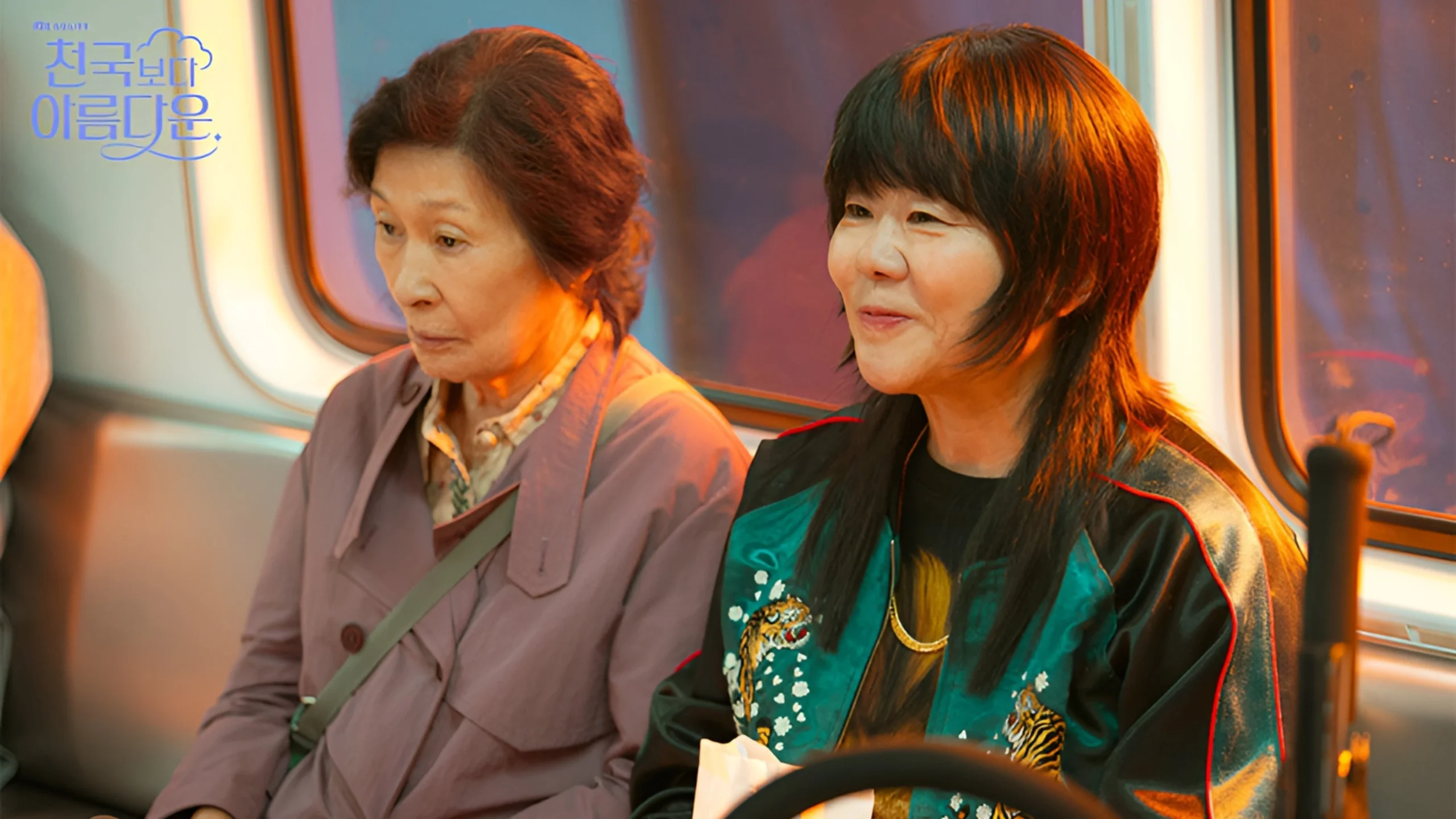
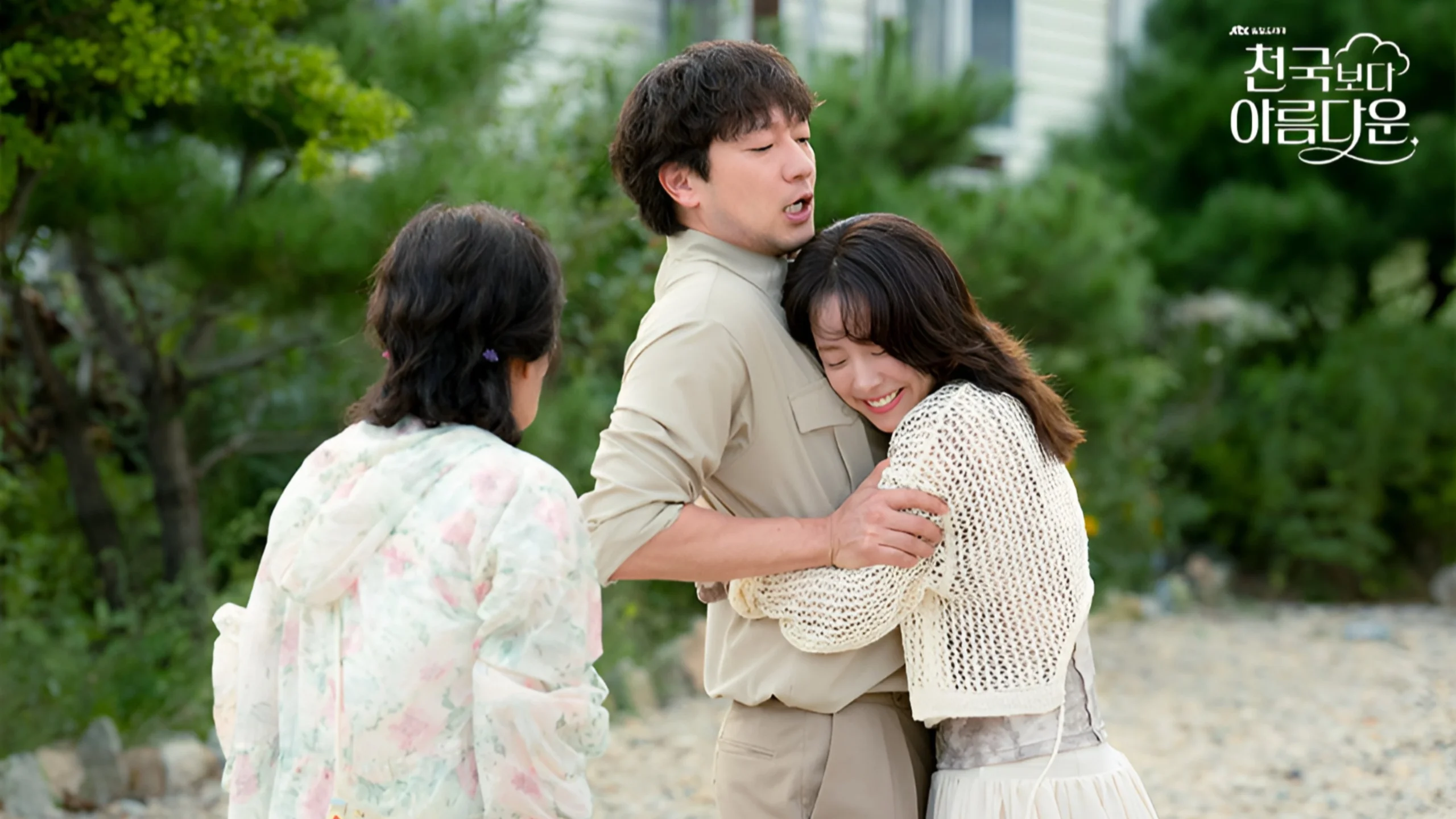
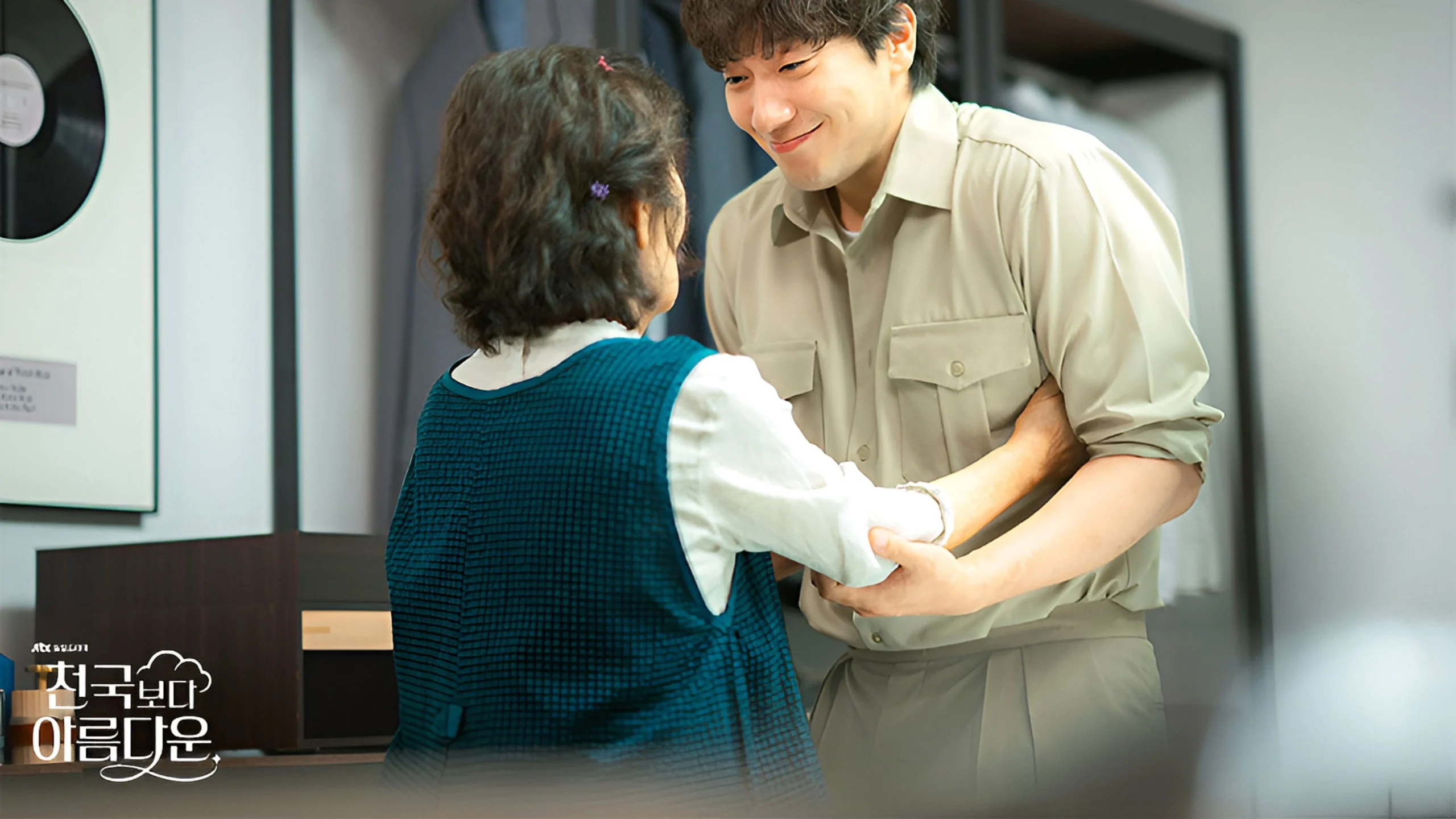
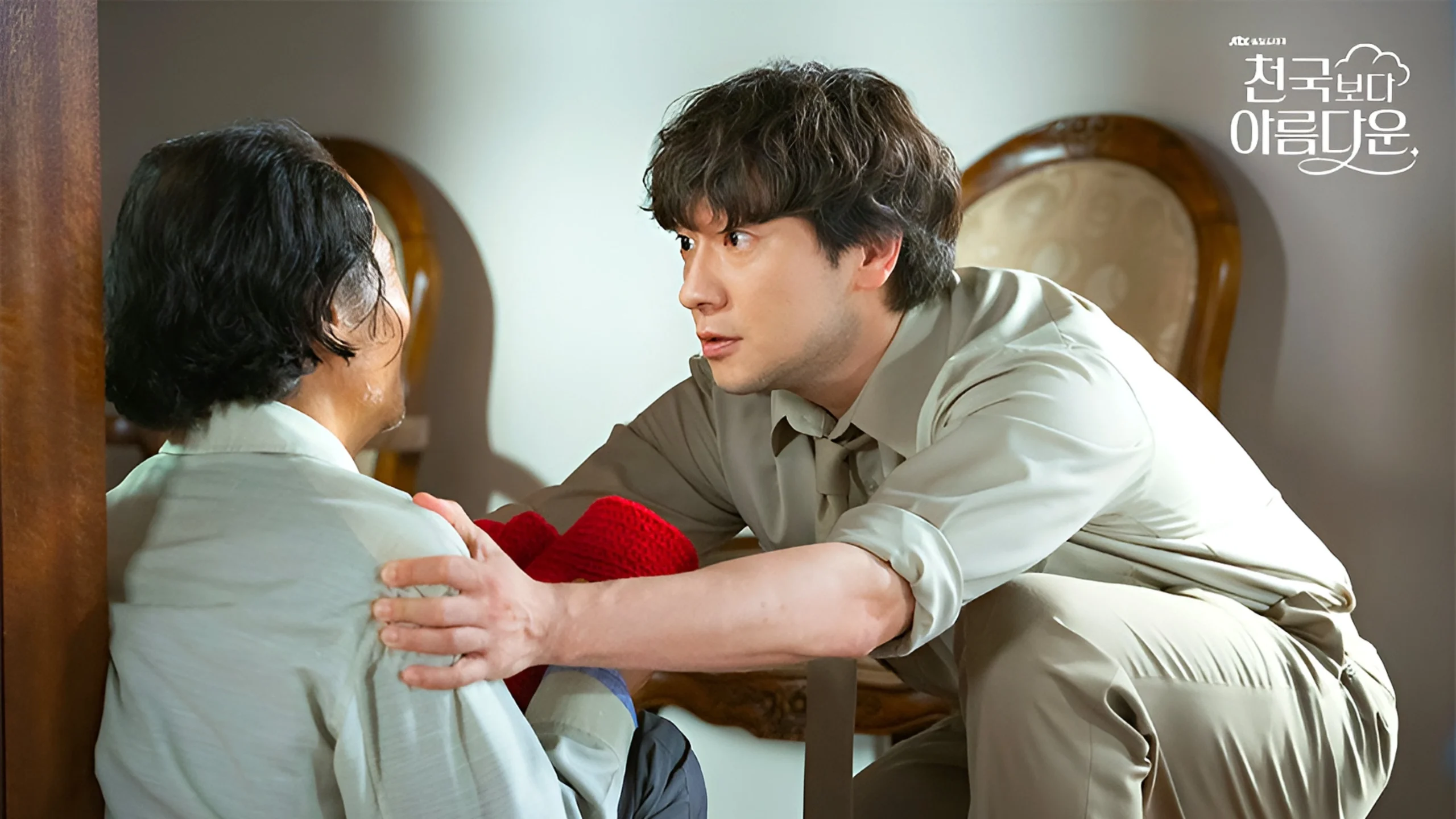




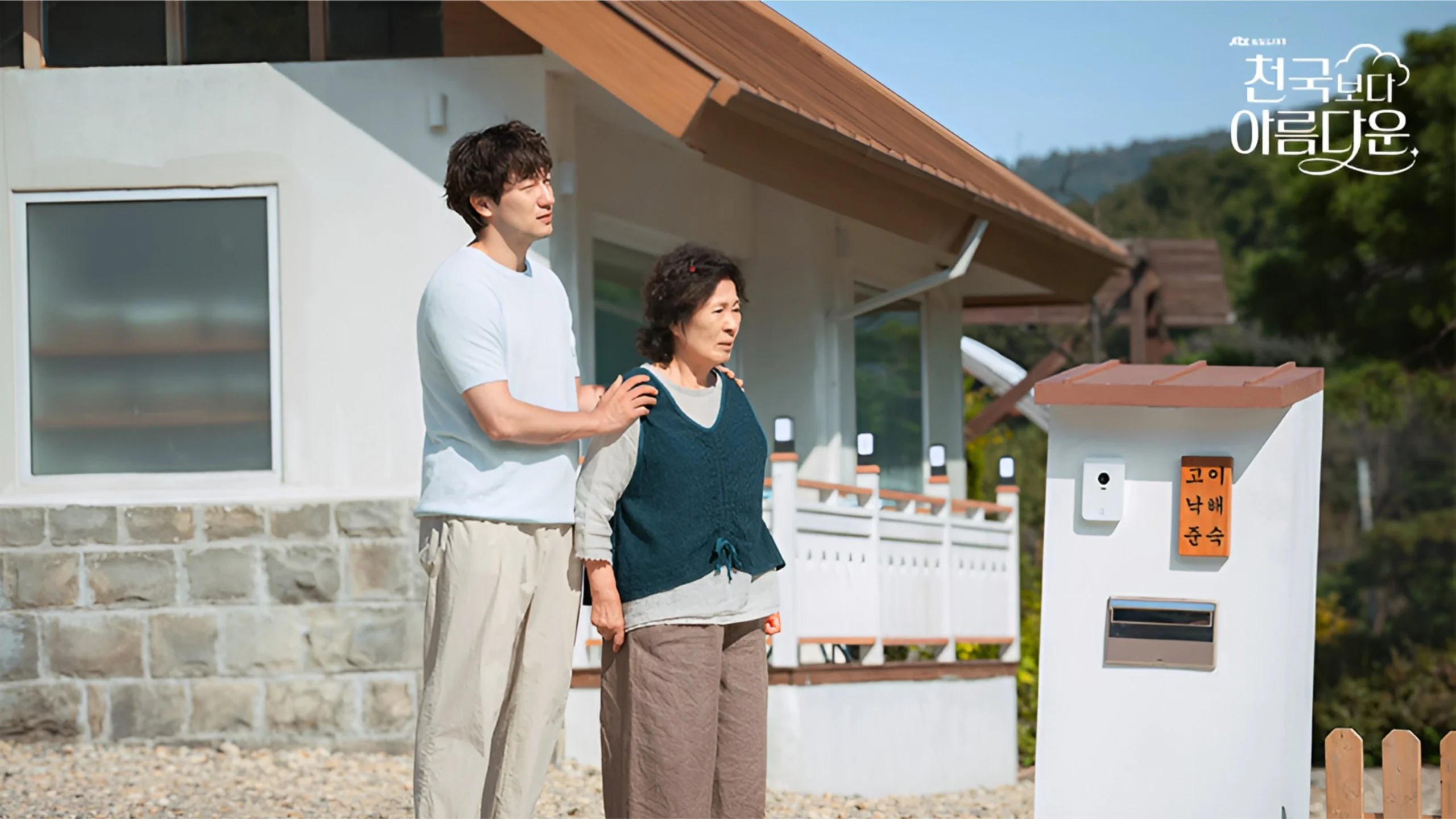
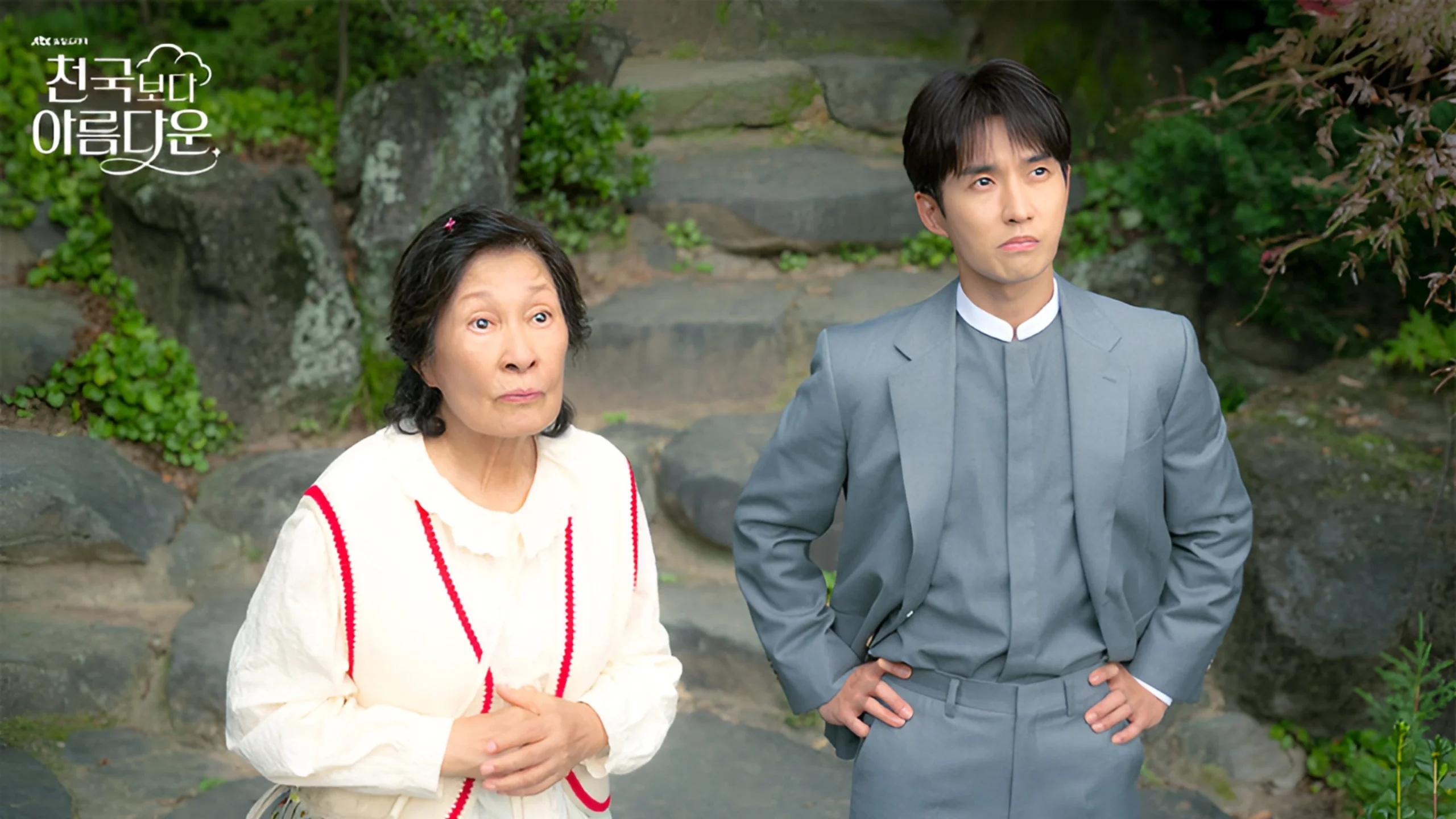


🏁 Ending Explained
Full spoilers — breaking down the finale and what it means.
What actually happened Som-i was never a rival, a runaway from Hell, or Yeong-ae under another name. She is a manifestation of Hae-sook’s own buried grief — the part of her that still remembers Eun-ho, the son who went missing as a child. Hae-sook’s mind erased the boy in order to survive losing him, and Nak-joon spent the rest of their marriage protecting that erasure by refusing to say his name out loud. The pastor Hae-sook has been quietly looking after all season is Eun-ho, grown.
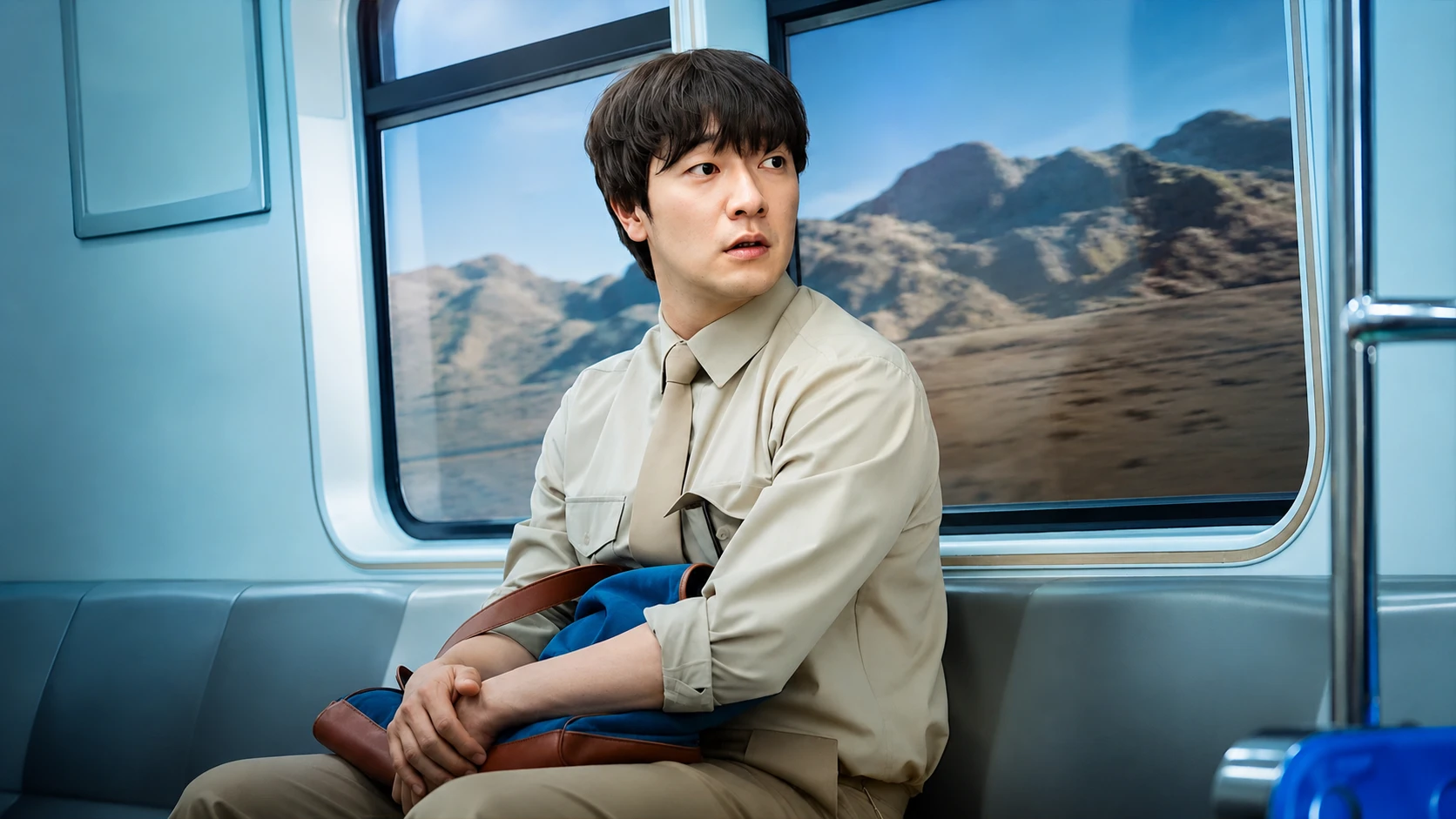
Why Nak-joon kept it from her His silence reads as cowardice until you account for what he watched. He saw what remembering did to her the first time, and he chose a wife who could keep functioning over a wife who knew. The show does not fully absolve him. That decision cost Hae-sook the ability to grieve her own child, and Som-i is what an ungrieved loss turns into once it is handed eternity and nothing to do with it.
The reunion, and why Som-i disappears When Som-i moves to erase Hae-sook, Nak-joon steps in front of her and takes the blame himself, accepting the angriest part of his wife rather than arguing with it. Eun-ho then does the thing nobody else could: he tells his mother he is here, and that she is allowed to stop. Som-i fades once Hae-sook can hold the memory without breaking under it. The guilt was never something to defeat — it needed acknowledging.
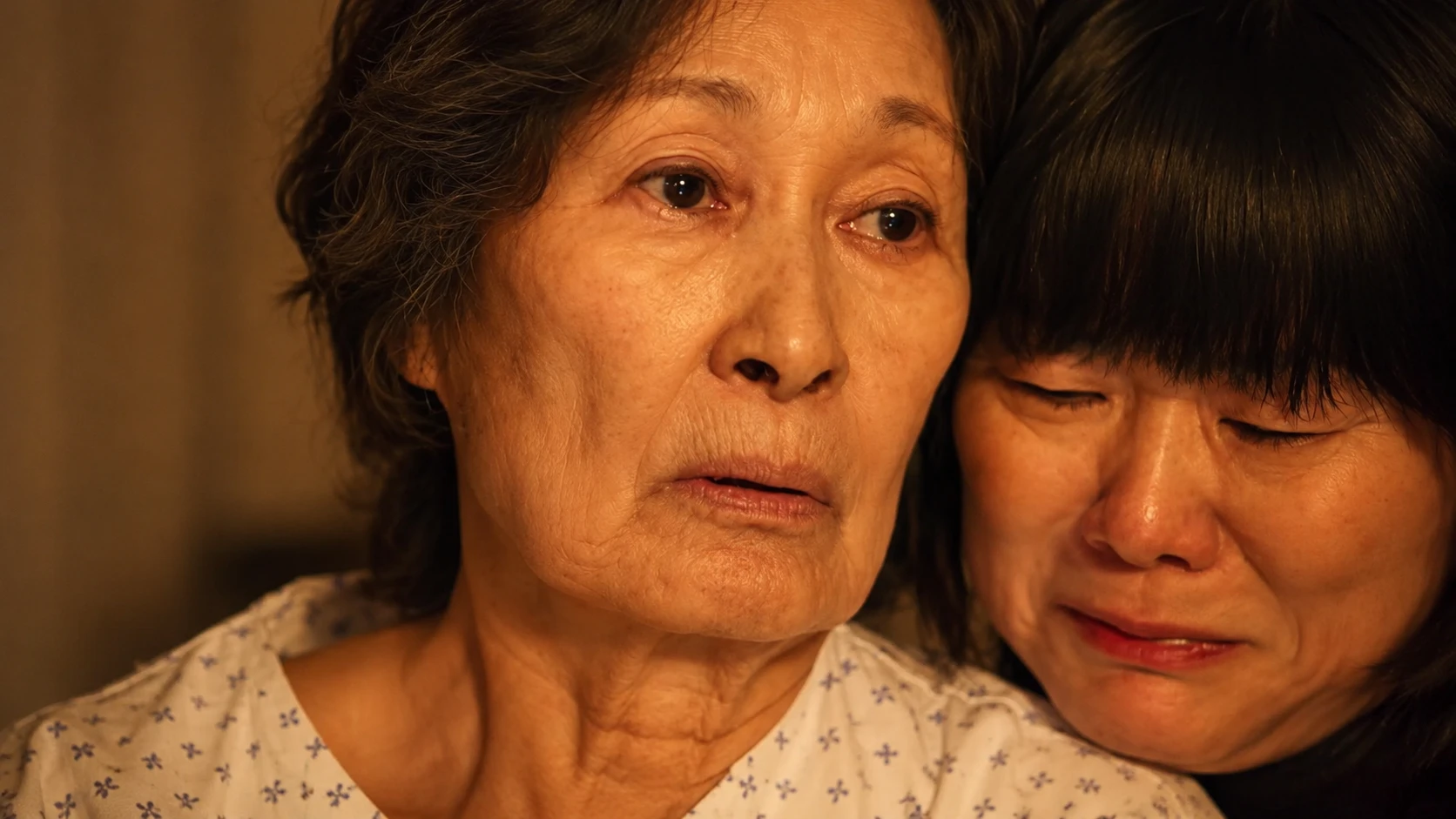
Why Nak-joon refuses to reincarnate with her The finale’s cruelest turn is also its most consistent. Nak-joon has spent two lifetimes managing Hae-sook’s pain, and he concludes that carrying his own regrets into a new life beside her would tether her to the same sorrow again. So he lets her walk through the gate without him. She fights it, then honors it. Whether that lands as love or as one final decision he made on her behalf is left genuinely open.
The KDW verdict The Korean title translates to ‘More Beautiful Than Heaven,’ and the finale finally cashes that in — the thing worth more than paradise is a woman being permitted to remember her own son. Getting there costs the show its lightness, and the last three episodes crowd in more revelation than they can comfortably carry. But Kim Hye-ja plays the moment of remembering with such specific, unglamorous devastation that the tonal whiplash stops mattering.

✍️ KDramaWorlds Editor’s Take
Straight talk — our real opinion, and the viewer it’s made for.
The casting is the argument. Kim Hye-ja is in her eighties playing a woman who chose to stay eighty, and the show never once treats that face as a punchline or a lesson. Watch what she does with her hands — a lifetime of collecting debts, still braced for someone to argue back. Korean television has gotten better at this than most; Navillera made the same bet on Park In-hwan and won it the same way, by trusting an older actor with the entire emotional load instead of parceling it out to the young leads.

The bureaucracy is doing more work than it looks like it is. Orientation sessions, a grape-based infraction ledger, stored good deeds you can draw down like a bank balance — it plays as comedy for five episodes, and then the machinery turns out to be load-bearing. Hae-sook’s banishment to Hell only happens because the system counts. Som-i only goes undetected because the system has a category for souls it cannot classify. Tomorrow ran a similar afterlife-as-workplace conceit; this one is looser about its rules but sharper about what they cost the people living under them.
Where it strains is the handoff. The first six episodes are a comedy about a marriage with a fifty-year age gap in it, the last three are a tragedy about a missing child, and the seam shows. Some of the past-life reveals in episodes nine and ten arrive fast enough to feel like a checklist being cleared. The performances hold it together anyway, which is not quite the same as the writing holding it together.
🎬 You Might Also Like
If you liked Heavenly Ever After, these are your next three watches.
 Love In Sync
Emotional TransferenceL
Read Full Review →
|
 Light Shop
afterlifeBae Sung-woo
Read Full Review →
|
 Mystic Pop-up Bar
afterlifeChoi Won Young
Read Full Review →
|
















Keep it kind, skip the harsh language, and please — no spoilers. Everyone's taste is different, and that's perfectly fine.
This space is for real reactions and discussion from other viewers. Help keep it comfortable for everyone by not giving away major plot details.
What do you think of this drama?
Login to share your review or leave a comment.
No email needed — just pick a username & password.