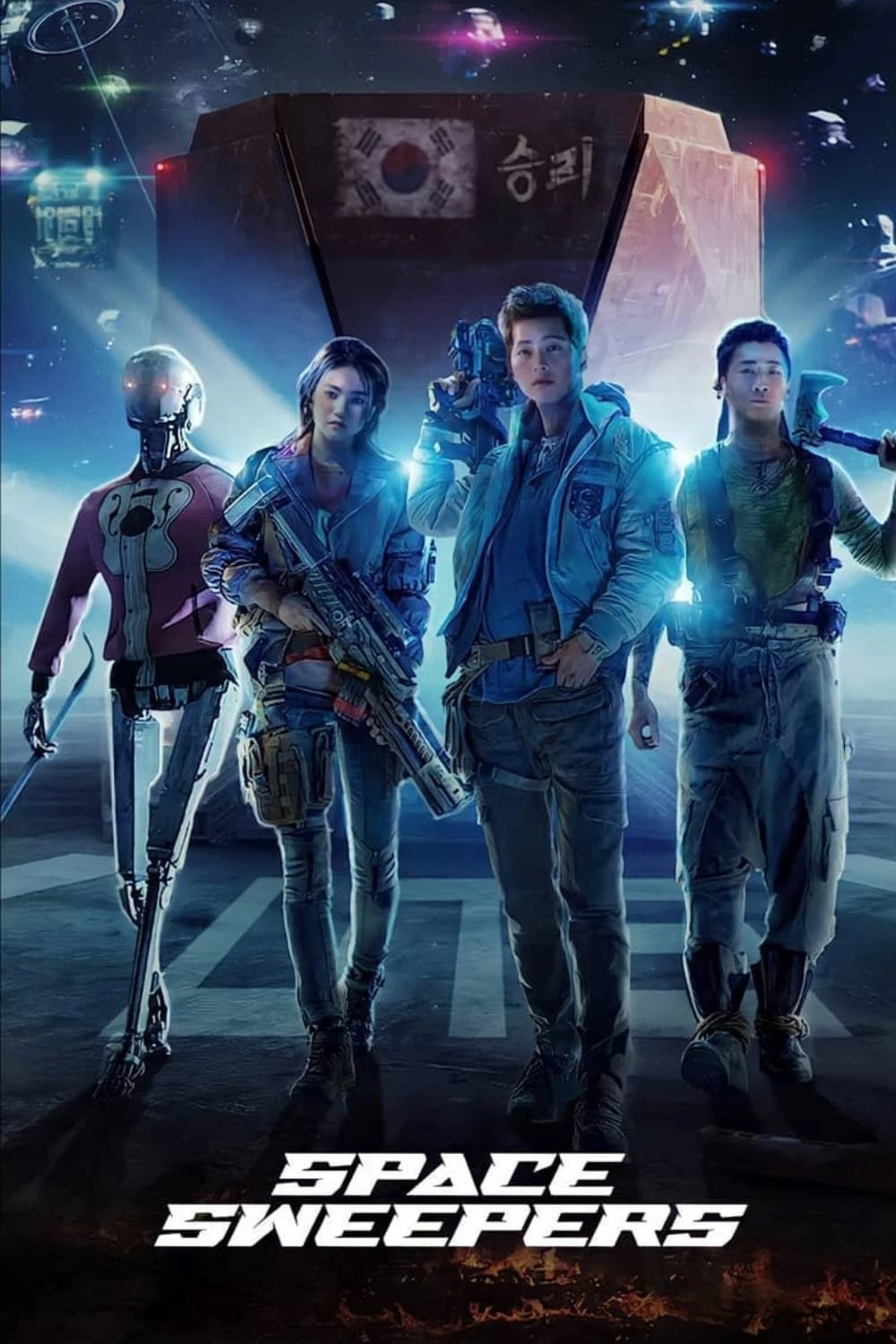
Space Sweepers
🎬 Netflix · Viu
⭐ 6.5 IMDb
🔞 TV-MA
🎬 Film Overview
FOUND FAMILY SPACE OPERA PICK
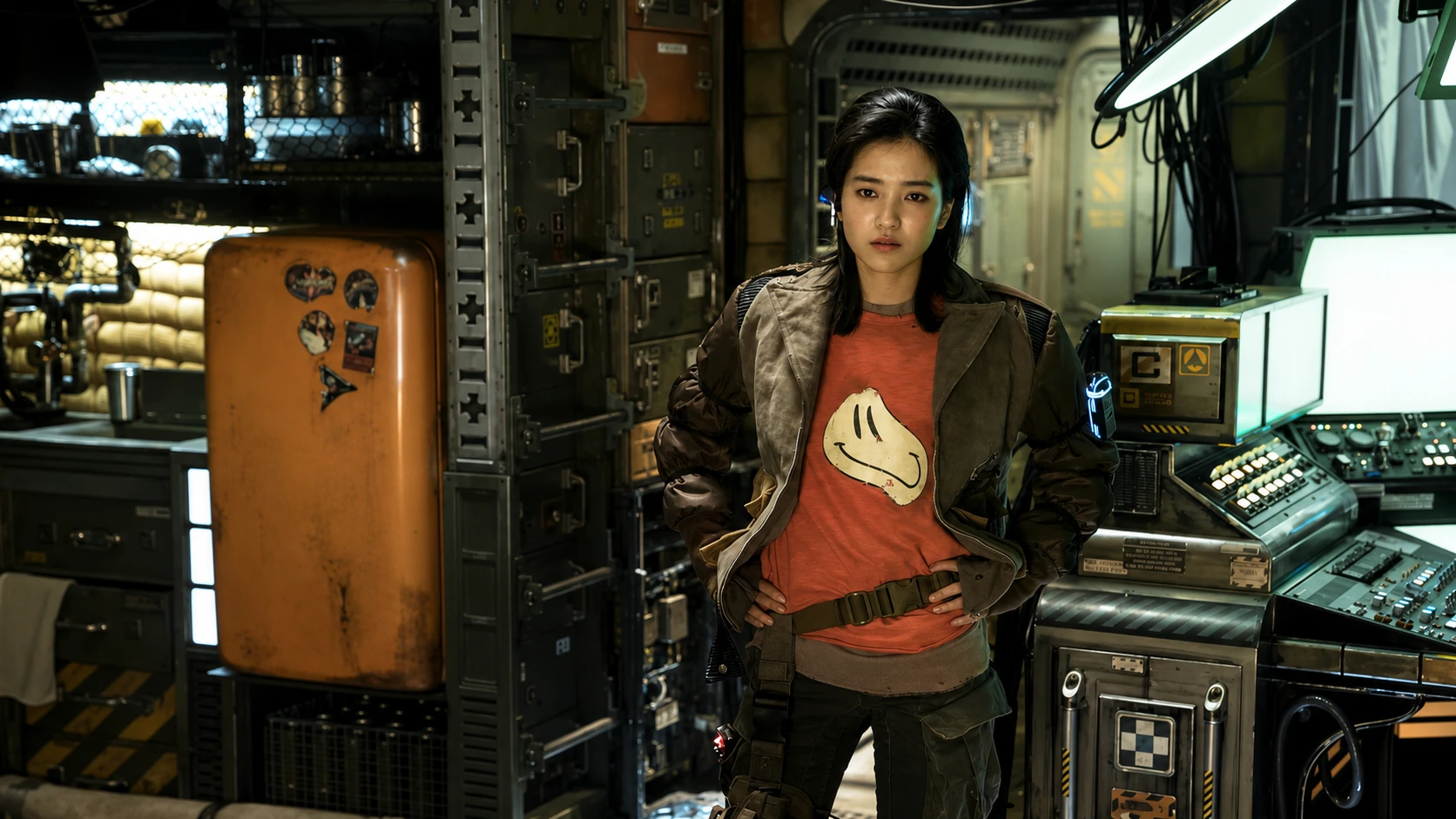
By 2092, Earth is barely livable, and the people who can afford it have relocated to UTS Corporation’s orbital habitats, pristine stations run by the outwardly visionary CEO James Sullivan. Everyone else scrapes by below, and the Victory is one of thousands of junk-collector ships fighting over salvage rights to keep their crews fed. Pilot Tae-ho flies it half-numb with debt and grief, ex-pirate Captain Jang runs the ship with secrets she doesn’t share, engineer Tiger Park keeps the whole thing from falling apart, and Bubs, a decommissioned military android with a very specific dream of getting a human-looking body, provides most of the crew’s actual optimism.
A routine salvage run changes everything when the Victory crew finds a crashed shuttle carrying what the news calls a weapon of mass destruction: a small humanoid robot named Dorothy, wanted by UTS Space Guards and worth an enormous ransom. The crew, desperate enough to see dollar signs before anything else, decides to cash in. What follows complicates that plan almost immediately, because Dorothy doesn’t act like a weapon, and Sullivan’s interest in getting her back turns out to run a lot deeper, and a lot darker, than a simple recovery mission.
⚡ Quick Verdict
The whole picture, condensed into one box.
· IMDb
▶ Official Trailer
🎭 Cast & Characters
A found-family crew of scavengers who discover the galaxy’s most wanted ‘weapon’ is just a kid.

Lead

Lead

Lead

Lead

Supporting

Supporting

Supporting

Supporting

Supporting

Supporting

Supporting

Supporting
📖 The Story
No spoilers — just what you need to know going in.
Earth in 2092 is mostly wasteland, and UTS Corporation has built the only real alternative: gleaming orbital habitats reserved for whoever can afford the ticket. Below that tier, the Victory is one of countless salvage ships fighting for scraps of debris worth trading in. Tae-ho flies it while carrying a debt he can’t see the end of. Captain Jang runs the crew with a past nobody on board fully knows. Tiger Park keeps the engine room from falling apart through sheer stubbornness, and Bubs, technically a decommissioned military android, wants exactly one thing badly enough to work every angle for it: a human-looking body.
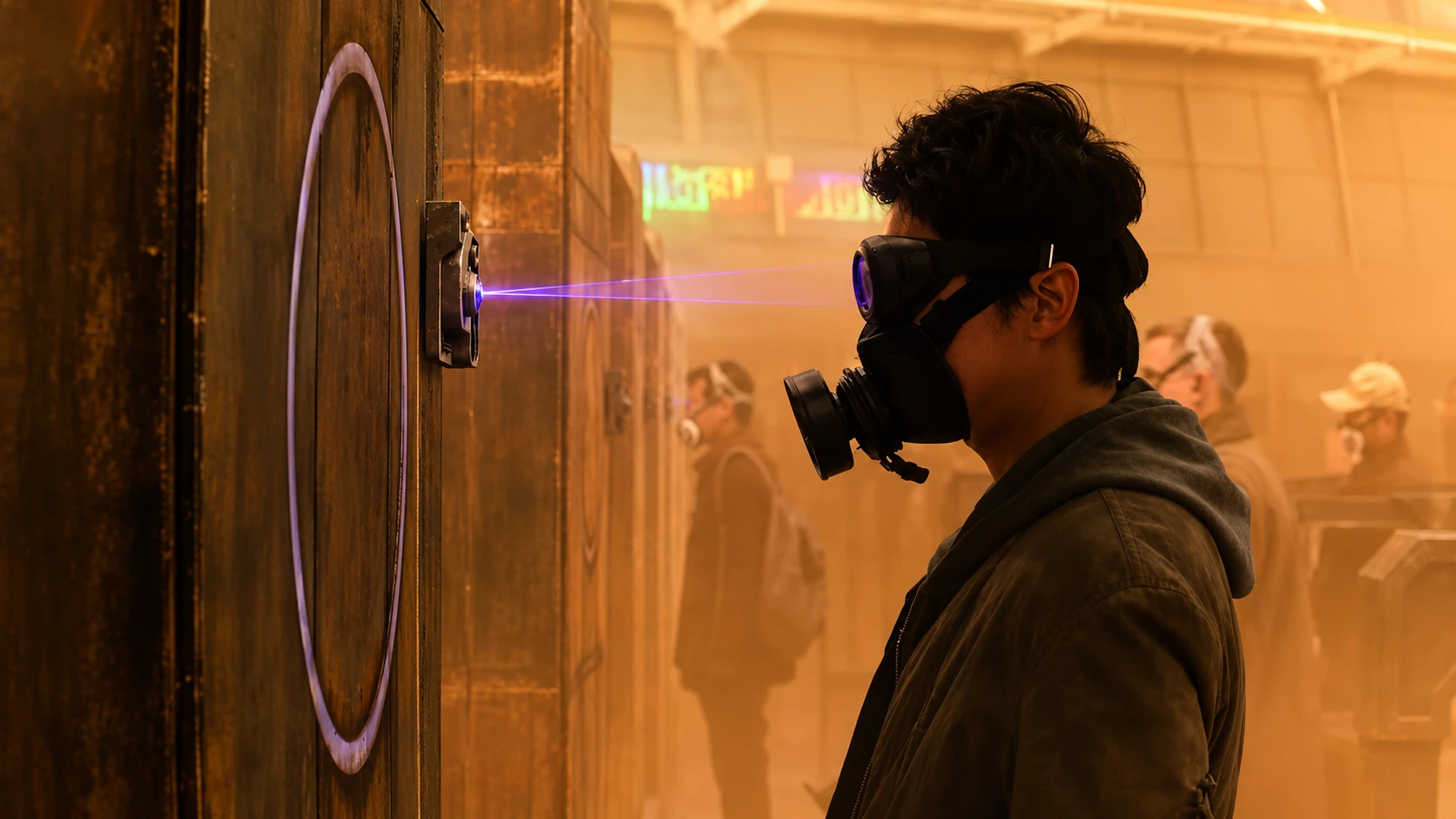
None of them are doing this out of idealism. The salvage business is competitive enough that other crews are as much a threat as the debris itself, and the Victory is perpetually one bad haul away from losing the ship outright. Tae-ho’s motivations run deeper than money, though — he’s still quietly searching for traces of a daughter he lost years earlier, a thread the film doesn’t rush to explain.
A routine sweep turns up a crashed shuttle, and inside it, a small girl the news is calling a weapon of mass destruction: Dorothy, a humanoid android built around a hydrogen bomb and hunted by UTS Space Guards. The ransom on her alone could clear every debt the Victory carries, so the crew makes the obvious call and decides to sell her back instead of turning her in.
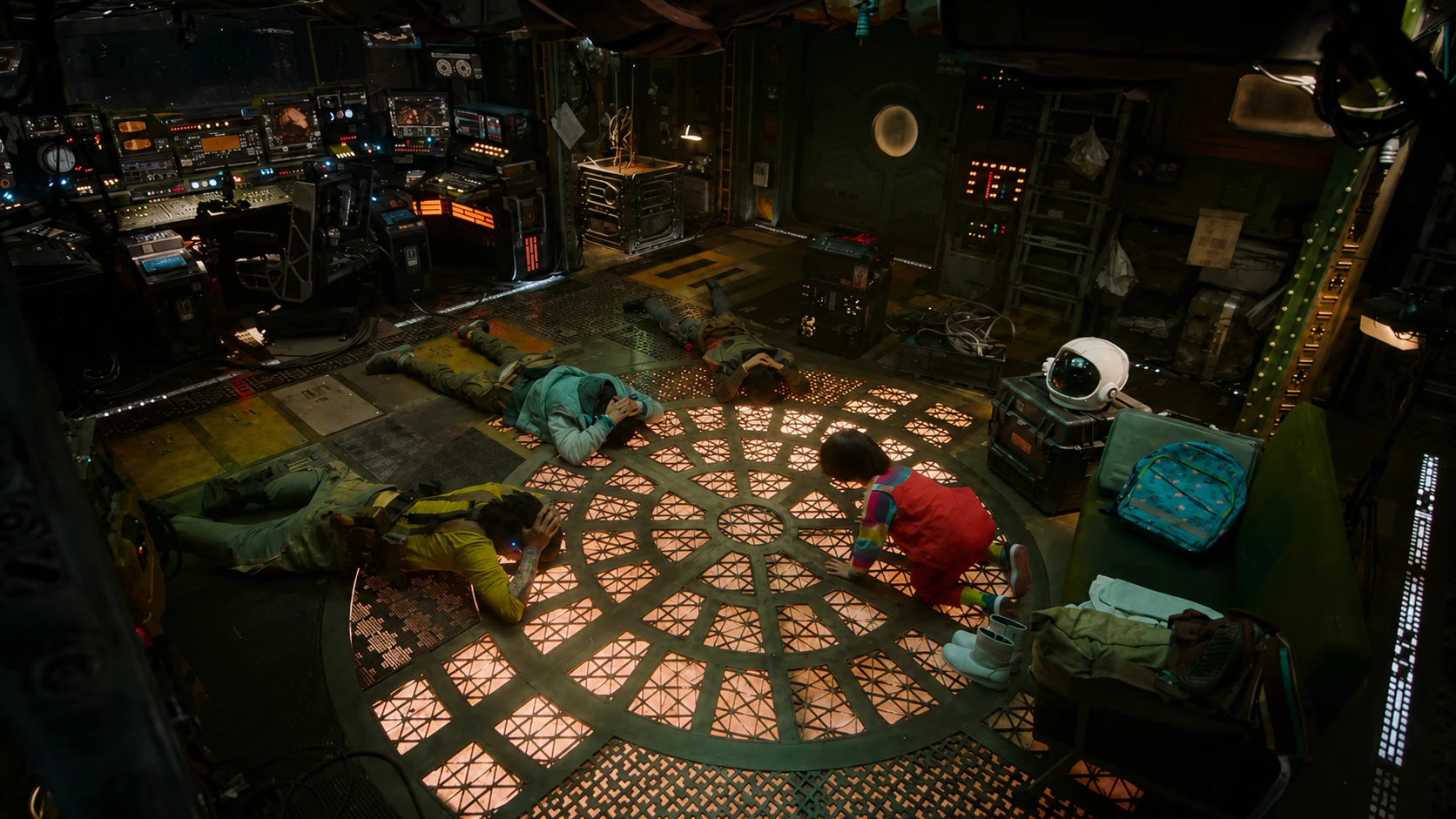
James Sullivan doesn’t want Dorothy back for the reasons UTS’s public messaging suggests. His involvement escalates from corporate cleanup to something closer to a manhunt almost as soon as the Victory makes contact, and the mismatch between how hard UTS is pushing and how harmless Dorothy actually seems becomes the first real crack in the crew’s plan.
Living with Dorothy complicates the ransom math further. She’s not a bomb waiting to go off — she’s a kid, scared and observant, and the Victory’s crew starts protecting her out of habit before any of them decide to admit it out loud. Bubs adopts her almost instantly. Tiger Park stops treating her like cargo. Even Captain Jang, guarded about everything, softens in ways that surprise her own crew.
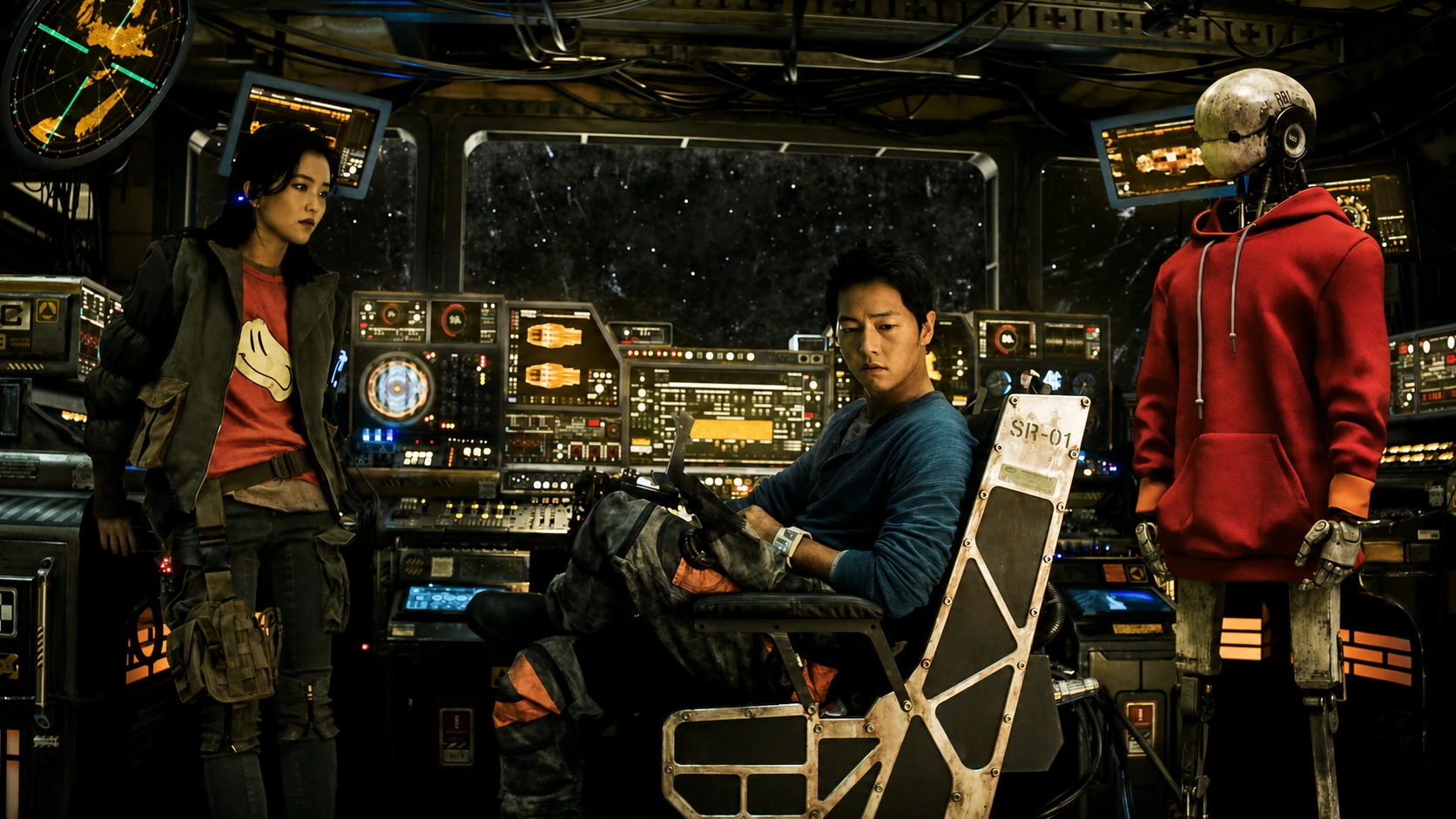
The truth behind Sullivan’s obsession surfaces in pieces: Dorothy isn’t just valuable, she’s central to a terraforming project Sullivan has been running in secret, one that only works if Earth’s current population isn’t around to complicate it. What started as a simple ransom job turns into the Victory crew standing directly between Sullivan and a plan built on erasing billions of people.
With UTS closing in and the true scale of Sullivan’s ambition now clear, the crew has to decide, fast, whether the payday that could have saved them is worth more than the kid they’ve spent the last several days failing to stay professionally distant from.
🏁 Ending Explained
Everything that happens, explained in full — spoilers ahead.
Full Spoilers Ahead — This section covers the complete ending of Space Sweepers. Stop here if you haven’t watched.
How the crew stops Sullivan Sullivan’s actual plan is to crash UTS’s orbital factory, doubling as a massive space junkyard, straight into Earth, wiping out most of humanity so a small elite can relocate to a Mars terraformed using Dorothy’s nanobot technology. The Victory crew, once they understand what’s actually at stake, rescues Dorothy and works with other space sweepers to detach the bomb from the factory before it can complete the collision course. Sullivan dies when the detached bomb strikes his own ship, and the factory is redirected away from Earth in time.
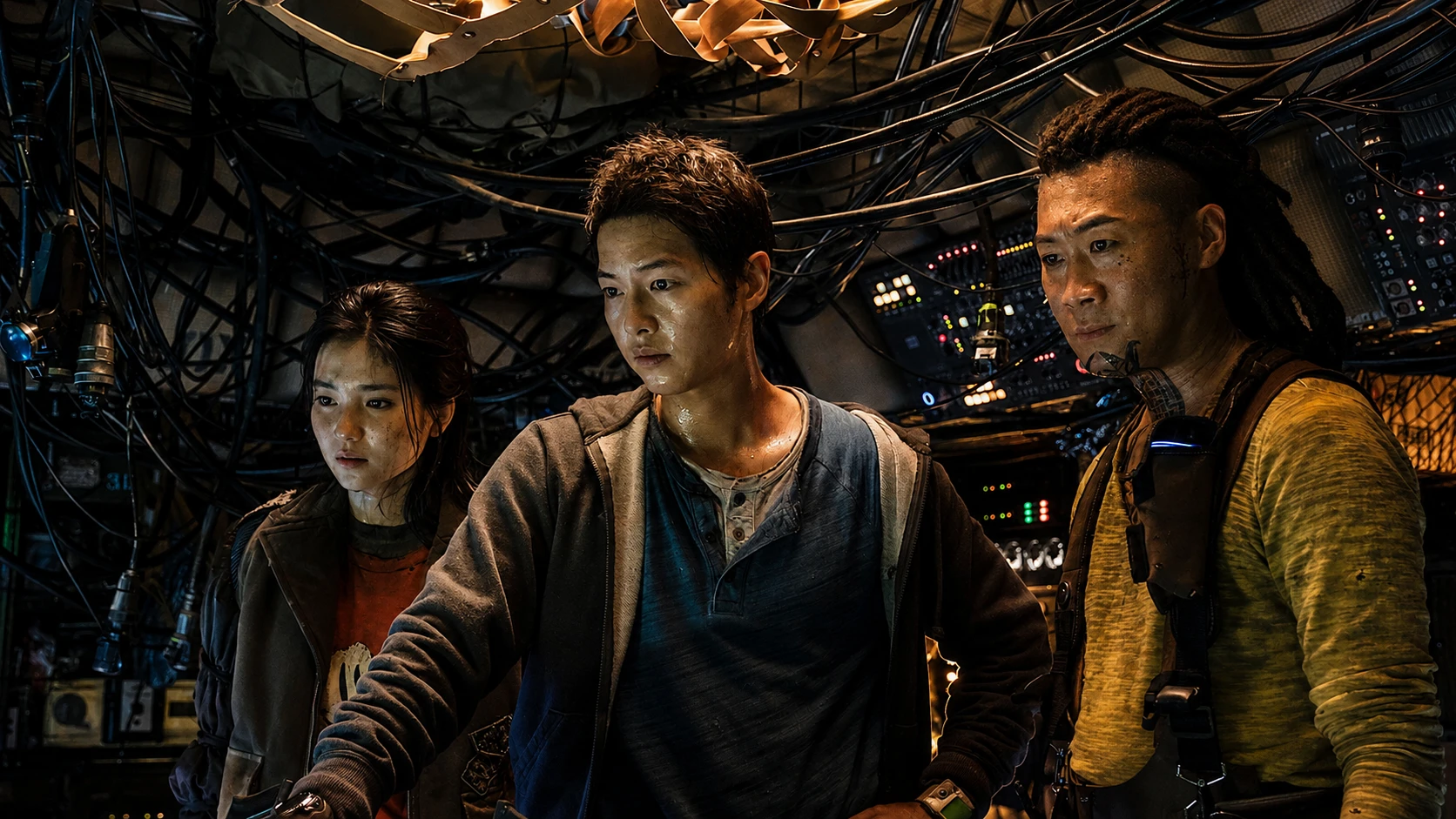
What it costs them None of this happens without the crew walking away from the ransom money that could have solved every problem they started the film with. They choose Dorothy, and by extension Earth, over the payday, with no guarantee any of them survive the attempt.
What it means for Tae-ho The ending lands hardest through Tae-ho, whose entire arc has run parallel to his search for his lost daughter, Su-ni. Protecting Dorothy doesn’t replace that loss, but it gives his desperation somewhere to go that isn’t just about money anymore. Captain Jang, Tiger Park, and Bubs make the same shift in their own ways, four scavengers turning into something closer to a family without ever formally deciding to.
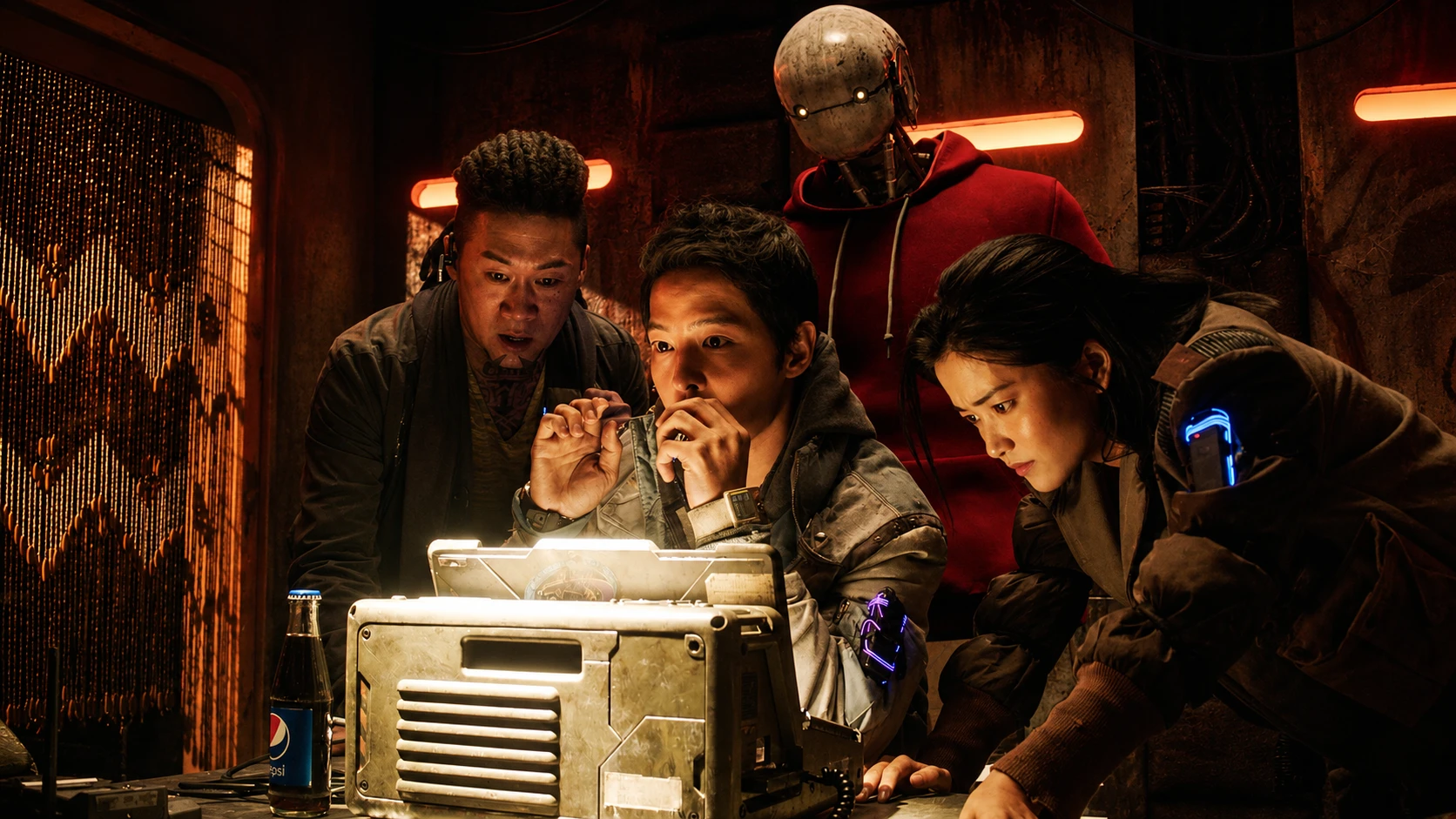
What the film leaves open Earth survives, but the film doesn’t pretend the planet’s underlying problems are solved. The pollution and inequality that pushed people into orbit in the first place are still there, UTS’s future leadership and accountability go largely unaddressed, and the space-sweeper economy the Victory crew depends on hasn’t fundamentally changed.
The KDW verdict The ending recontextualizes how the film opened: Tae-ho chasing money with a kind of blinkered desperation that looked, at first, purely selfish. By the finale, that same drive has been redirected toward people instead of a payout, and Space Sweepers makes its thesis plain without much subtlety, which is part of its charm rather than a flaw. In a universe built on debris and desperation, the crew’s actual find wasn’t the ransom. It was each other.
✍️ KDramaWorlds Editor’s Take
Worth watching or not — our honest read, and who it’s for.
Jo Sung-hee
Known for: Jo Sung-hee started with the small-scale indie post-apocalyptic drama End of Animal, then broke through commercially with 2012’s A Werewolf Boy, a fantasy romance that also happened to star a young Song Joong-ki. After the underperforming mystery thriller The Phantom Detective, Space Sweepers marked a massive jump in scale, and reuniting with Song Joong-ki nearly a decade after A Werewolf Boy. What carries over from his smaller films is the same instinct: genre premises used mainly as a frame for close, intimate relationships, whether that’s a boy and a werewolf or a scavenger crew slowly becoming a family.
Space Sweepers wears its influences openly, there’s Star Wars scrappiness and a little Guardians of the Galaxy in the crew dynamic, but the film’s grimier, more desperate version of the future feels distinctly Korean in how it frames survival. That instinct for grounding spectacle in working-class desperation runs through Korean genre filmmaking generally, the same impulse that powers Peninsula‘s zombie-apocalypse survivors scraping by on nothing.
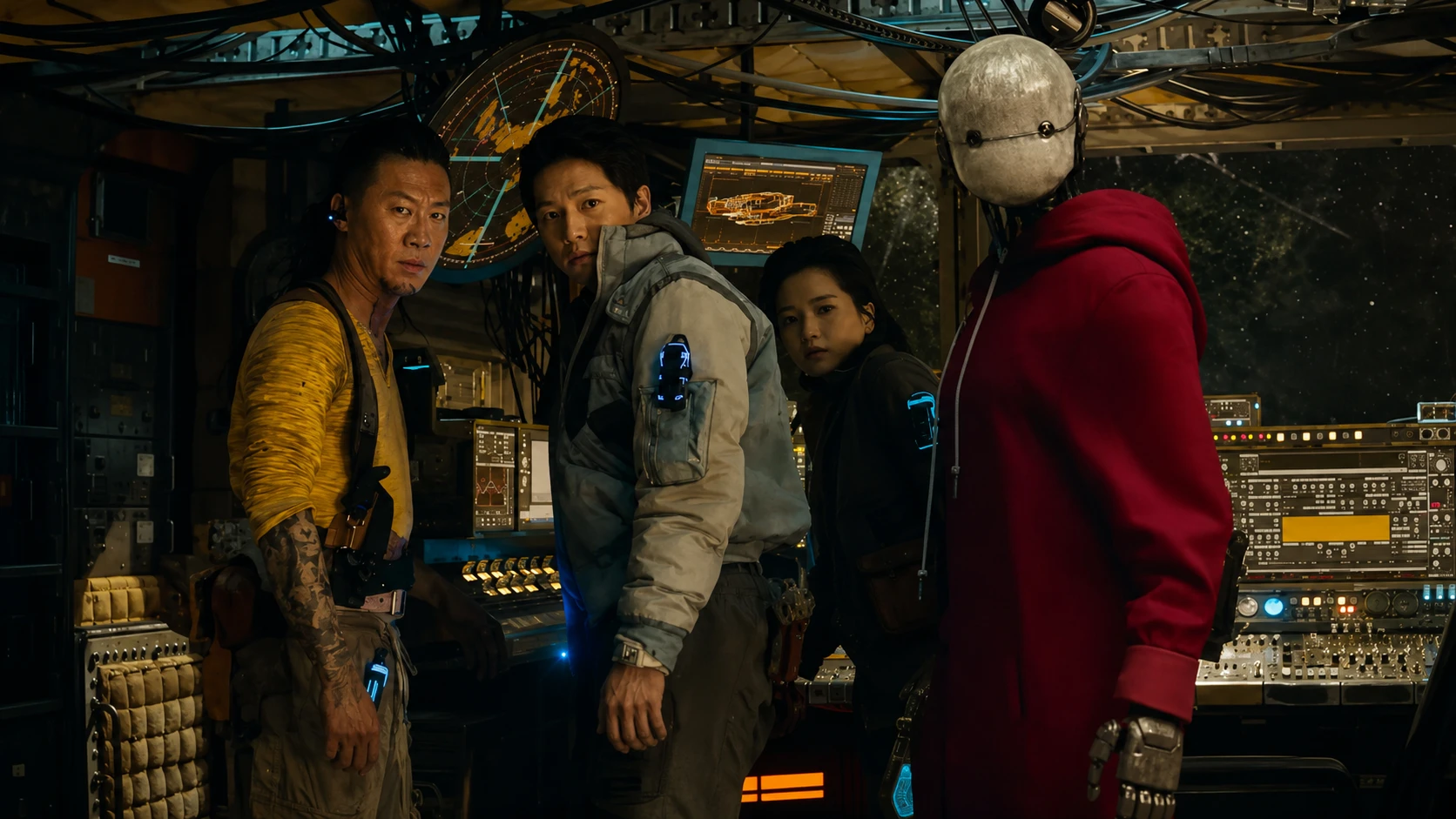
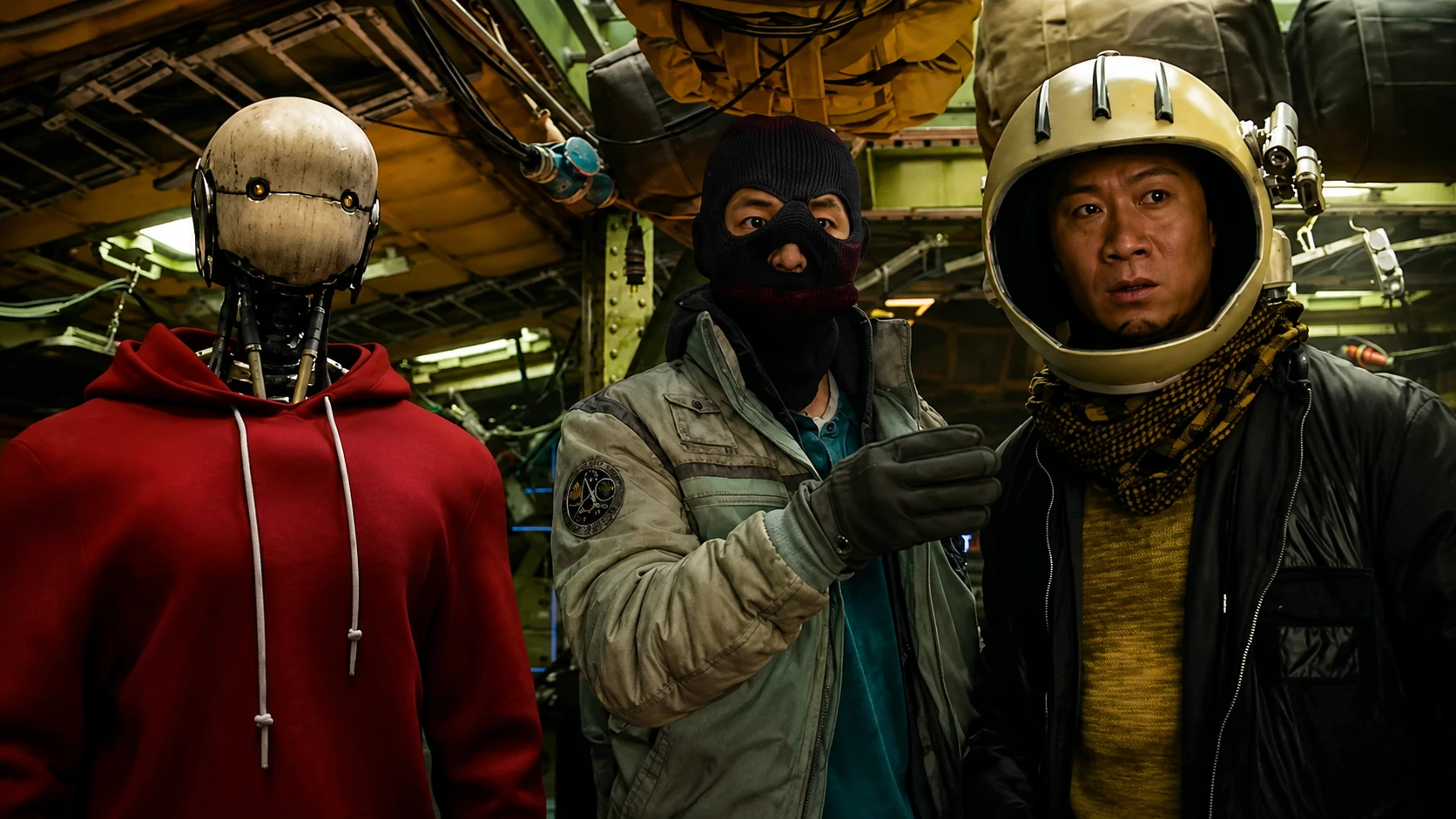
Bubs is the film’s secret weapon. A military android voiced with real comic timing by Yoo Hai-jin, Bubs’ running dream of getting a human-looking body could easily have played as a gimmick, but it ends up carrying some of the film’s most sincere moments about wanting to belong somewhere. It’s the same found-community instinct that drives Concrete Utopia‘s residents to define themselves by who they let inside their walls, just pointed toward warmth instead of paranoia.
The film’s biggest swing, treating a corporate mass-extinction plot with the same emotional weight as a single family reconciling, doesn’t always land cleanly. But the cast sells it. Song Joong-ki and Kim Tae-ri especially find real chemistry in characters who spend most of the runtime being deliberately guarded with each other.
🎬 You Might Also Like
If you liked Space Sweepers, these are your next three watches.
 Welcome to Waikiki (Season 1)
comedyFound Family
Read Full Review →
|
 Hospital Playlist (Season 2)
Cho Jung-seokcomedy
Read Full Review →
|
 Wok of Love
Chefcomedy
Read Full Review →
|






Keep it kind, skip the harsh language, and please — no spoilers. Everyone's taste is different, and that's perfectly fine.
This space is for real reactions and discussion from other viewers. Help keep it comfortable for everyone by not giving away major plot details.
What do you think of this drama?
Login to share your review or leave a comment.
No email needed — just pick a username & password.