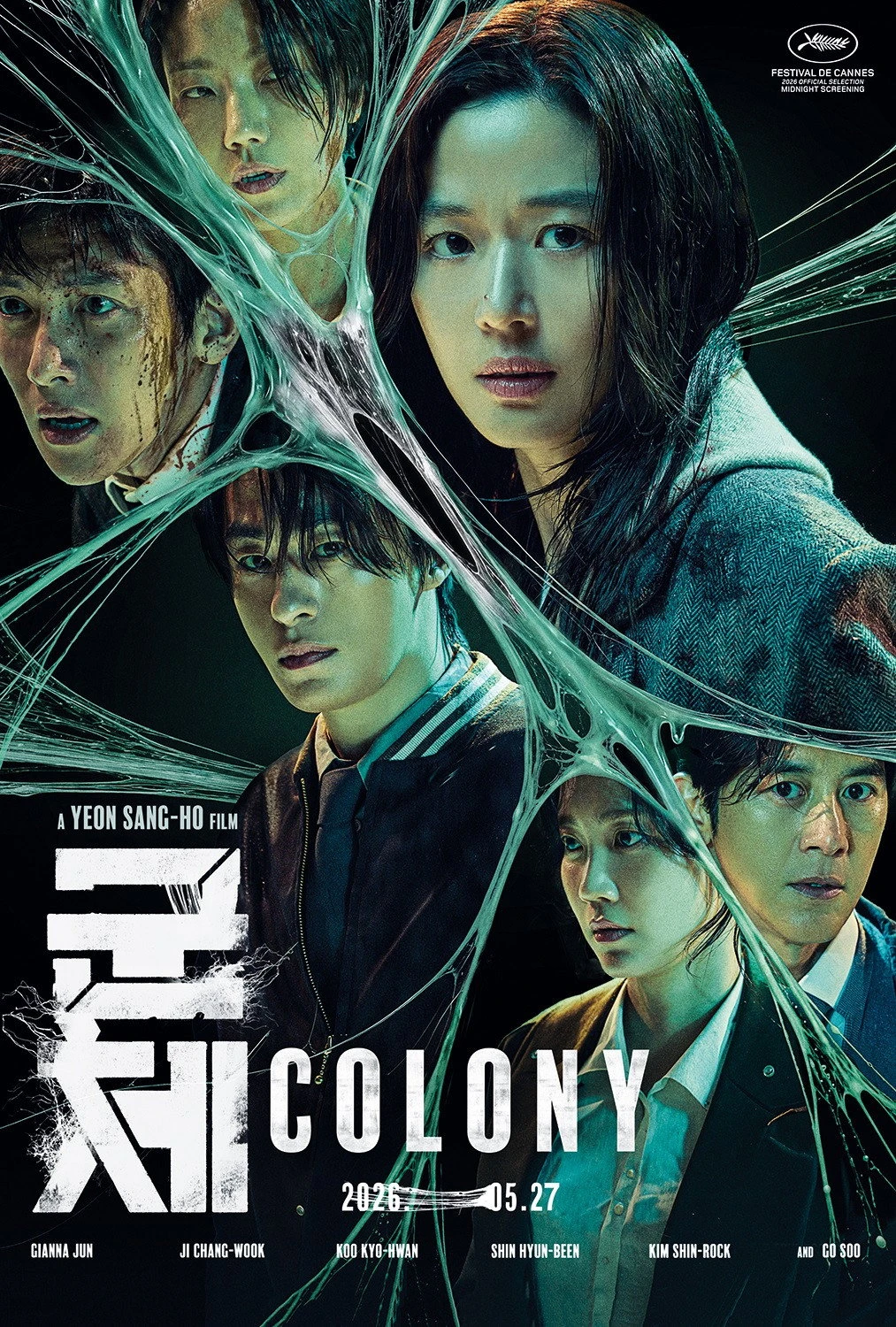
Colony
🎬 Film Overview
A biotechnology professor attends an industry conference that becomes a sealed nightmare when a rapidly mutating virus is unleashed inside the facility. Authorities lock down the building, trapping everyone within — scientists, ministers, and staff alike — alongside infected whose bodies keep transforming in unpredictable and terrifying ways. What begins as a professional gathering turns into a desperate fight for survival where every decision is a moral gamble and the systems designed to contain the crisis keep making it worse.
⚡ Quick Verdict
One box. Everything you need to decide.
· MDL
▶ Official Trailer
The ‘Turn Off the Light’ Clip
The ‘Different Odors’ Clip
The ‘Run to the Elevator’ Clip
🎭 Cast & Characters
Twelve performances inside a building that never lets them go.

Lead

Lead

Lead

Lead

Lead

Supporting

Supporting

Supporting

Supporting

Supporting

Supporting

Supporting
🍿 Where to Watch
Watch Colony on these platforms.
📖 The Story
What happens, who it happens to, and why it matters — spoiler-free.
Kwon Se-jeong is a biotechnology professor — a woman whose professional life is built around frameworks that promise to contain the unknown. She moves through sterile conference rooms and research environments with the composed authority of someone who believes science is, at its core, a form of control. The film opens in that world: polished, functional, and suffused with the particular confidence of people who specialize in things the public cannot fully understand. There is a hierarchy here, and Se-jeong occupies a comfortable position within it. That comfort is the film’s first quiet lie.
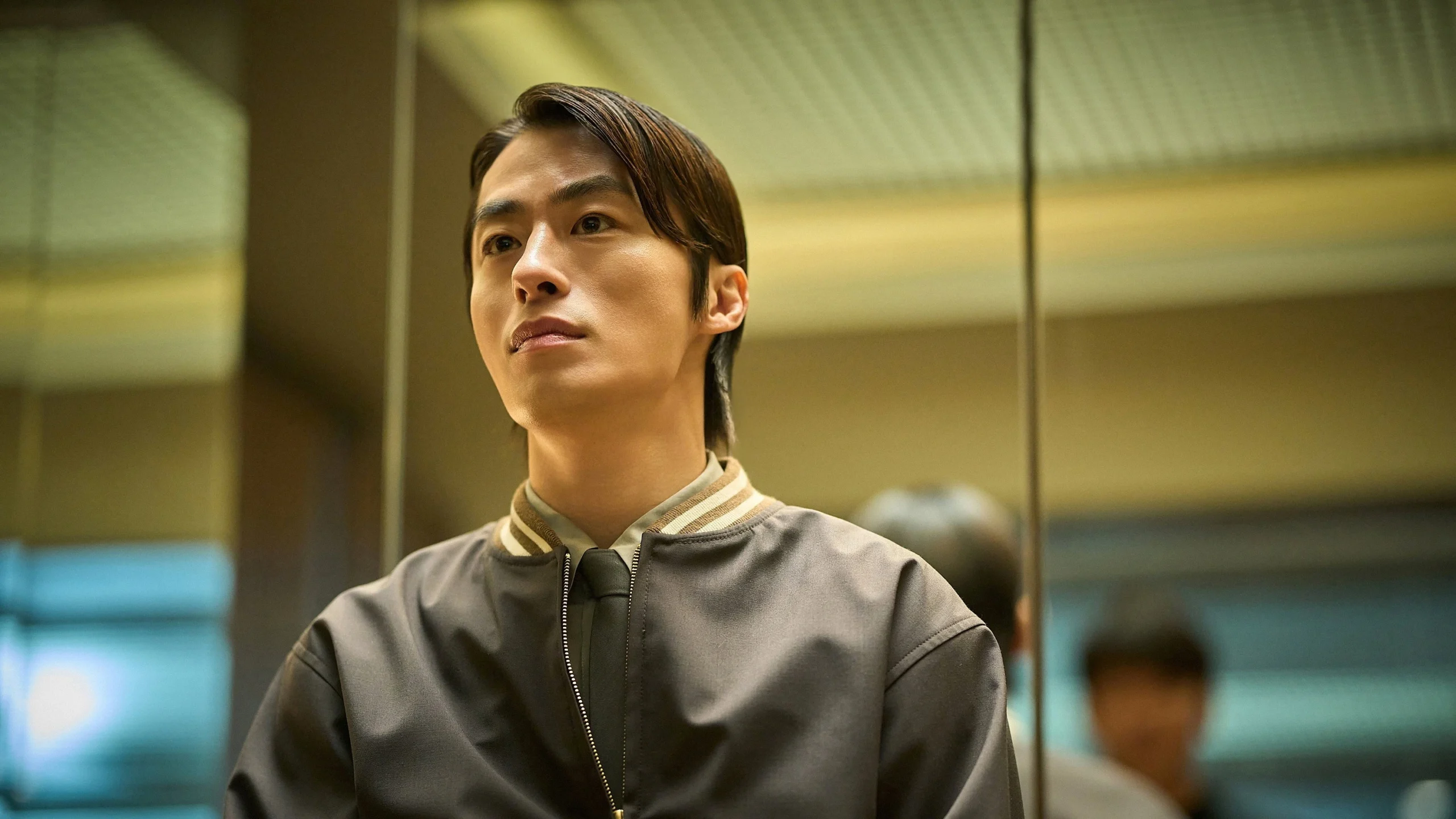
The turning point comes at a large biotech industry conference — the kind of event where professionals network, present optimistic findings, and project the image of expertise. Without warning, an outbreak erupts inside the facility. A rapidly mutating virus begins spreading through the building, and the authorities’ immediate response is not evacuation but sealing: they lock the doors, turn the conference venue into a containment zone, and leave everyone inside — scientist, minister, staff member, attendee — trapped together. The building that was meant to represent progress becomes a symbol of its limits in the span of a single decision.
The moral pressure Colony generates is specific and uncomfortable. This is not simply a survival story — it is a film about what happens to professional identity when the frameworks that define it fail completely. Se-jeong is trained to observe, hypothesize, and act within protocols. None of those protocols account for a situation where the infected keep mutating in unpredictable directions and where saving one person may expose others to accelerating danger. Every decision she makes carries weight because the cost is immediate and the calculation is impossible. The film is interested not just in whether people survive, but in what they have to become in order to.

The characters surrounding Se-jeong are not just survival obstacles — they are different kinds of pressure. Seo Yeong-cheol brings a directness that cuts through professional courtesy the moment it becomes a liability. Choi Hyeon-seok operates from protective instinct, which creates its own form of conflict when instinct and strategy diverge. Choi Hyeon-hui adds an emotional register that complicates the film’s otherwise clinical tone. Kong Seol-hui and Han Gyu-seong complete a group where every relationship is being stress-tested in real time by people who, days earlier, were exchanging business cards. What makes the ensemble work is that no one is purely rational or purely reactive — they are all compromised in different ways by what they know, what they feel, and what they cannot afford to feel.
What sets Colony apart from comparable Korean outbreak thrillers is the compression of its setting. Where films in this genre often spread their crisis across space — cities, highways, moving vehicles — Colony narrows everything to a single architectural structure and refuses to open it up. That spatial choice forces the film to generate tension through density rather than velocity. The confined environment means the infected are never far away, eliminating the release valve that distance usually provides in disaster cinema. Colony treats the building itself as part of the threat: every corridor, every sealed exit, every locked utility room is a character in a story that has nowhere to go but further in.
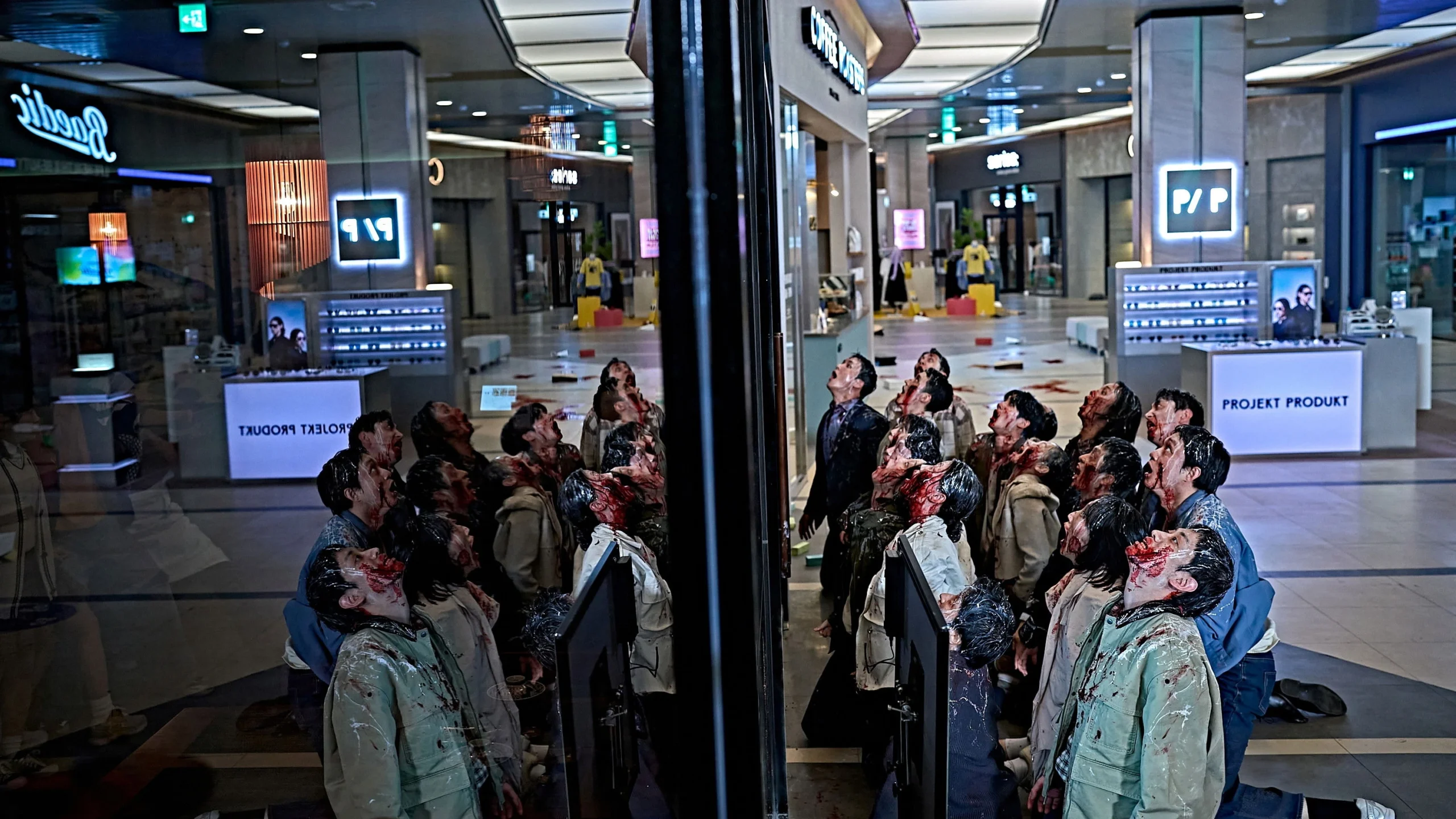
The film has the cold, precise finish of a medical procedure being performed in failing light. Director Yeon Sang-ho shoots the early conference scenes with the kind of clean visual grammar that makes everything feel operational and professional — and then systematically degrades that grammar as the outbreak takes hold. The pacing is relentless in the way that sealed spaces produce relentlessness: not through spectacular set pieces, but through the accumulation of small impossibilities. Quiet moments exist in Colony, but they feel borrowed rather than earned. The film does not allow genuine relief — only intervals that recharge the next wave of dread before it arrives.
Yeon Sang-ho built his reputation on stories about what Korean modernity looks like under pressure. Train to Busan was about a country in transit, both literally and socially, being overrun by something it had no language for. Colony moves in a different direction: it places the outbreak inside an institution that is explicitly designed to represent expertise and progress, which gives the disaster a more targeted and unsettling anxiety. The biotech setting is not incidental — it is the film’s argument that institutional authority creates vulnerabilities as surely as it creates defenses. For Korean audiences in 2026, watching a gathering of professionals lose control of a building built to represent control carries a resonance that extends well beyond the genre.
🏁 Ending Explained
Full spoilers ahead — what happens, what it means, and what Colony is really about.
Full Spoilers Ahead — This section covers the complete ending of Colony. Stop here if you haven’t watched.
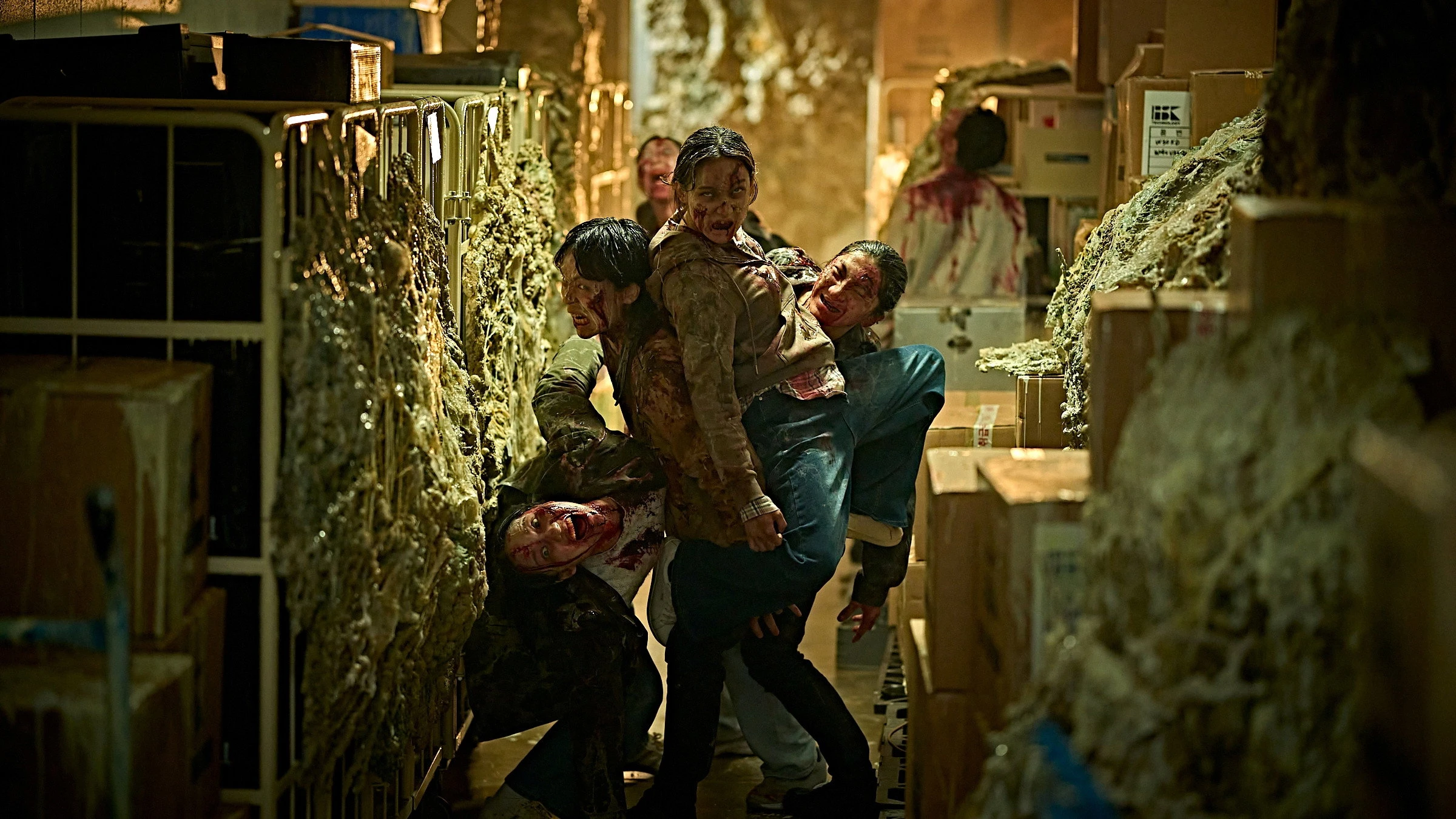
The facility reaches its terminal state — and containment proves to be the illusion it always was. As the outbreak escalates to its final phase, the mutating virus has advanced far beyond what any emergency protocol was designed to manage. The infected are no longer recognizable as a single coherent threat — their continued transformation has made prediction impossible and defense increasingly personal rather than systemic. Se-jeong and the remaining survivors are forced to move through a structure that is now actively working against them: the same sealed architecture that was imposed to prevent the virus from spreading has created the conditions for it to intensify. The building’s own logic — containment, isolation, control — has become the mechanism of maximum damage.
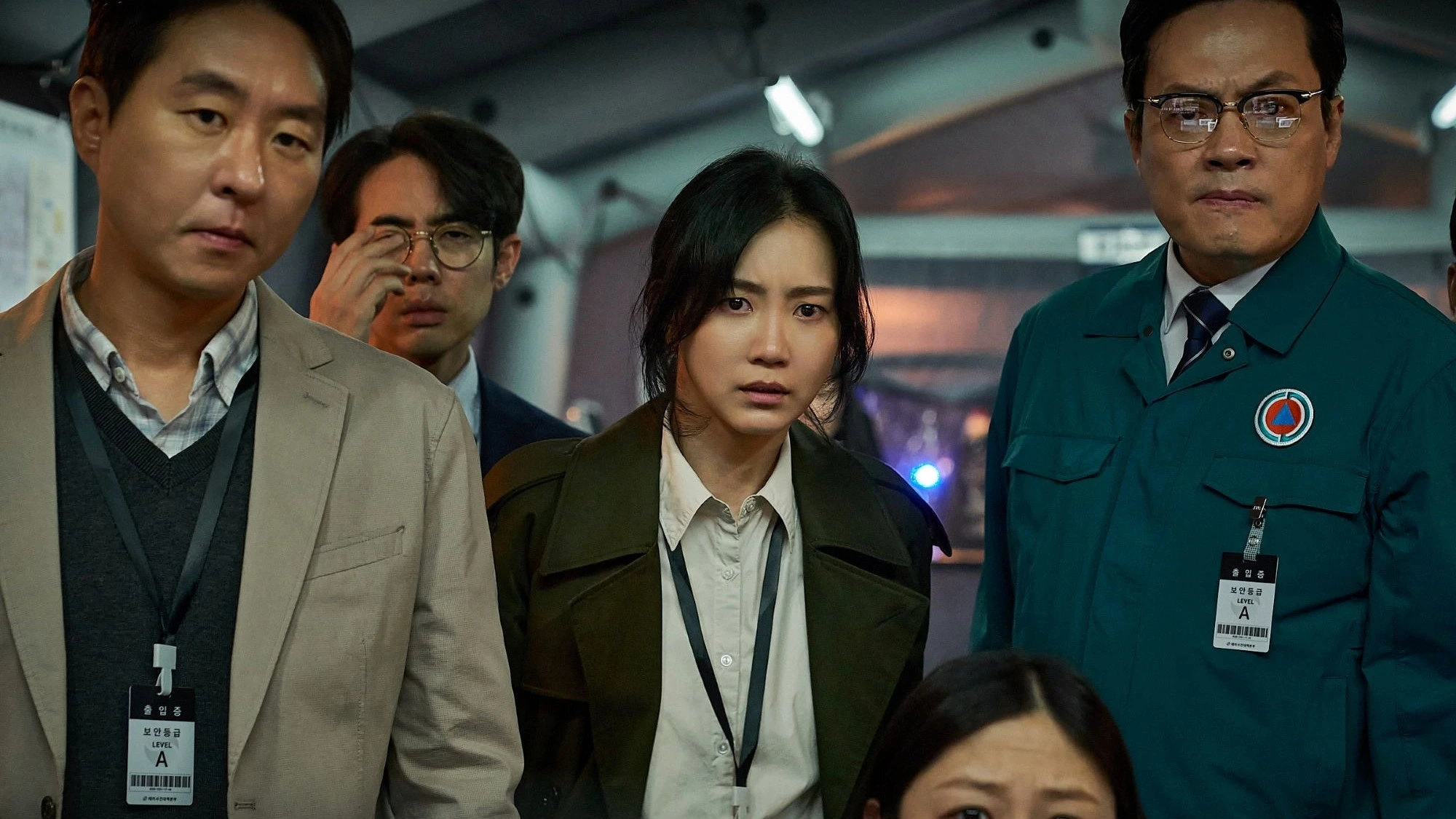
The film’s ending is designed to argue that containment is a form of denial. The sealed facility, which began as a professional environment projecting scientific authority, ends as a demonstration of what happens when that authority commits fully to its own logic even after the logic has failed. Se-jeong’s survival — whatever form it takes — is not a validation of scientific method. It is a demonstration of how far personal instinct and improvisation outperform institutional protocol when systems designed to protect people become the thing trapping them. The resolution shifts the film’s emotional weight from the setting to the individuals inside it, and arrives at a conclusion that is more indictment than triumph.
Three readings of the film’s conclusion are in circulation. The first treats Se-jeong’s actions as an argument for human adaptability — that expertise matters less than the willingness to abandon it when it stops working. The second reads the ending as genuinely pessimistic: no one who made it out of the building left unchanged, and the virus’s continued mutation implies the crisis is not contained so much as temporarily displaced. The third interpretation is the most unsettling — that the film implicates the audience’s own comfort with institutional trust. The facility was supposed to be safe. Experts were supposed to have answers. The ending makes clear that neither premise was ever more than a collective agreement not to look too closely at the foundations.
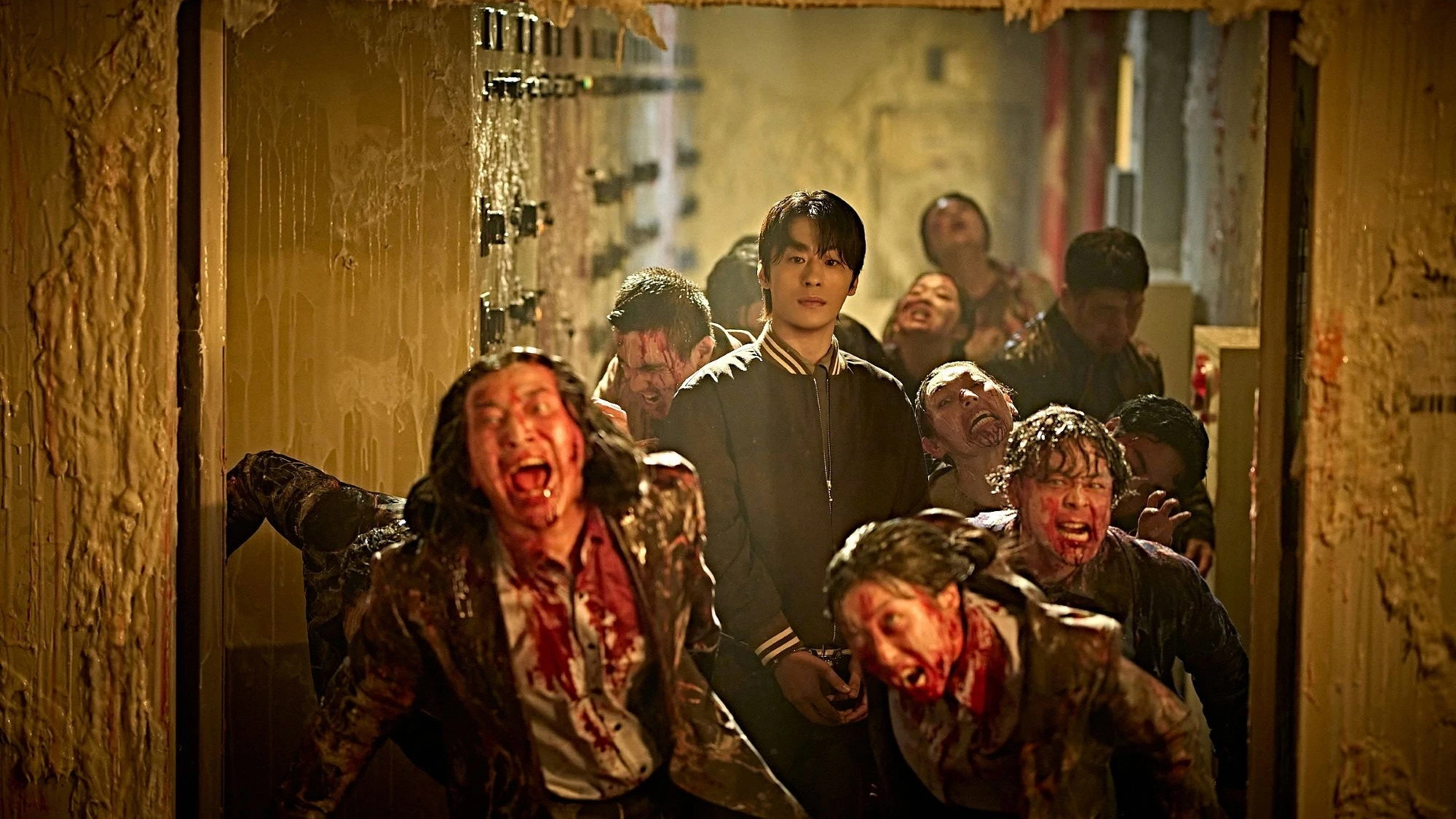
The KDW verdict: the survival-as-illusion reading is the one Colony earns. Everything in Yeon Sang-ho’s filmmaking — the cold visual register, the degraded trust between characters, the mutating threat that never stabilizes into something manageable — points toward a director who is less interested in whether people escape than in what the escape costs them. Colony does not celebrate its survivors. It presents their continuation as the only available outcome in a situation that was never designed to produce good endings. The virus was never the film’s real subject. The film’s real subject is what we build to protect ourselves, and the precise moment those structures begin protecting us from the truth instead. When the building sealed, it wasn’t keeping the danger in. It was keeping the certainty out — and Colony ends by refusing to give it back.
✍️ KDramaWorlds Editor’s Take
Our honest read on why this film is worth your time — and who it’s for.
Yeon Sang-ho
Known for: Train to Busan (2016) · Peninsula (2020)
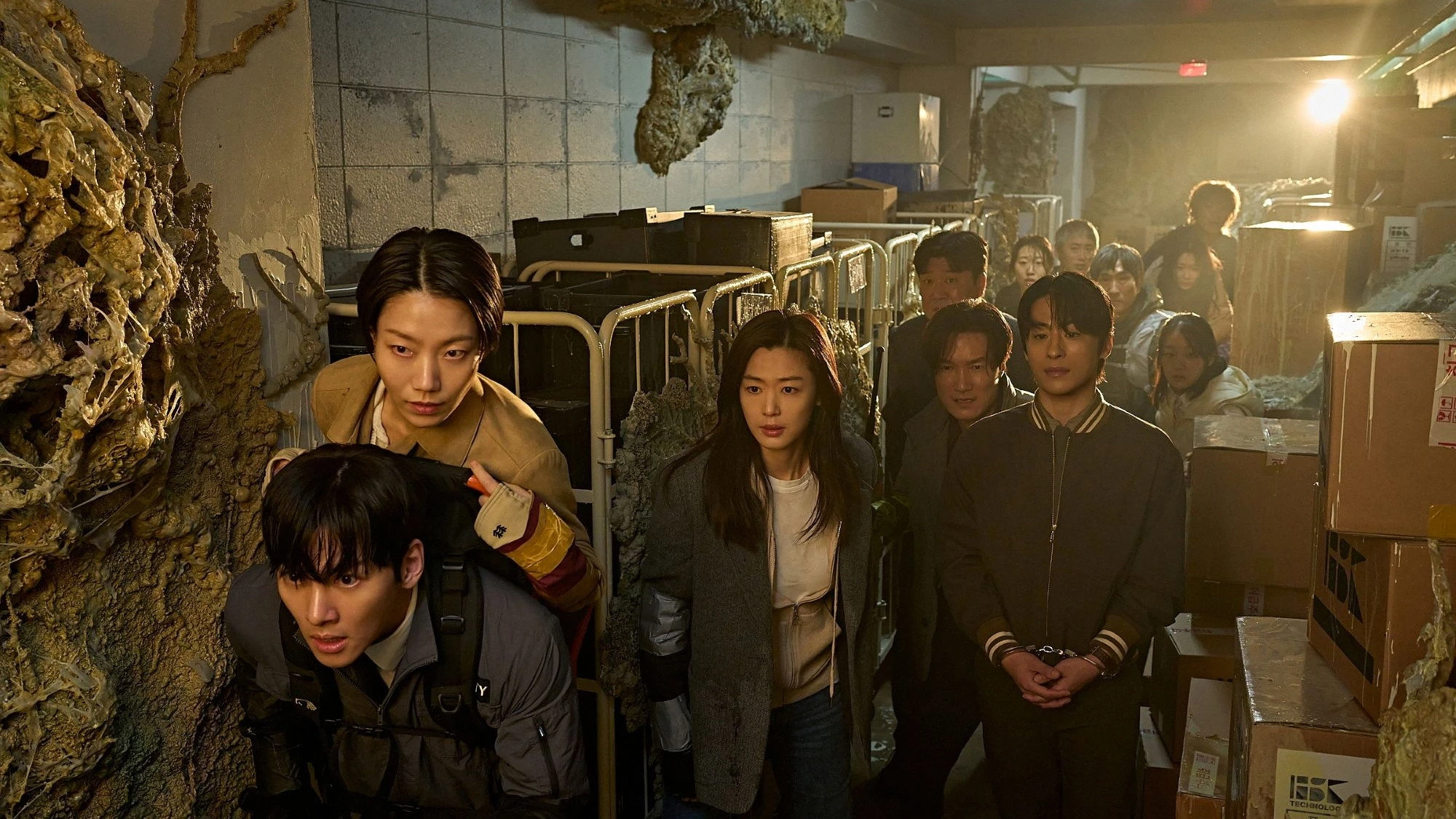
Gianna Jun is the reason Colony works as something more than a technically accomplished genre exercise. She has spent decades building one of the most precisely calibrated screen presences in Korean cinema — the kind of star quality that operates through restraint rather than display. What Yeon Sang-ho does with that quality here is intelligent: he positions her not as a superhero of scientific competence but as someone whose specific training makes her simultaneously the most equipped person in the room and the most trapped by her own frameworks. The gap between what Se-jeong knows and what the situation requires her to accept is where Colony’s most interesting work happens. Jun navigates that gap with controlled restraint that reads as authority until it very quietly cracks — and the cracking is the film’s best scene.

Yeon Sang-ho’s decision to confine Colony to a single location reveals something about where his filmmaking instincts are evolving. Train to Busan moved — it was a film about momentum and the attempt to outrun catastrophe across the length of a country. Colony removes that option entirely. The enclosed setting forces every scene to generate tension through proximity rather than propulsion, which is a more demanding structural challenge and, when it works, a more suffocating one. The shift from the polished early conference scenes to the degraded visual grammar of the outbreak is precise and deliberate. Yeon is not making a sequel to his earlier sensibility — he is asking what happens when you seal the exits and remove the possibility of running. For viewers who want to see how that instinct played out in a different format, his work as producer on All of Us Are Dead showed he understood enclosed outbreak dynamics before Colony gave him the feature canvas to push them further.
The film’s most significant achievement and its most significant limitation are the same quality: Colony does not breathe. The relentlessness is a deliberate feature rather than a structural gap — Yeon is not forgetting to include relief, he is refusing to provide it. Some viewers will find that decision thrilling, an experience that maintains its tension without flinching. Others will feel the absence of quiet as a cost rather than a choice, and they are not wrong to feel that way. Ji Chang-wook’s Choi Hyeon-seok is the film’s most useful barometer here: he performs protective instinct with the physical conviction that has become his signature across very different genres — and in a film this compressed, that performance either reads as essential pressure or tips into relentlessness depending entirely on your tolerance for films that never let you settle. His range across genres is on full display in our guide to Bad and Crazy, which shows how different his instrument sounds in a completely different register.
Gianna Jun completists — she carries this film through its most demanding stretch
Anyone who wants their outbreak thriller to ask harder questions than survival
Late-night solo viewing — Colony rewards dark rooms and full attention
🎬 You Might Also Like
If you liked Colony, these are your next three watches.
 Gyeongseong Creature (Season 1)
body horrorHan So-hee
Read Full Review →
|
 Shin's Project
Bae Hyeon-seongBlack Comedy
Read Full Review →
|
 The Tyrant
action thrillerantihero
Read Full Review →
|














Keep it kind, skip the harsh language, and please — no spoilers. Everyone's taste is different, and that's perfectly fine.
This space is for real reactions and discussion from other viewers. Help keep it comfortable for everyone by not giving away major plot details.
1 Comment
Trapping a room full of scientists, ministers, and staff inside a sealed conference facility with a rapidly mutating virus is such an efficient way to turn a professional gathering into a survival nightmare 🧫 — and starting with Se-jeong’s quiet confidence that science equals control makes her eventual loss of that control land harder. Curious what everyone thought was the film’s most unsettling turn.
What do you think of this drama?
Login to share your review or leave a comment.
No email needed — just pick a username & password.