
Pretty Crazy
🎬 Film Overview
Seon-ji is a bright and cheerful aspiring pastry chef who harbors a secret she herself is completely unaware of — every night, without fail, she transforms into a wild and unruly she-devil. Her family, desperate to manage her nocturnal alter ego, hires Gil-gu, their clumsy and unemployed neighbor, to babysit her through the dangerous midnight hours. As Gil-gu falls deeply in love with the warm and gentle daytime Seon-ji, he finds himself entangled in something far stranger than a simple odd job — drawn into an extraordinary midnight romance as he sets out to unravel the supernatural curse and help both versions of Seon-ji find their way to a shared future.
⚡ Quick Verdict
The short version — everything that matters, boxed up.
· IMDb
· 7.6 / 10 MDL
▶ Official Trailer
🎭 Cast & Characters
Twelve performances across 115 minutes of supernatural romance.

Lead

Lead

Supporting

Supporting

Supporting

Supporting

Supporting
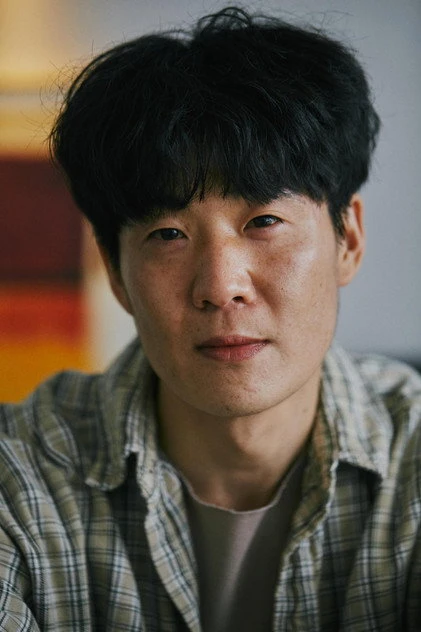
Supporting

Supporting

Supporting
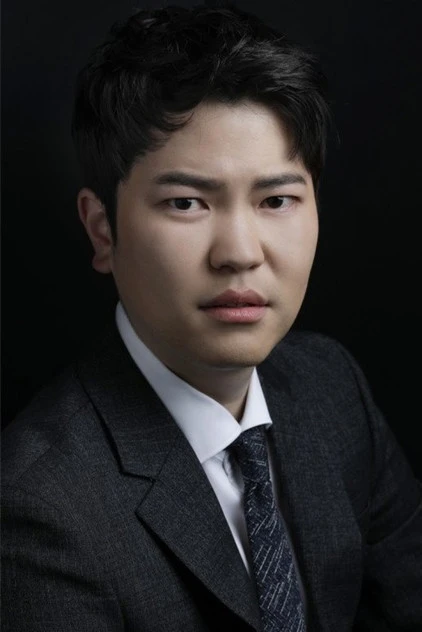
Supporting

Supporting
📖 The Story
Spoiler-light. Everything you need to know before you watch — nothing you don’t.
Seon-ji is exactly the kind of person people gravitate toward without knowing why — warm-voiced, flour-dusted, and quietly dedicated to the craft of pastry-making. She lives in a modest apartment building and spends her days refining recipes, nurturing her dream of becoming a proper pâtissier, and earning the trust of the people around her. She is, by all visible accounts, a perfectly ordinary young woman with a perfectly ordinary life. The gap between that image and who she becomes after midnight is the engine that drives everything in this story.
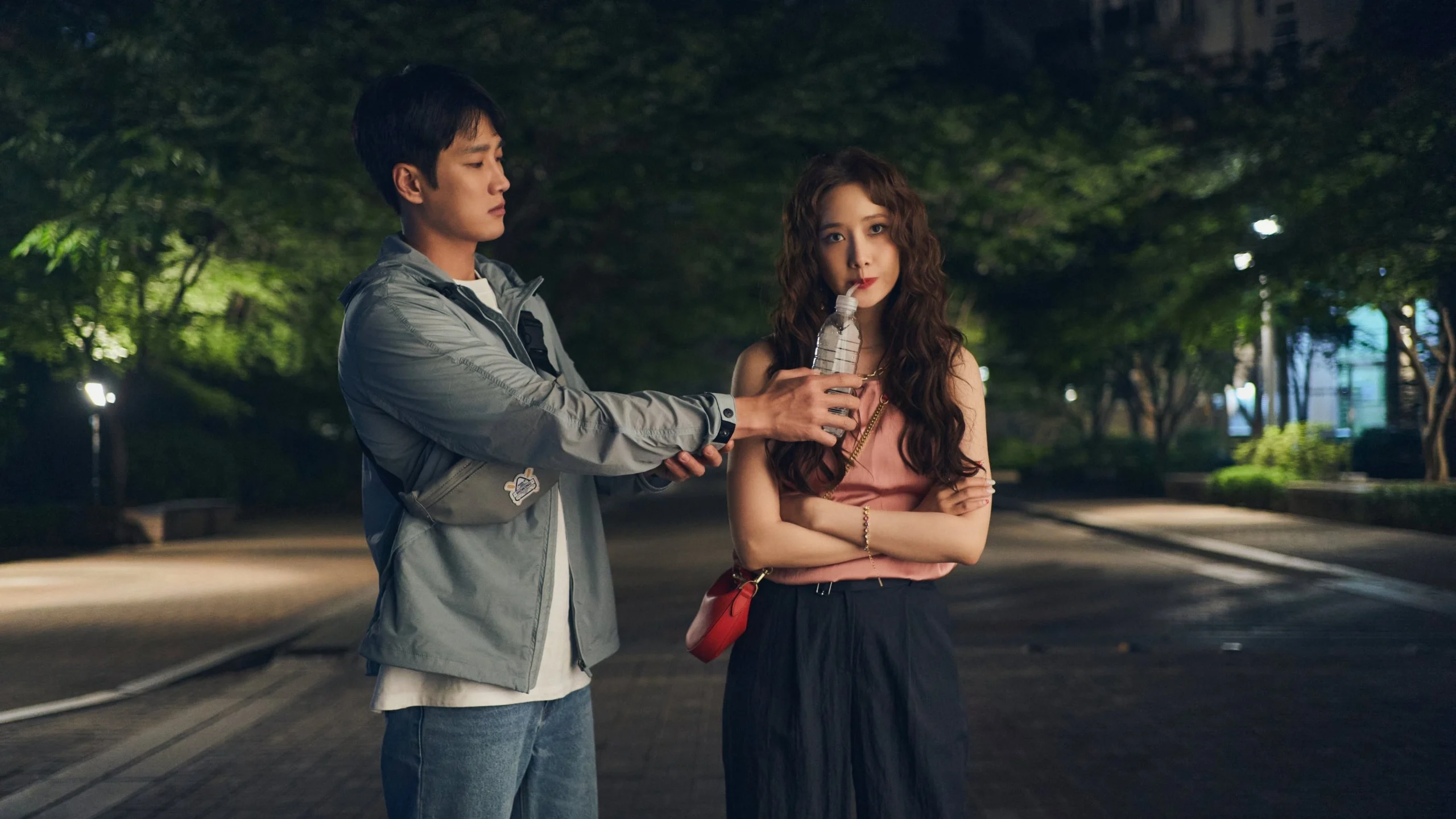
One night at 2 a.m., when the rest of the building is asleep, the downstairs neighbor Seon-ji collides with the upstairs neighbor Gil-gu in the building’s stairwell — except this is not the Seon-ji he will meet by morning. She is sharp-tongued, unfiltered, and radiating a chaotic energy that is more creature than person. Gil-gu, freshly unemployed and half-asleep, has no framework for what just happened. He is then approached by Seon-ji’s family with an offer: watch her at night, keep her safe, say nothing. For a man with no job, no plan, and an apartment full of crane-machine plush toys, it is an offer he cannot rationally refuse.
At its core, Pretty Crazy is about the terrifying possibility of loving someone you do not fully know — and whether that love can survive the parts of them they cannot control. Gil-gu finds himself in an impossible emotional bind: the daytime Seon-ji is the woman he is falling for, completely unaware of her own secret. What is emotionally at risk is not just Gil-gu’s heart, but Seon-ji’s sense of self: what does it mean to be “you” when you only own half of your own hours? The stakes are not plot mechanics — they are a question about identity that the film refuses to answer cheaply.
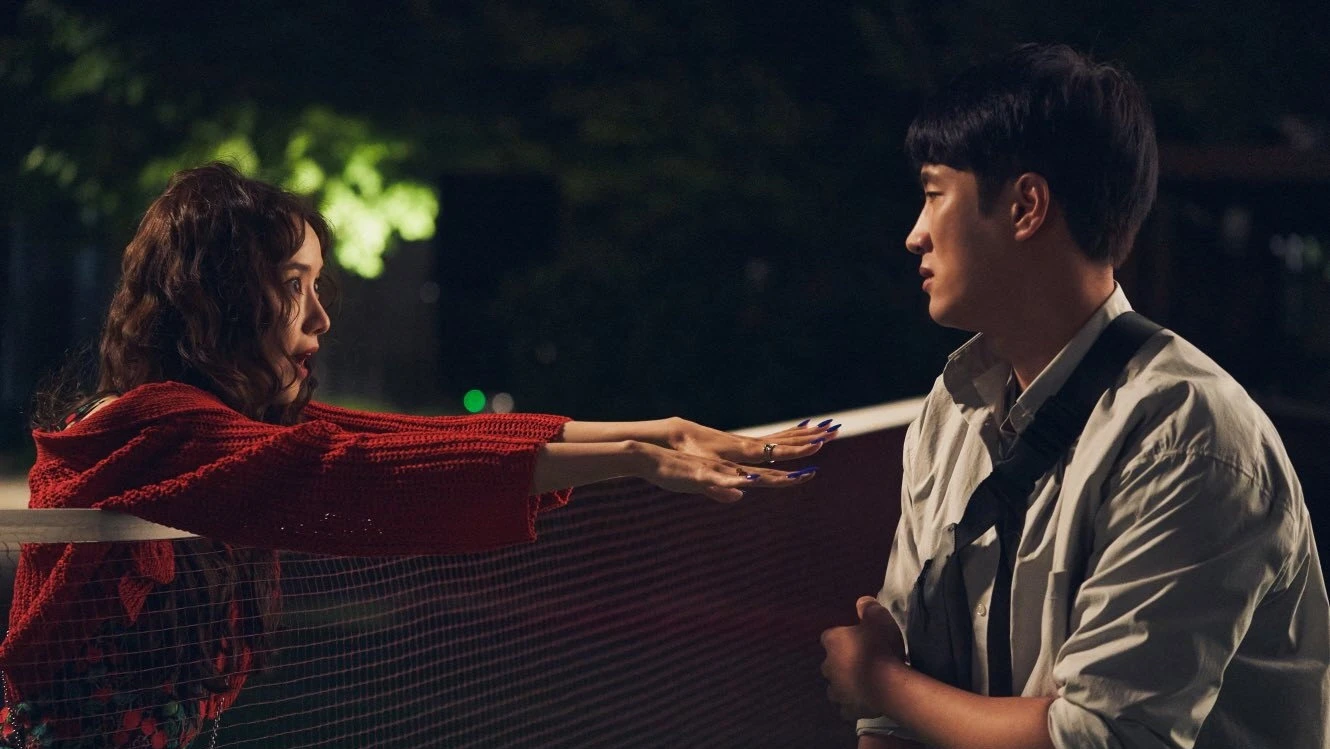
Seon-ji’s father, Jung Jang-su, is not a villain in this story — he is a parent carrying a burden he did not choose and a secret he cannot explain away. He hired Gil-gu not out of cruelty but out of exhaustion, and their dynamic is quietly one of the more layered relationships in the film. Seon-ji’s cousin Ah-ra brings a different kind of energy — she is observant in the way only someone close to you can be, and she senses that whatever is happening between Gil-gu and Seon-ji is more than a professional arrangement. Gil-gu’s friend Hee-beom serves as a grounding voice and a comedic foil, pulling the film back toward lightness whenever the supernatural stakes threaten to tip into melodrama.
What separates Pretty Crazy from the crowded field of Korean supernatural romances is that neither version of Seon-ji is presented as the “real” one and the other as the problem to be solved. Most films in this mold treat the alternate personality as a curse to be lifted, a shadow to be vanquished. This film resists that simplicity. Gil-gu’s journey is not just about breaking a spell — it is about recognizing that both versions of the woman he loves deserve a future, and that love which only accepts the convenient half of someone is not really love at all. That is a more honest question than most films in this genre are willing to ask.

Pretty Crazy moves the way a good summer should — warm and loose in the daylight, stranger and more electric after dark. Director Lee Sang-geun, who previously helmed the crowd-pleasing disaster comedy Exit with Im Yoon-ah, brings a similar instinct for physical comedy and crowd-pleasing setpieces, but threads in a genuine emotional undercurrent that keeps the film from floating away entirely. Im Yoon-ah’s dual performance is the film’s greatest technical achievement: her daytime Seon-ji and nighttime Seon-ji share the same face but almost nothing else, and the contrast is played for laughs without ever becoming a caricature. The film feels bright and propulsive, punctuated by genuinely surprising nocturnal sequences that carry a slightly darker edge — not horror, but a kind of delicious unease that makes you lean forward.
The concept of a person harboring an unseen, uncontrollable inner force — whether framed as a curse, a spirit possession, or a supernatural inheritance — has deep roots in Korean folk tradition and has been reworked through Korean cinema and drama across decades. Pretty Crazy draws on this mythology lightly, using it as a romantic premise rather than a cultural thesis, but the cultural legibility of the “cursed family” trope gives the film a warmth and familiarity for Korean audiences that helps sell its more absurd comedic beats. For international viewers, the tradition reads easily as a fairy tale structure — beauty and the beast inverted, with the monster living inside the heroine rather than across the forest. The film trusts that structure enough not to over-explain it, which is the right call.

🏁 Ending Explained
Full spoilers ahead. Read only after watching.
What literally happens in the finale. As Gil-gu digs deeper into the origins of Seon-ji’s curse, it becomes clear that the transformation is tied to a generational family secret that Jung Jang-su has been protecting — and partially responsible for sustaining. The curse is ultimately confronted directly rather than worked around: Seon-ji is made aware of her nighttime self, forcing her to reckon with both identities as parts of herself rather than a split to be managed. Gil-gu’s decision to remain by her side — not as a watcher hired by her family, but as someone who has chosen her — becomes the emotional catalyst that the film has been building toward since the stairwell encounter. The curse is resolved not through a magical fix but through a combination of family honesty, Seon-ji’s own acceptance, and the grounding force of Gil-gu’s love.
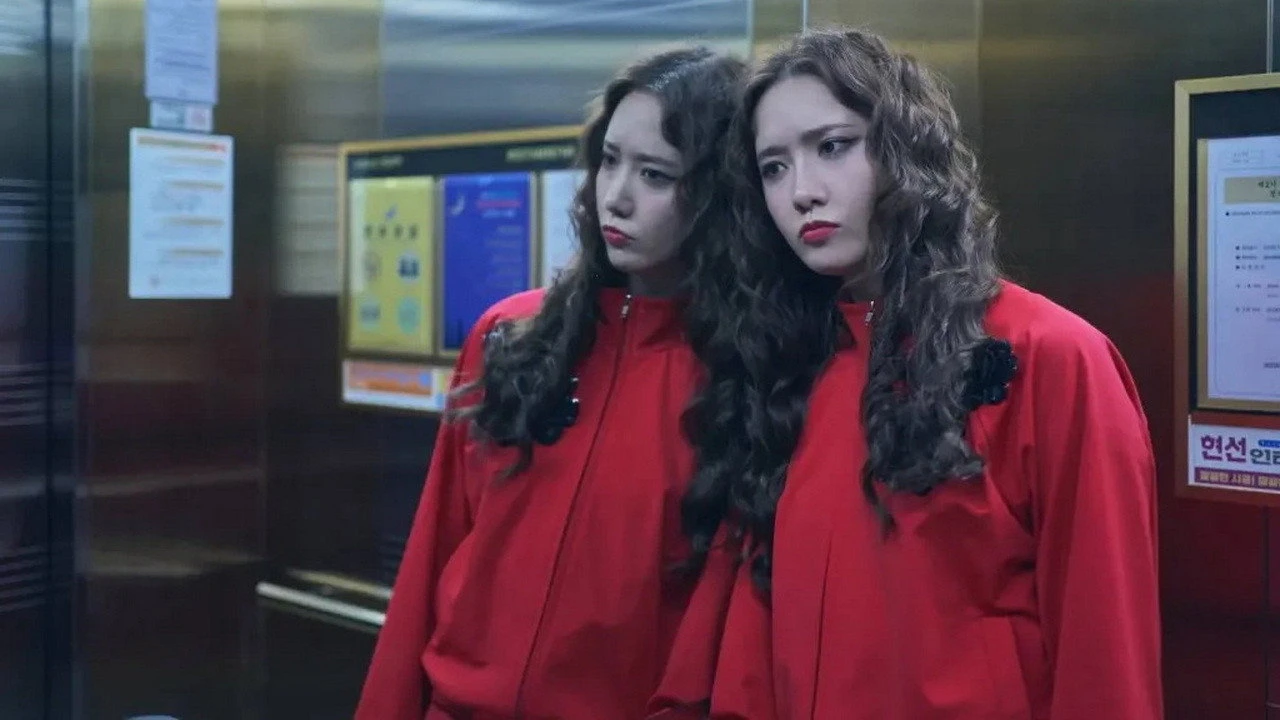
What it means. The film ends this way because its central argument was never really about a curse — it was about self-acceptance mediated by love. Seon-ji could not confront her nighttime self until someone else had already seen it and chosen not to run. Gil-gu’s role in the ending is not to be the hero who lifts the spell; it is to be the witness who makes it safe for Seon-ji to stop hiding from herself. The ending is saying that healing is only possible when shame is replaced by being genuinely known — and that love which requires someone to be only their best half is conditional love, not real love.
Unanswered questions and competing theories. The film is deliberately vague about the precise mechanism of the curse’s resolution. One reading suggests nighttime Seon-ji still exists but is now harmonized — she is no longer uncontrollable because she is no longer suppressed. Another reading takes the ending at face value: the curse is fully broken and the transformation ceases entirely. A third interpretation, and the film’s most psychologically interesting one, questions whether the “nighttime self” was ever supernatural at all — or whether it was a psychological dissociation rooted in family trauma that simply manifested in extraordinary ways.

The KDW verdict: the integration reading is strongest. The film consistently treats nighttime Seon-ji as a real person with her own reactions and desires, not merely a symptom. To end the film by erasing her entirely would contradict the emotional arc the screenplay builds so carefully. The ending works because it does not require either version of Seon-ji to lose — it requires them to find each other, with Gil-gu as the unlikely bridge. Pretty Crazy argues that the people we are in the dark are not our enemies — they are the parts of us still waiting to be loved.
The rewatch recontextualization. On a second viewing, the moments where daytime Seon-ji reacts with inexplicable unease around Gil-gu early in the film carry new weight — she is sensing a familiarity she cannot explain, because her nighttime self already knows him. Small gestures and instinctive reactions that read as comedic quirks the first time reveal themselves as the two selves bleeding through, long before the film acknowledges it narratively. The film is smarter about this than it initially appears.

✍️ KDramaWorlds Editor’s Take
Worth the watch? Our honest answer, and who it’s aimed at.
Lee Sang-geun
Known for: Exit (2019) · Pretty Crazy (2025)
Im Yoon-ah has spent her career navigating the gap between idol star and credible actress, accumulating evidence that she is more capable than her detractors allow. Pretty Crazy is the film that makes the argument most clearly. The dual performance required here is not a gimmick — it is a genuine acting problem with no cosmetic solution. Daytime Seon-ji and nighttime Seon-ji share a face, a body, and a wardrobe, but nothing else: posture, vocal rhythm, eye contact, the precise tension held in the jaw. Im Yoon-ah makes them feel like genuinely different people without ever losing the throughline that connects them. That is harder than it looks, and she makes it look easy, which is the best kind of hard.

The film’s greatest achievement is also its most deceptive one: it looks like a crowd-pleasing summer comedy, and it is, but it is also quietly asking a question that most romantic films never bother to pose. What if the person you love is not always the person you know? Most love stories resolve this by revealing that the “other” version was never real — a disguise, a phase, a test overcome. Pretty Crazy refuses that comfort. Both versions of Seon-ji are real. Both have desires. Both deserve to exist. The film insists on this so consistently that the ending cannot possibly take either version away, and it doesn’t. Lee Sang-geun earns the warmth by being honest about what it costs.
The weakest link is Shin Hyun-soo’s character Yeong-sik, who occupies an unclear space in the story and never quite resolves into someone the film needs. Ahn Bo-hyun, by contrast, anchors the film’s emotional realism — he plays Gil-gu as someone responding to an impossible situation with plausible confusion rather than rom-com competence, and that specificity makes the love story land harder than the genre standard. The nocturnal sequences have real atmosphere. The comedy, when it fires, is physical and specific. The film is not perfect. It is, however, doing something worth doing. 115 minutes. A she-devil, a plush toy collector, and the question of whether you can love someone you’ve never fully met.
Anyone who wants to see Im Yoon-ah in her most demanding role to date
Summer watch with a lot of warmth and just enough strange
People who believe love should survive the inconvenient half of someone
🎬 You Might Also Like
If you liked Pretty Crazy, these are your next three watches.
 A Good Day to Be a Dog
curse
Read Full Review →
|
 Love In Sync
Emotional TransferenceL
Read Full Review →
|
 The Ordinary Jackpot
Dramafantasy
Read Full Review →
|













Keep it kind, skip the harsh language, and please — no spoilers. Everyone's taste is different, and that's perfectly fine.
This space is for real reactions and discussion from other viewers. Help keep it comfortable for everyone by not giving away major plot details.
1 Comment
A cheerful pastry chef who has no idea she turns into a wild she-devil every night is such a fun premise, but hiring the neighbor to babysit her through it — instead of anyone more qualified — is what actually makes it a rom-com 🧁 — falling for the daytime version while getting pulled deeper into the nighttime chaos is a great structural bind for Gil-gu to be stuck in. Curious how everyone felt the film balanced the comedy against the curse actually needing to be solved.
What do you think of this drama?
Login to share your review or leave a comment.
No email needed — just pick a username & password.