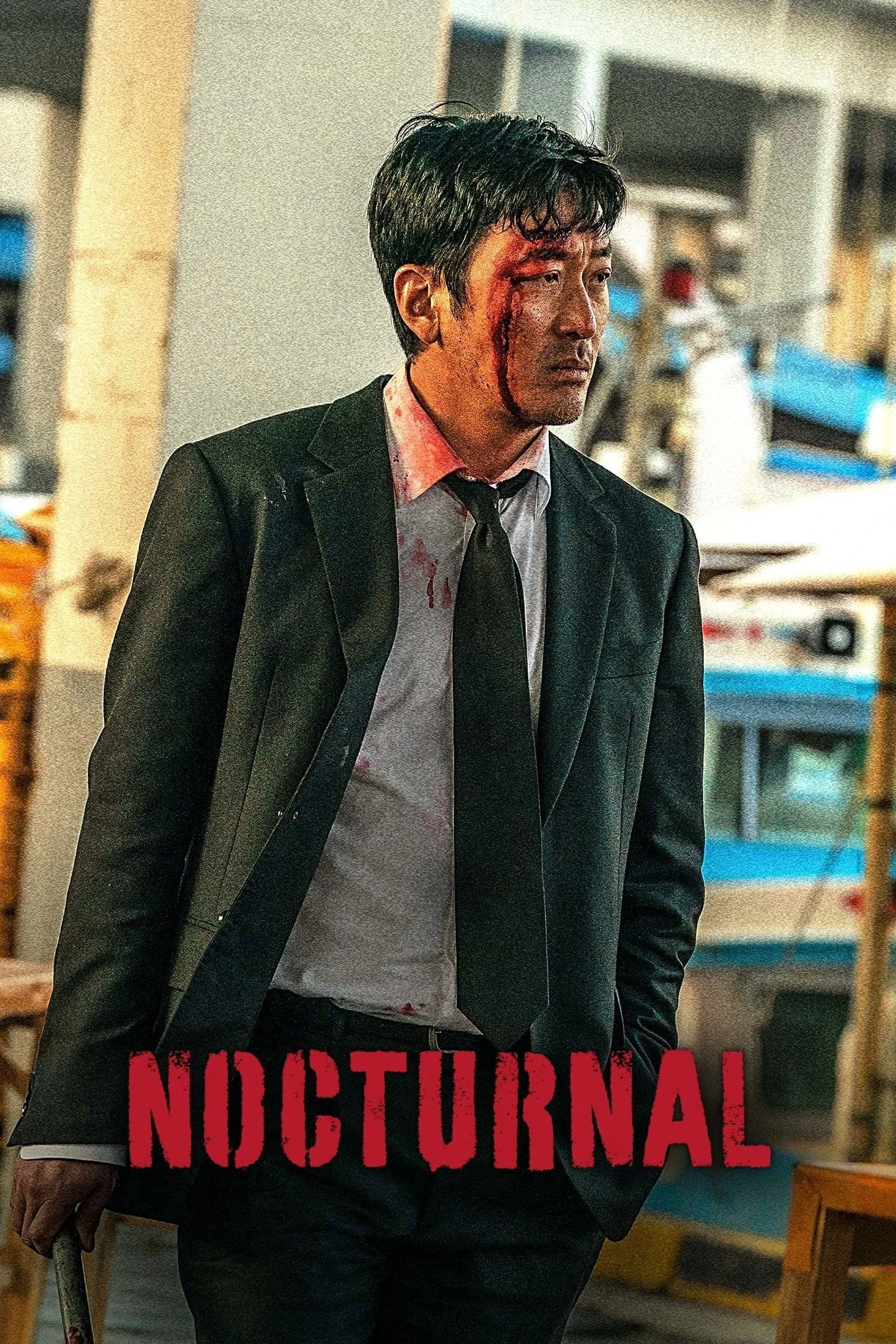
Nocturnal
🎬 VIU · Prime Video
⭐ 6.8 MDL
🔞 15+
🎬 Film Overview
NEO-NOIR PICK
Ha Jung-woo built his career on charisma that cuts through any genre, and Nocturnal gives him the kind of role he does best: a man of few words who says everything with his body. His Bae Min-tae is a former gangster who clawed his way to something resembling a normal life — construction work, silence, distance from everything that once defined him — before his brother’s murder drags him back into the darkness he thought he’d left for good. What makes the premise stick is its unusual meta-layer: a bestselling novel titled “Nocturnal” appears to have predicted the crime, turning what could have been a straightforward revenge thriller into something more unsettling, where fiction and violence have started bleeding into each other.
Kim Nam-gil is the counterweight — novelist Kang Ho-ryeong, who knows more than he’s saying, becomes Min-tae’s reluctant partner in the investigation, and their scenes together carry the film’s best tension. Director Kim Jin-hwang keeps the atmosphere appropriately bleak: a muted urban landscape where everyone has something to hide and nobody survives the truth unscathed. At 99 minutes, Nocturnal doesn’t outstay its welcome, though it occasionally rushes through revelations that deserved more room to breathe.
⚡ Quick Verdict
Here’s the verdict — no scrolling, no guesswork.
· MDL · 420 ratings
▶ Official Trailer
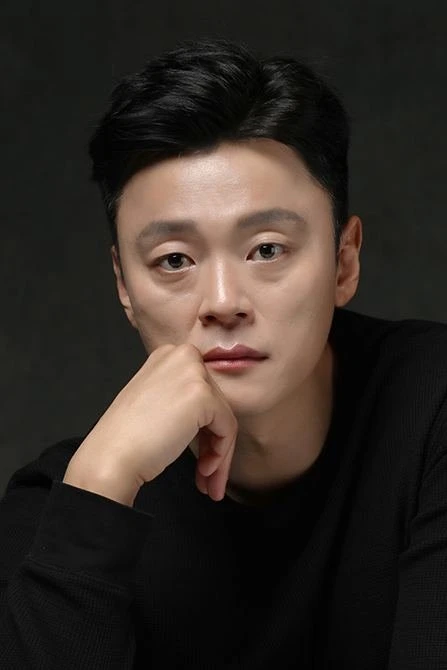
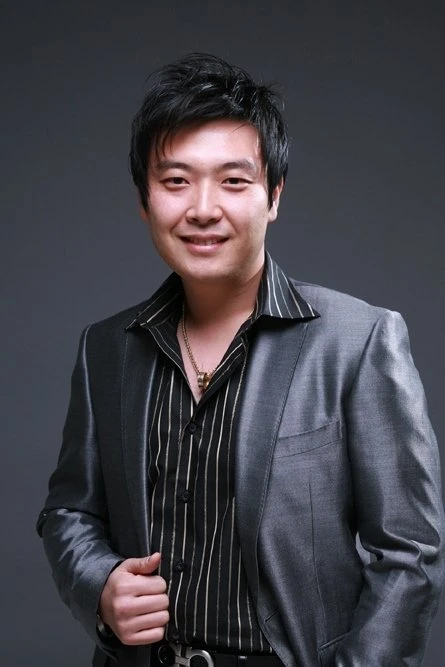
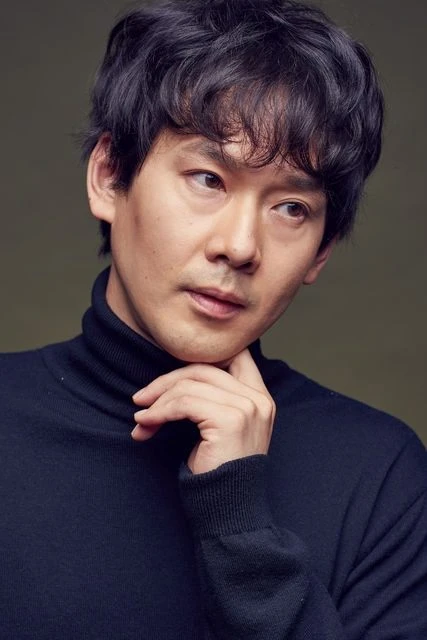
🎭 Cast & Characters
Two leads who do more with silence than most actors manage with monologues.

Lead

Lead

Supporting
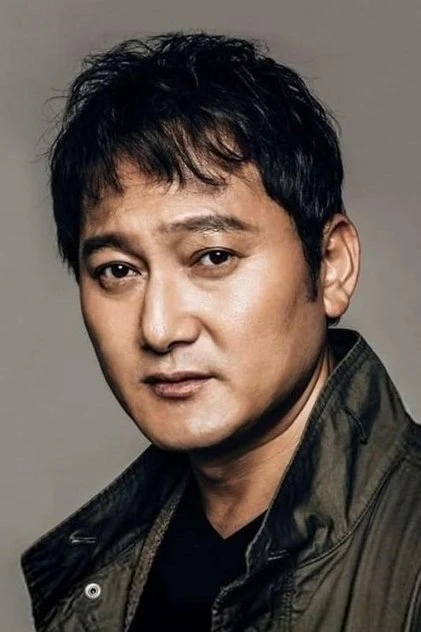
Supporting
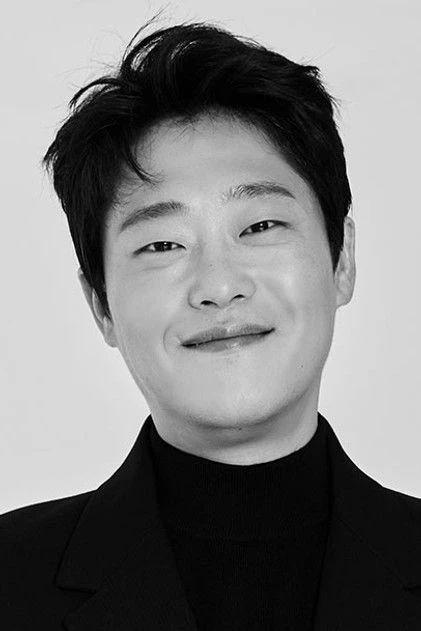
Supporting
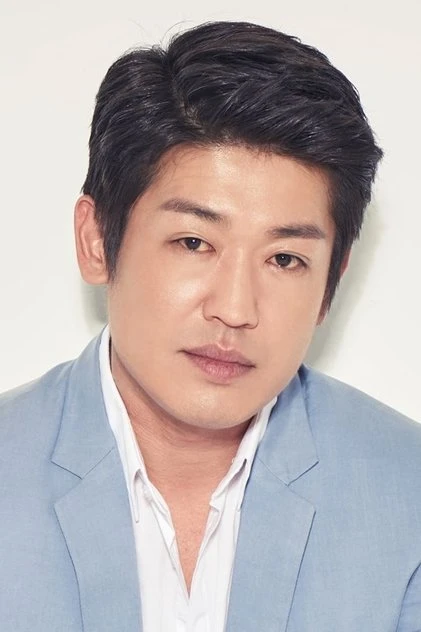
Supporting

Supporting
Supporting
Supporting
Supporting

Supporting

Supporting
📖 The Story
A quick, spoiler-free look at what you’re in for.
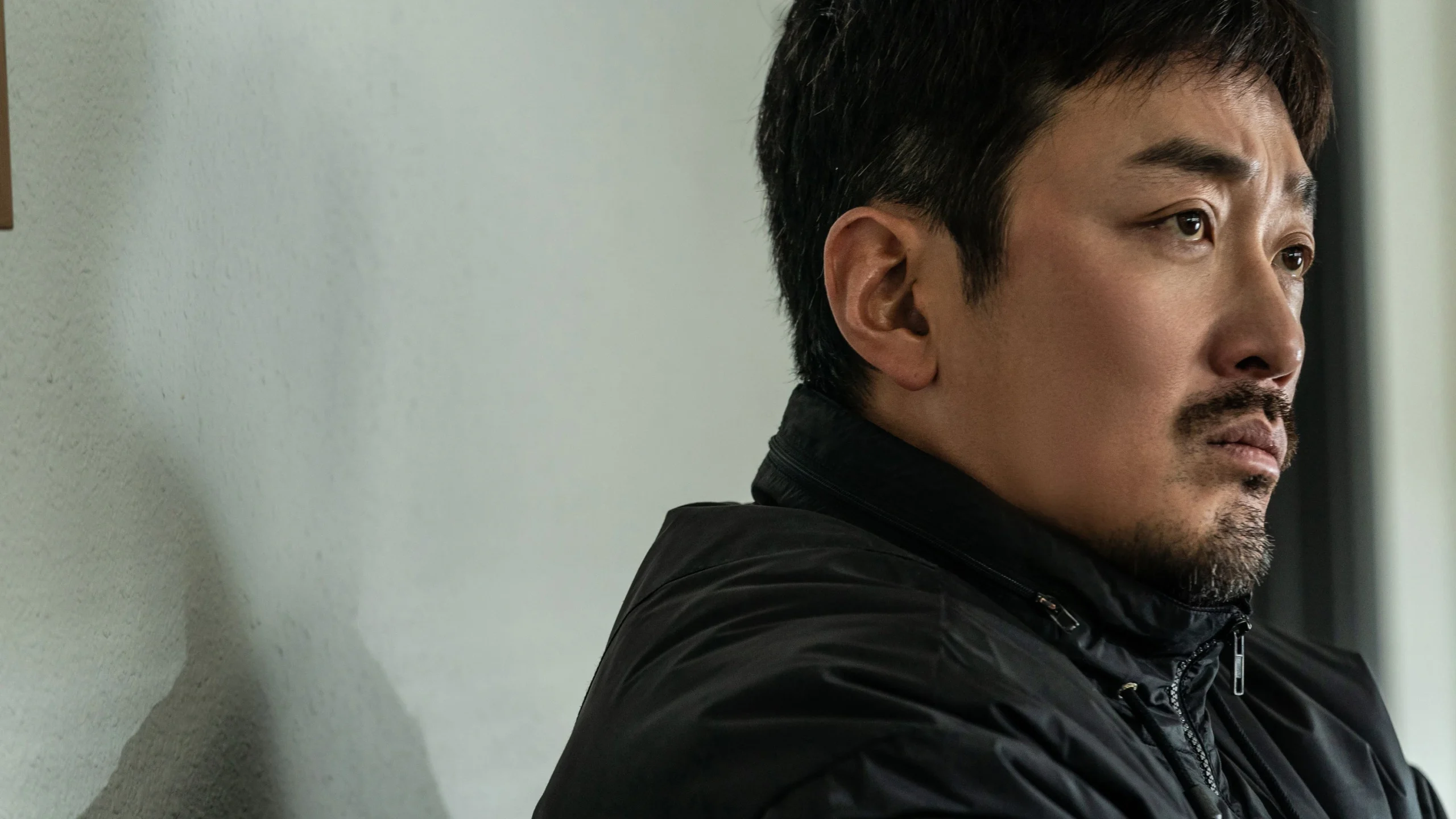
Bae Min-tae has spent years constructing a version of himself that has nothing to do with violence. A construction site, an honest wage, the simple discipline of showing up — this is what passes for peace when you’ve built a life out of deliberately forgetting everything you used to be. He’s not happy exactly, but he’s stable, and for a man with his history, stable is a kind of miracle. Then the phone call comes, and the miracle ends.
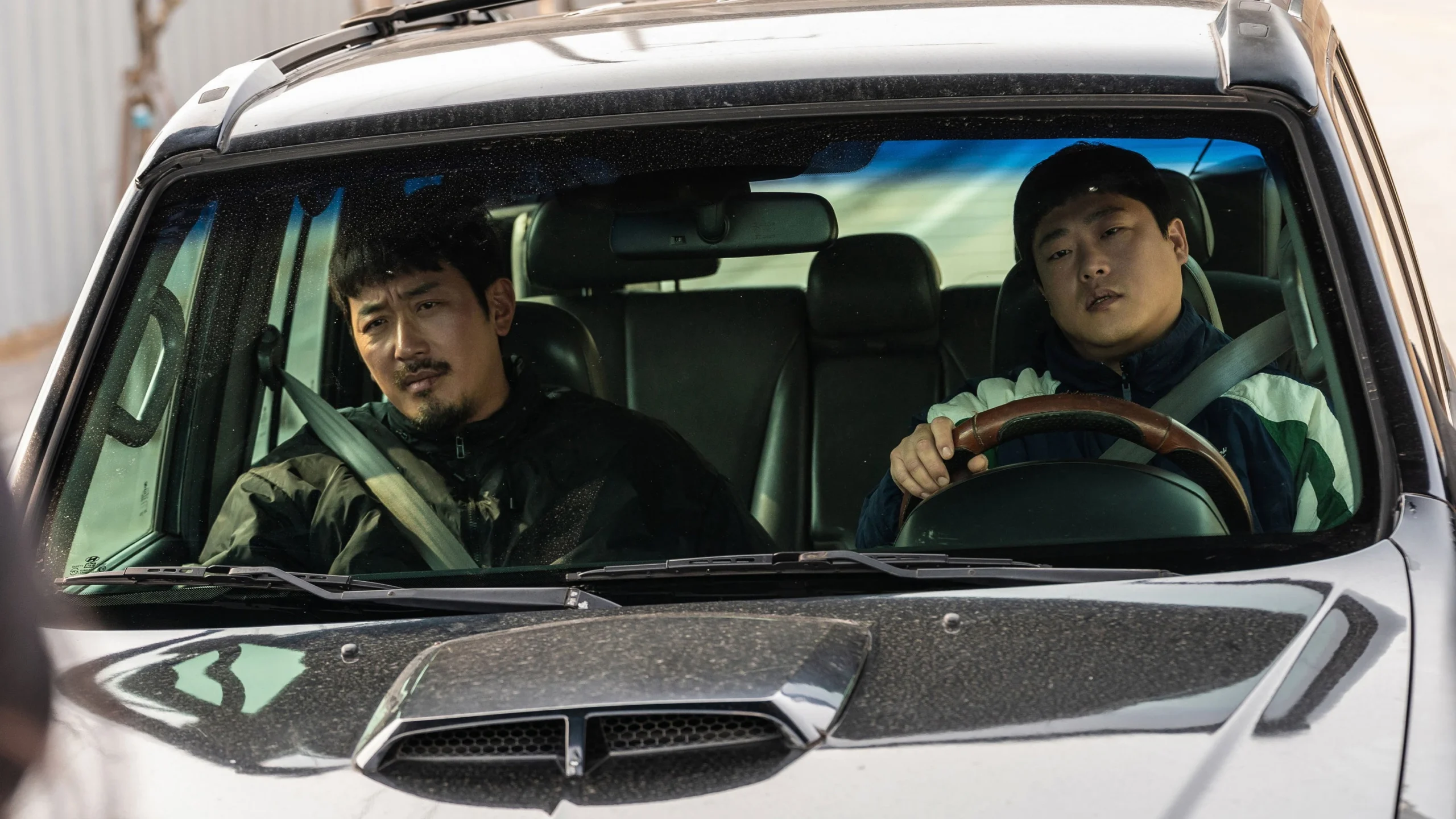
His younger brother Seok-tae is dead, found under circumstances that no official explanation has adequately described. What makes it worse: Seok-tae’s wife, Moon-young, has vanished. The police have an easy narrative — spouse as prime suspect — and they’re not inclined to look further. Min-tae knows better, or at least suspects better, and that suspicion is enough to turn grief into purpose. He starts asking questions nobody wants answered.
The investigation takes an unexpected turn when Min-tae discovers a bestselling novel called “Nocturnal,” written by the quietly intense Kang Ho-ryeong, that appears to have described the details of Seok-tae’s murder before it happened. Whether it’s prediction, confession, or something stranger, the discovery changes the shape of the case entirely. Min-tae and the novelist find themselves circling each other with mutual suspicion — neither trusting the other, both knowing they need what only the other can provide.
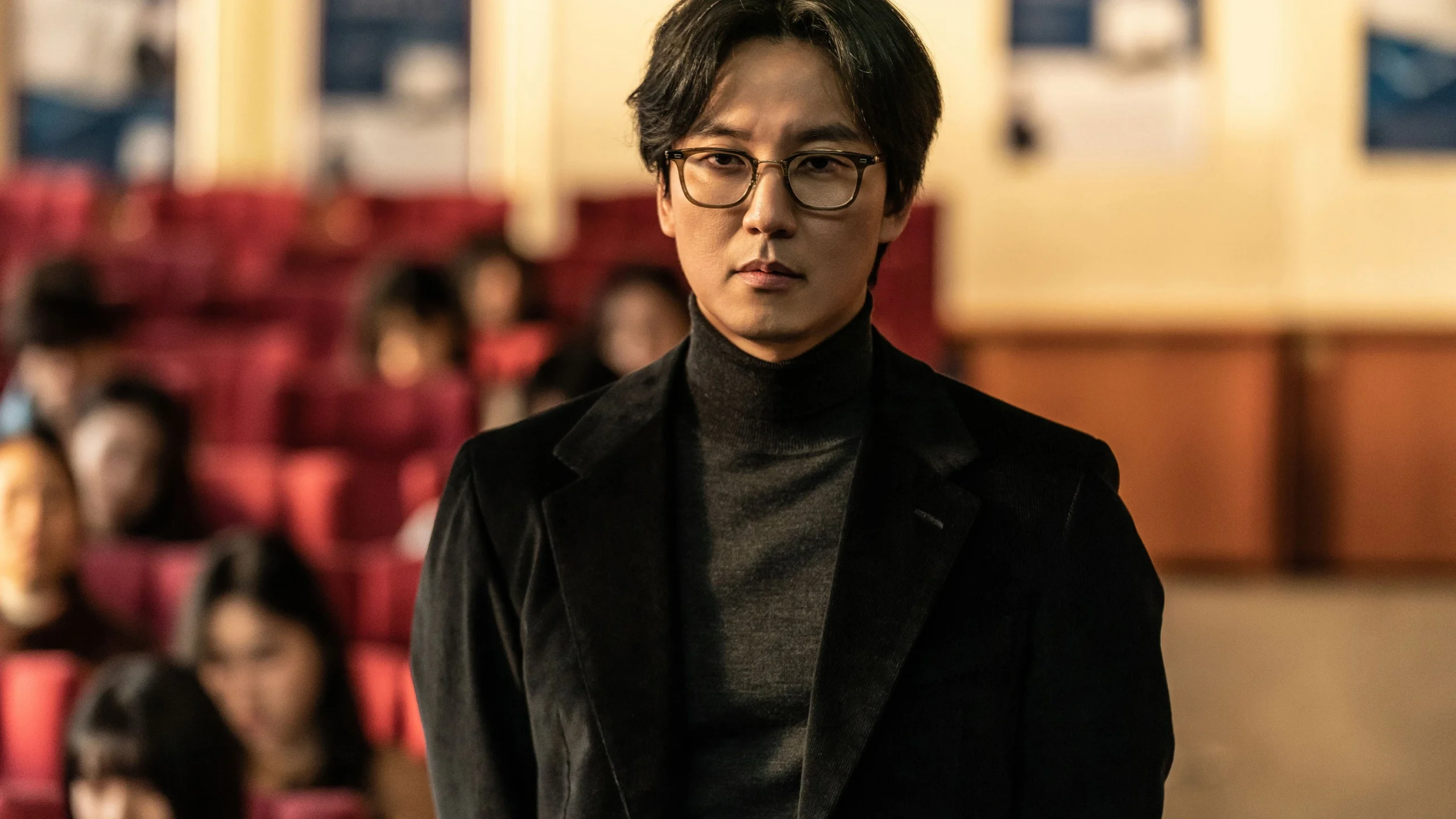
What emerges is a layered conspiracy that connects Min-tae’s former crime world to people who have since moved into more legitimate — and more dangerous — positions. The CEO whose son fell into a coma after a drug encounter with Seok-tae looms over everything: a figure with enough power to make problems disappear and enough motive to have wanted Seok-tae gone. Seok Chang-mo, Min-tae’s former gang boss, stands at the center of a web constructed specifically to make Min-tae look in the wrong direction.
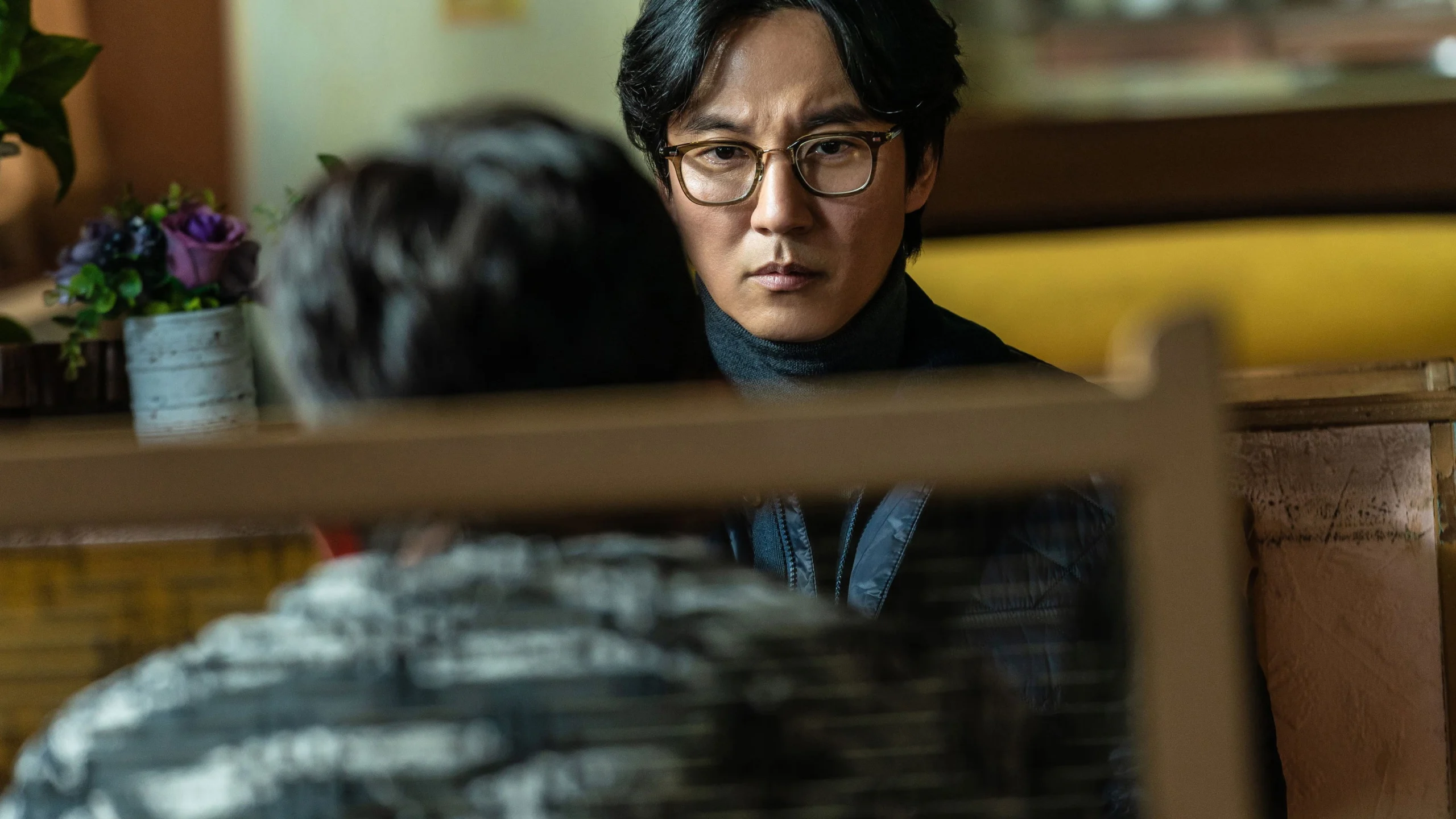
The film is at its best when Min-tae and Kang Ho-ryeong share space. Ha Jung-woo and Kim Nam-gil are both actors who communicate enormous amounts without saying much, and the scenes where their agendas collide — neither revealing more than necessary, both calibrating how much the other knows — generate the film’s most charged moments. Director Kim Jin-hwang shoots these exchanges in tight, slightly airless compositions that match the characters’ refusal to give anything away.
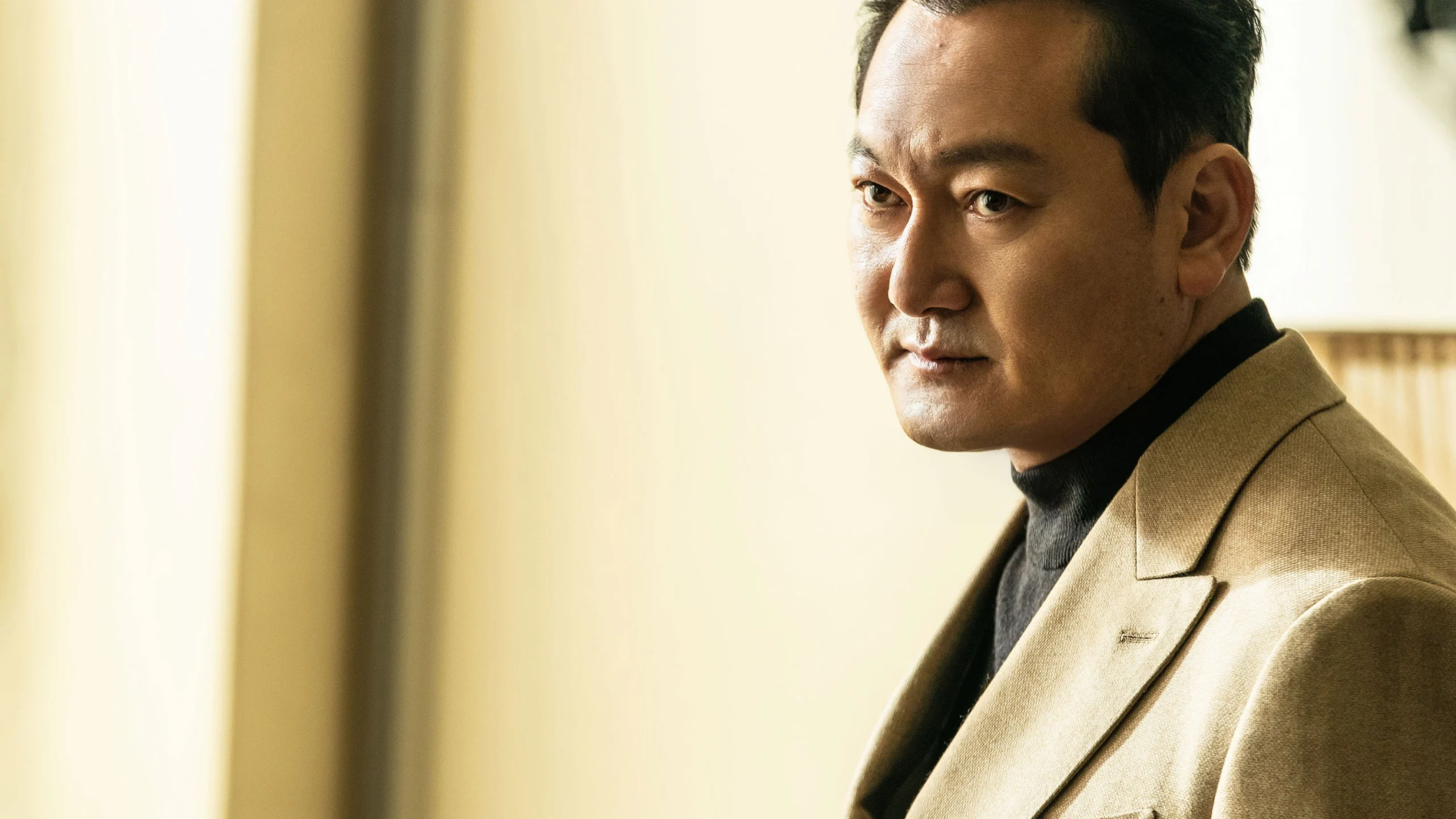
Moon-young’s story runs parallel and largely silent — she has been carrying violence for years before Seok-tae’s murder made it impossible to keep carrying it. Her disappearance turns out to be survival rather than guilt, and the truth of what she witnessed the night her husband died is both the key to everything and, ultimately, not enough to protect her. The film handles her arc with a certain brisk efficiency that serves the plot but leaves the character underdeveloped given how central she is.
As the conspiracy closes in, Min-tae’s careful distance from his own violent instincts becomes increasingly untenable. He came back to this world to find the truth; he stays because he’s realized the truth isn’t the endpoint — justice is. And in the world this film inhabits, justice looks a lot like what he used to be.
🏁 Ending Explained
Spoilers ahead — the ending, broken down in full.
Full Spoilers Ahead — This section covers the complete ending of Nocturnal. Stop here if you haven’t watched.
Who actually killed Seok-tae Not Moon-young — the film’s entire first-act misdirect, neatly collapsed. Seok-tae’s death was ordered by Seok Chang-mo, Min-tae’s former gang boss, on behalf of a powerful CEO whose son fell into a coma after Seok-tae supplied him with drugs. Chang-mo tidied up a mess that would have exposed the CEO’s family, then used the most available scapegoat: a missing wife and an absent brother the police were happy to deprioritize. Moon-young didn’t kill her husband. She witnessed it, then was forced by the same men who ordered it done to clean up the crime scene.

Moon-young’s fate She doesn’t make it. During the confrontation sequence that brings the conspiracy into the open, Chang-mo’s subordinate Byung-gyu kills Moon-young to eliminate the one person who can testify to what actually happened. It’s a brutal, efficient scene — the film doesn’t telegraph it or give her a final speech. She knew too much, and that was enough. Min-tae, who came to find truth partly for her sake, now has one more reason to make sure this ends.
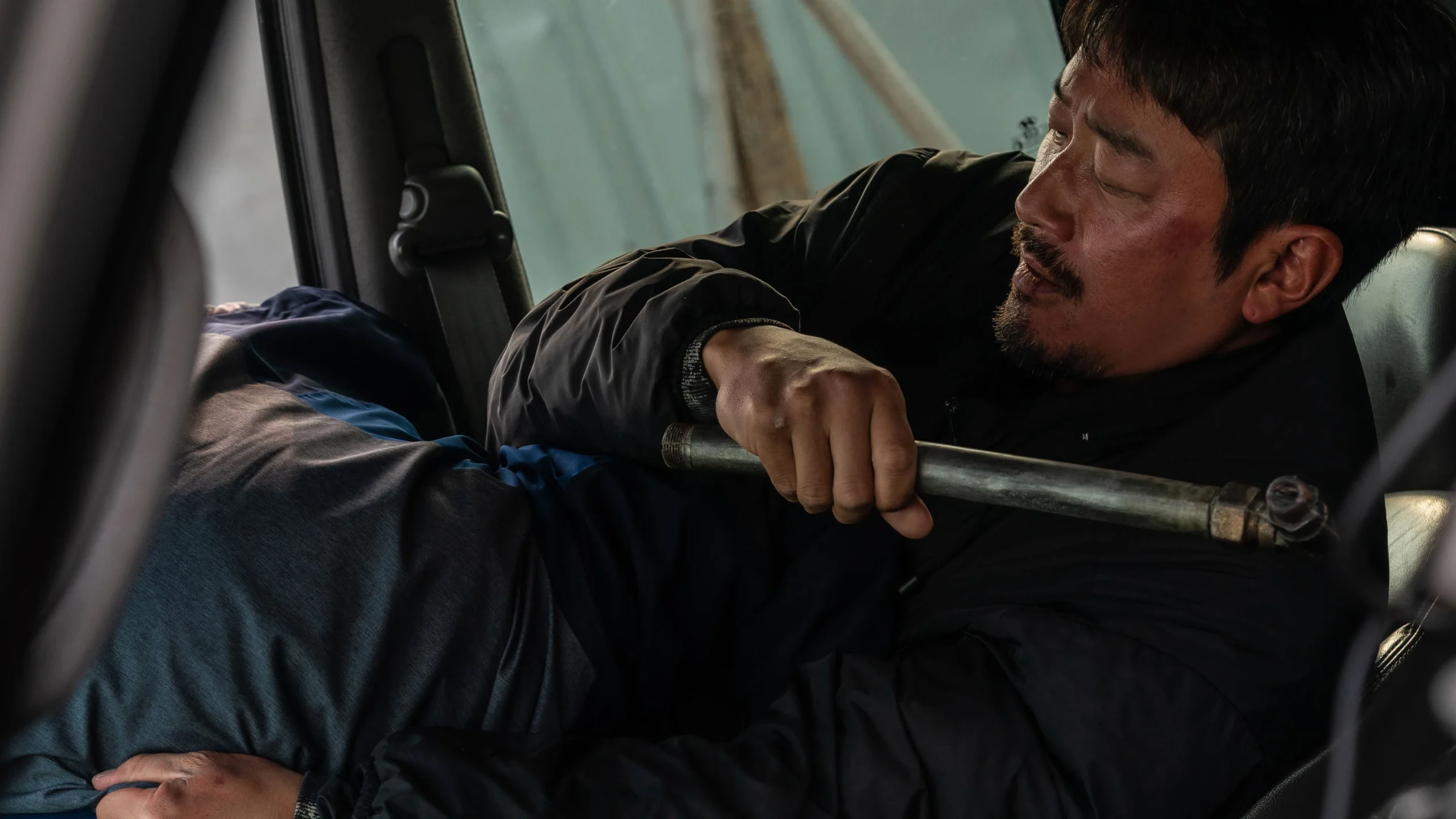
Min-tae’s revenge and the final phone call Min-tae pursues Byung-gyu and delivers the kind of reckoning the film has been building toward — a bloody, physical confrontation that doesn’t feel triumphant so much as inevitable. Chang-mo’s culpability confirmed, Min-tae is left standing with a steel pipe and a phone. The call he makes to the CEO is the film’s final image: a man who just finished one piece of unfinished business, signaling there is more to come. Whether he completes that retribution is deliberately left open. The point isn’t the next act — it’s that he made the call at all.
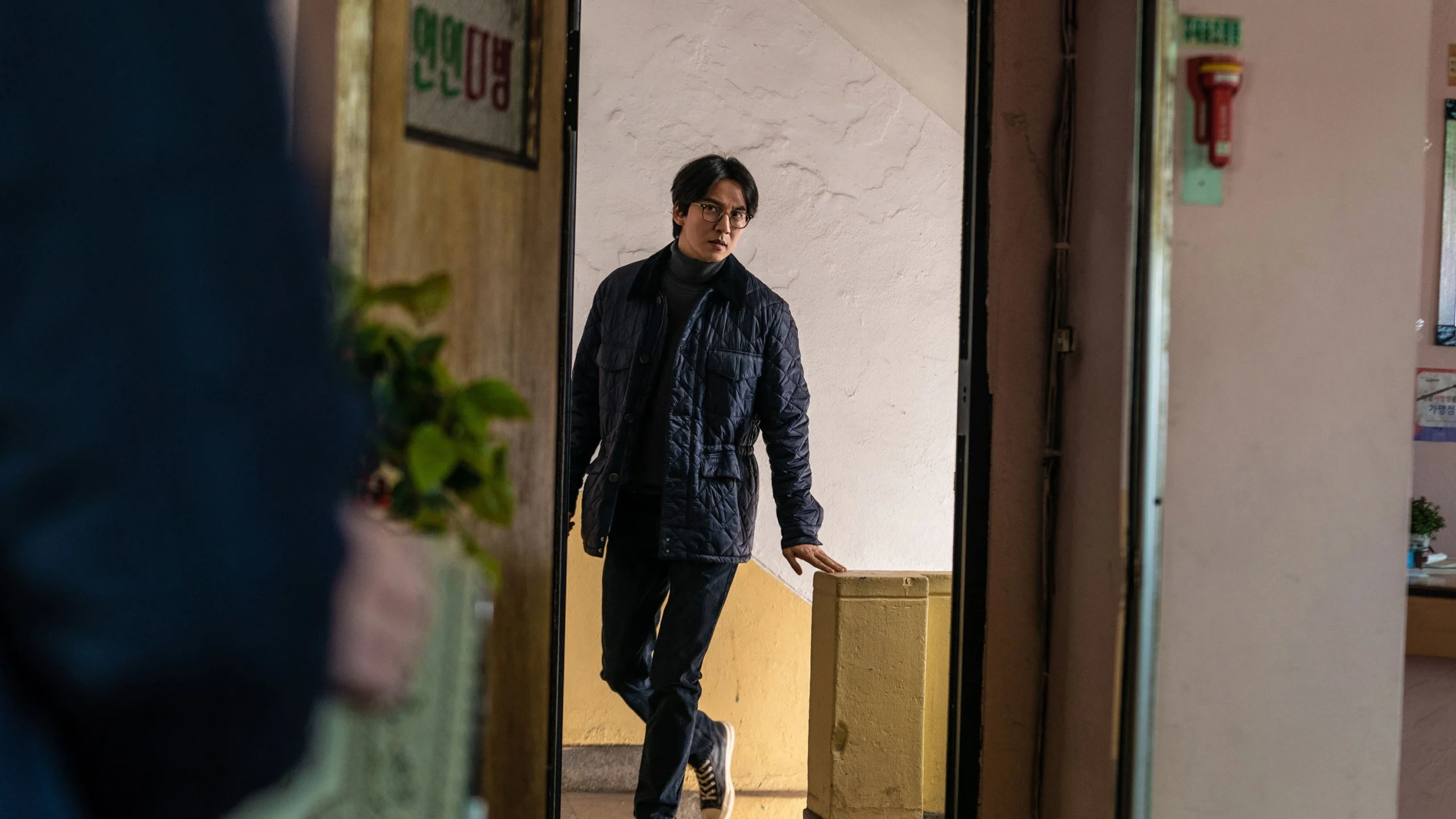
Kang Ho-ryeong’s unresolved arc The film leaves the novelist in a frustratingly ambiguous position after Moon-young’s death. His precise knowledge of the crime — the source of it, whether the novel was confession, coincidence, or something more calculated — is never fully unpacked. He survives, but the ending doesn’t give him closure or consequence. It’s the film’s most significant unresolved thread and the element most likely to leave audiences dissatisfied with the mystery payoff.
The real meaning of the title — both of them The English title “Nocturnal” operates as atmosphere: this is a film that lives in the dark, in the hours when violence happens and decent people are asleep. But the Korean title — 브로큰 (Broken) — is the actual thesis. Everything in this film is broken: Min-tae’s peace, Moon-young’s escape, the legal system’s capacity for justice, the idea that leaving a life of crime means it leaves you in return. The cycle the ending implies — Min-tae calling a CEO, promising more violence — suggests the breaking doesn’t stop with the credits. It just continues without us watching.
✍️ KDramaWorlds Editor’s Take
Our honest opinion — and the kind of viewer who’ll love it most.
Kim Jin-hwang
Known for: Nocturnal places Kim Jin-hwang firmly within Korean neo-noir conventions — muted palettes, morally compromised protagonists, conspiracies that implicate institutions rather than just individuals. The literary device at the film’s center (a crime predicted by a novel) reflects an interest in how narratives get constructed around violence, who controls those stories, and what gets left out. As a filmmaker he demonstrates a clear preference for atmosphere over exposition, trusting his lead actors to carry weight that lesser productions would spell out in dialogue.
Ha Jung-woo doesn’t play former gangsters — he plays men who have decided, at great cost to themselves, to be something other than what they were built to be. Min-tae’s stillness throughout Nocturnal isn’t passivity; it’s containment, the physical discipline of someone who knows exactly what he’s capable of and has spent years making sure it stays locked down. When the lock breaks, it’s not explosive so much as exhausted — a man who tried as hard as anyone could to walk away, and ultimately couldn’t. If you’ve seen him in The Childe, you know what he does with moral ambiguity — Nocturnal is a quieter version of that energy, stripped to its essentials.
The novel-within-the-crime premise is the film’s most interesting gamble, and it half-pays off. The idea that a bestselling book appeared to predict a real murder — with details too specific to be coincidence — should generate paranoia throughout the entire runtime. Instead it generates the best twenty minutes in the film’s middle section before the narrative retreats into more conventional conspiracy-thriller mode. Kim Nam-gil’s novelist is compelling precisely because he’s never fully explained, but that ambiguity cuts both ways: the film that fully committed to unraveling what Kang Ho-ryeong actually knew and when he knew it would have been something more unusual. For thematic company in this territory, the corrupt underbelly of Hopeless shares this film’s interest in how crime systems protect themselves.
At 99 minutes, Nocturnal moves efficiently enough that its structural weaknesses don’t outstay their welcome. The dual-title problem — English “Nocturnal” sells the atmosphere, Korean “Broken” 브로큰 nails the theme — captures the film’s own split identity: it wants to be both a moody atmosphere piece and a sharp thematic statement about cyclical violence. It achieves both partially. For fans of Ha Jung-woo working in his wheelhouse, that’s enough.
🎬 You Might Also Like
If you liked Nocturnal, these are your next three watches.
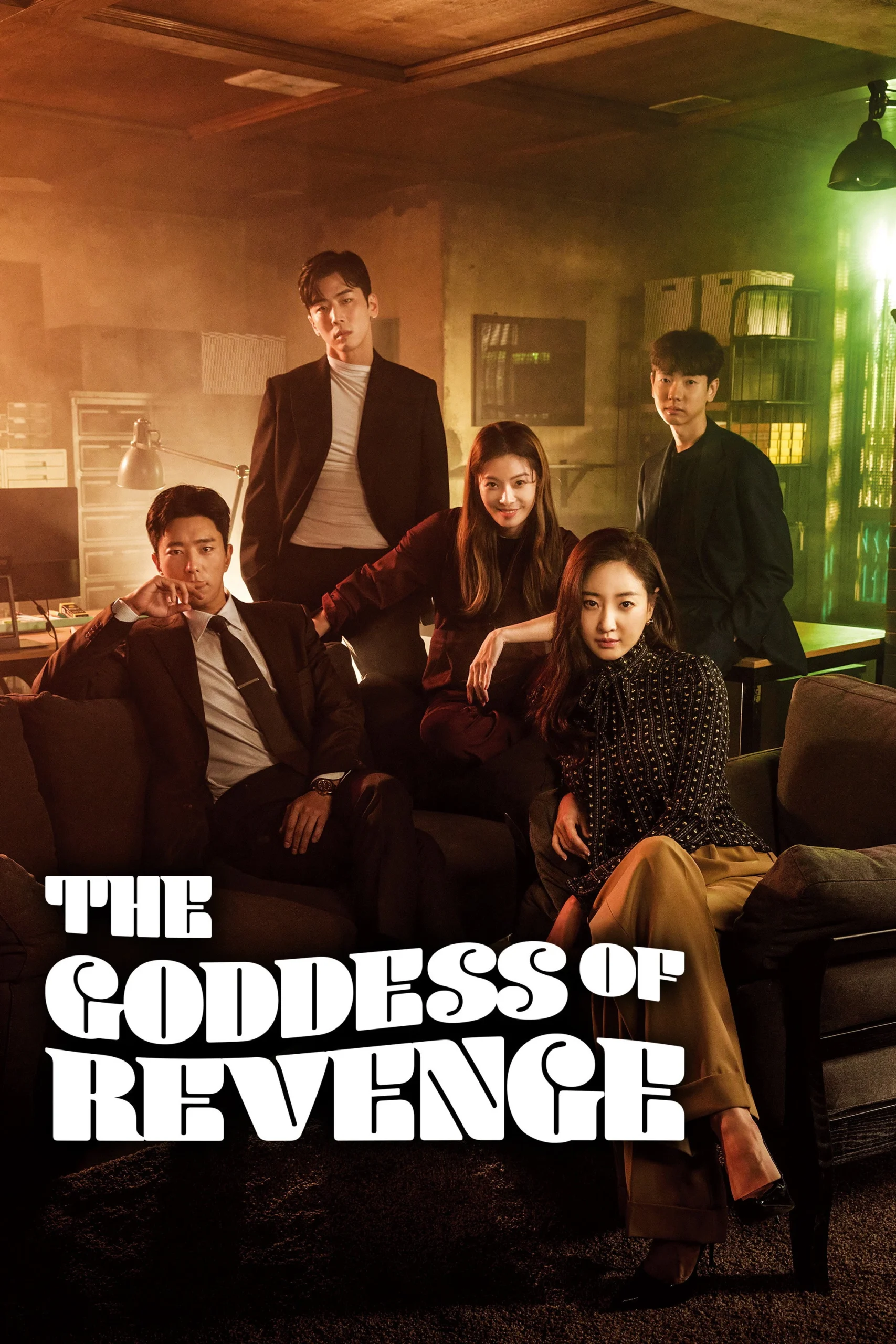 The Goddess of Revenge
ChaebolFemale Lead
Read Full Review →
|
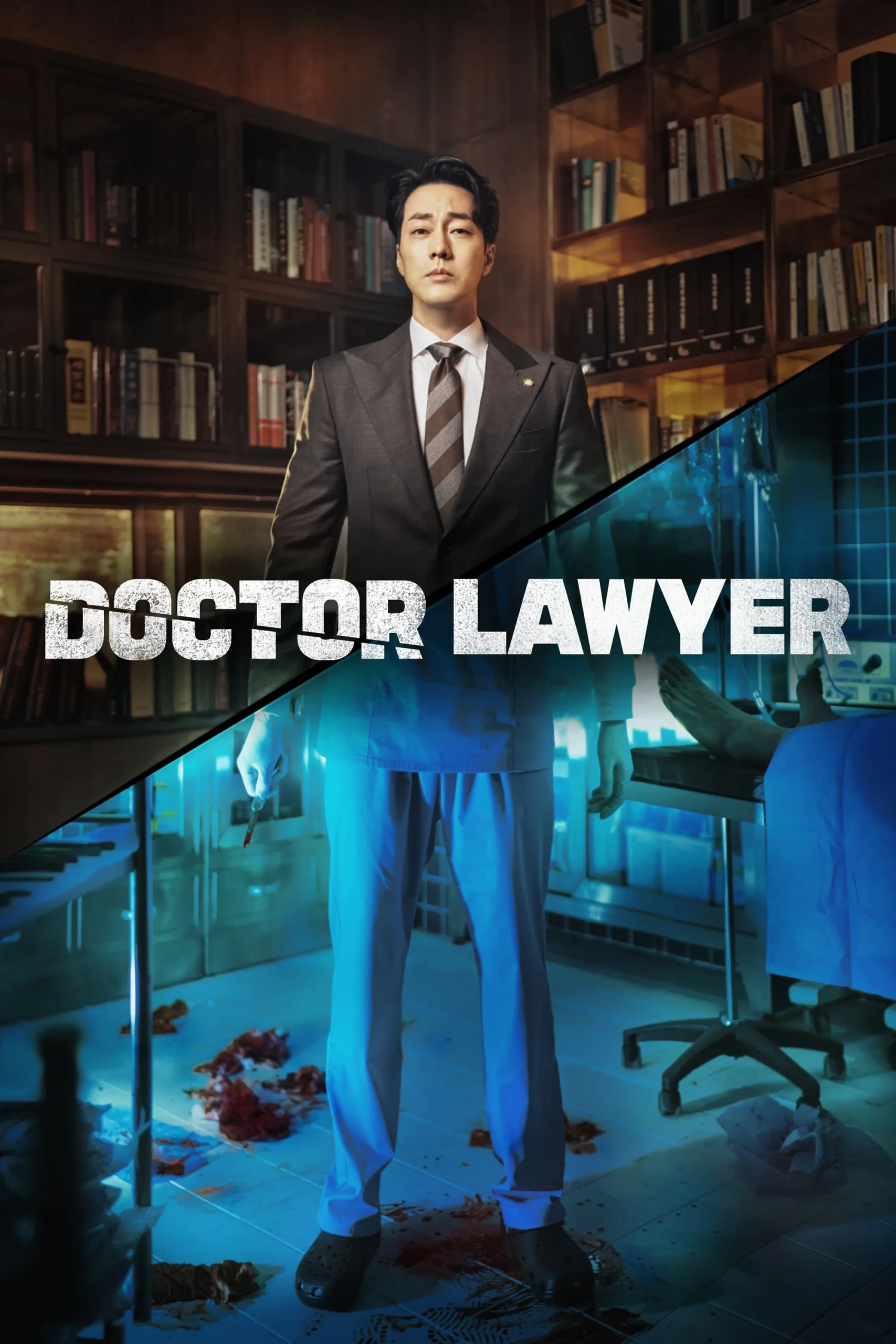 Doctor Lawyer
Chaebol CorruptionCorruption
Read Full Review →
|
 Suspicious Partner
comedyJi Chang-wook
Read Full Review →
|







Keep it kind, skip the harsh language, and please — no spoilers. Everyone's taste is different, and that's perfectly fine.
This space is for real reactions and discussion from other viewers. Help keep it comfortable for everyone by not giving away major plot details.
What do you think of this drama?
Login to share your review or leave a comment.
No email needed — just pick a username & password.