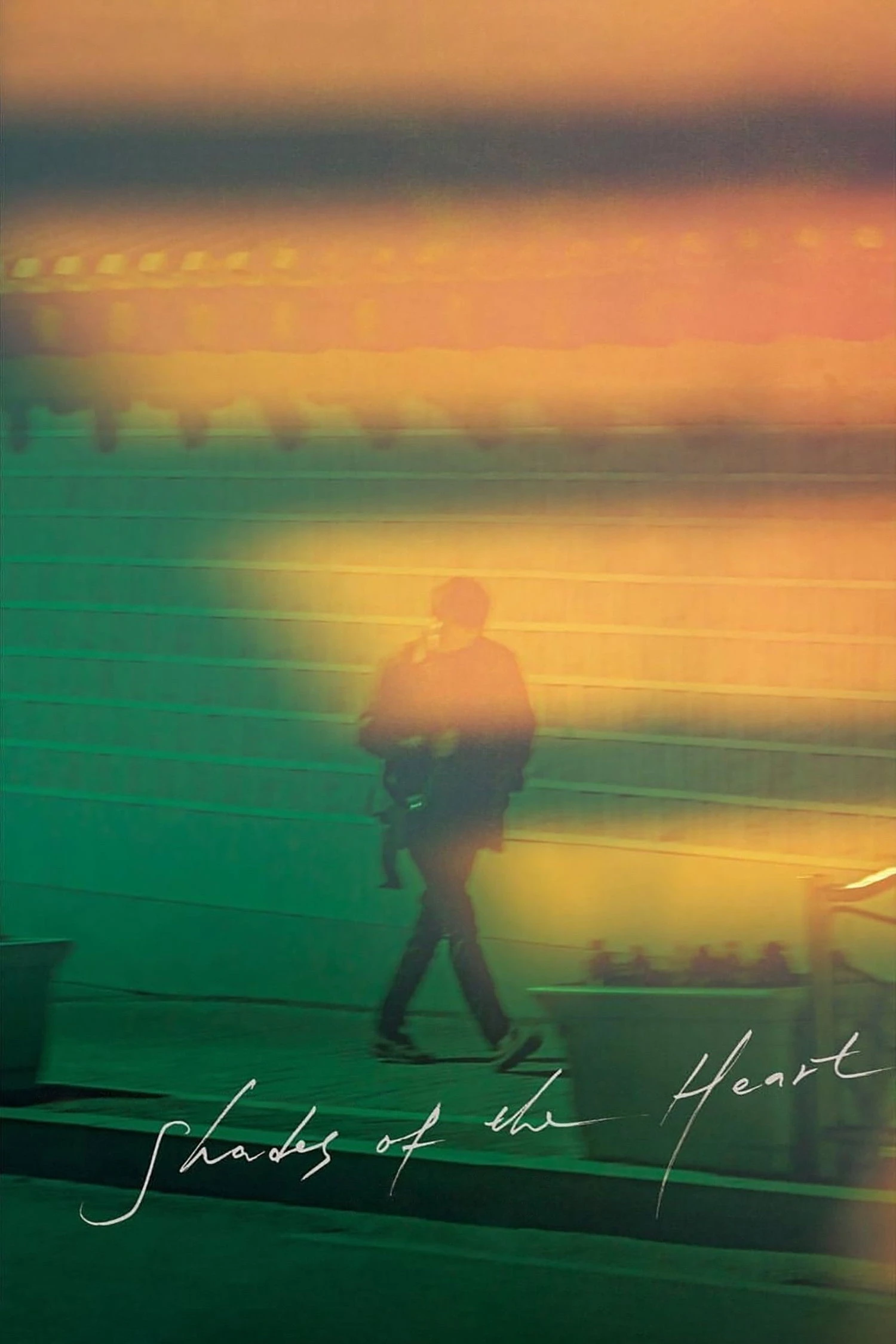
Shades of the Heart
🎬 Film Overview
Chang-seok comes back to Seoul after seven years in England with a failed marriage behind him and a novel about to go to print. He has no plan beyond a few days of walking the city and meeting people, some by arrangement and some by accident: a woman dozing in a subway-station café, a former junior colleague who now edits his book, a photographer he runs into in Bukchon, a bartender who trades drinks for memories. Each gets a chapter named after them, and Chang-seok mostly listens. Kim Jong-kwan wrote and directed this 83-minute drama after a run of two-person conversation films, and he shot it largely at night and at dawn, in what he called a gray area between light and dark. It premiered at Jeonju in 2019 and reached Korean cinemas on March 31, 2021, with IU, Kim Sang-ho, Lee Zoo-young and Yoon Hye-ree around Yeon Woo-jin. The question it keeps circling is what a story is for when the person telling it is grieving.
⚡ Quick Verdict
No scrolling required — the verdict’s right here.
Watch Shades of the Heart Free (US Only)
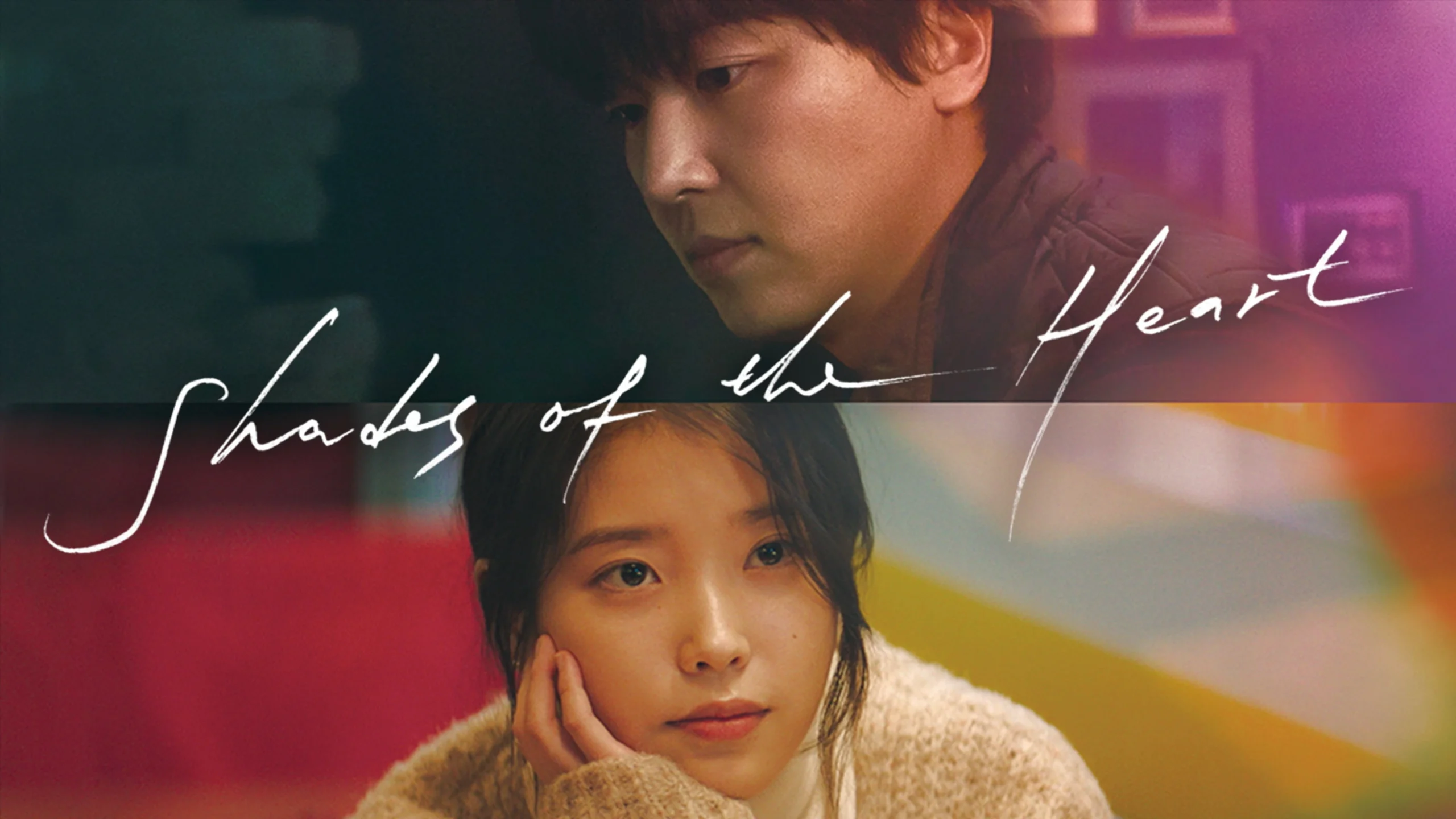
Free to watch - US only. Its owner makes this movie available only in the United States. If it doesn't play in your country, you may need a VPN with a server in an allowed country to watch it.
Region limits are set by the video owner, not by KDramaWorlds. Please make sure VPN use is allowed where you live and by YouTube's terms.
This film is free with ads, but the stream is currently available only in certain regions, mainly the United States. If the player shows “not available in your country,” the film can’t be played from your location.
Official Videos


🎭 Cast & Characters
Five conversations, five faces, and one man who mostly listens.

Lead
Lead

Supporting

Supporting
Supporting

Supporting

Supporting

Supporting
🍿 Where to Watch
Watch Shades of the Heart on these platforms.
📖 The Story
No spoilers ahead — just enough to see if it fits your taste.
Chang-seok is a novelist who has spent seven years in England and has come back to Seoul alone. His marriage is over, though the sources disagree on whether the word is divorce or separation, and Korea Times says the grief behind it includes the death of the couple’s child. A novel based on his own life is about to be published. For a few days he walks the city with no schedule, and the film follows him through five conversations, each one introduced by the name of the person he meets. Four of them get a title card of their own. The fifth belongs to him. Kim Jong-kwan shot most of it at night or at dawn, in ten shooting days, and the whole thing runs 83 minutes.
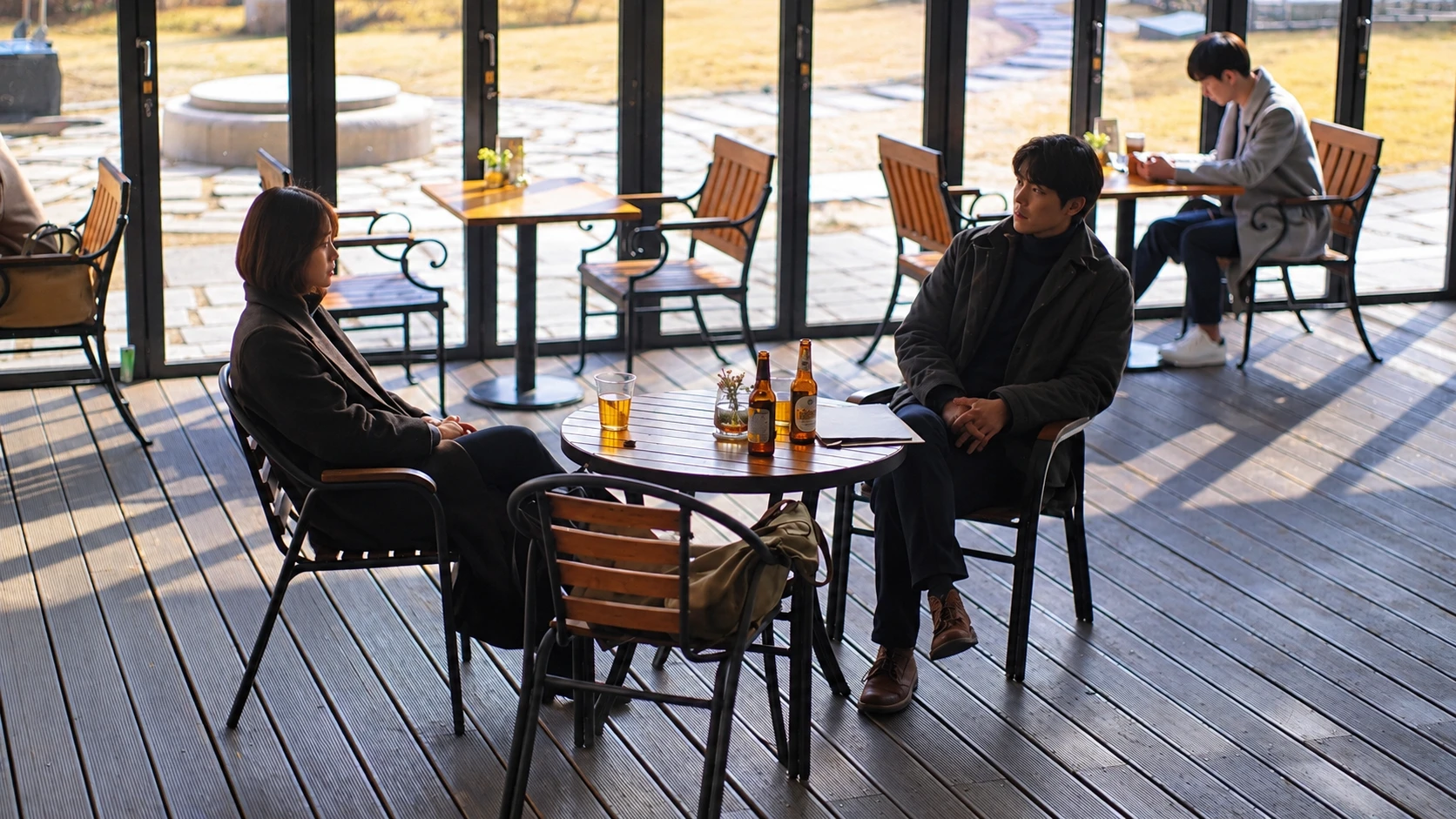
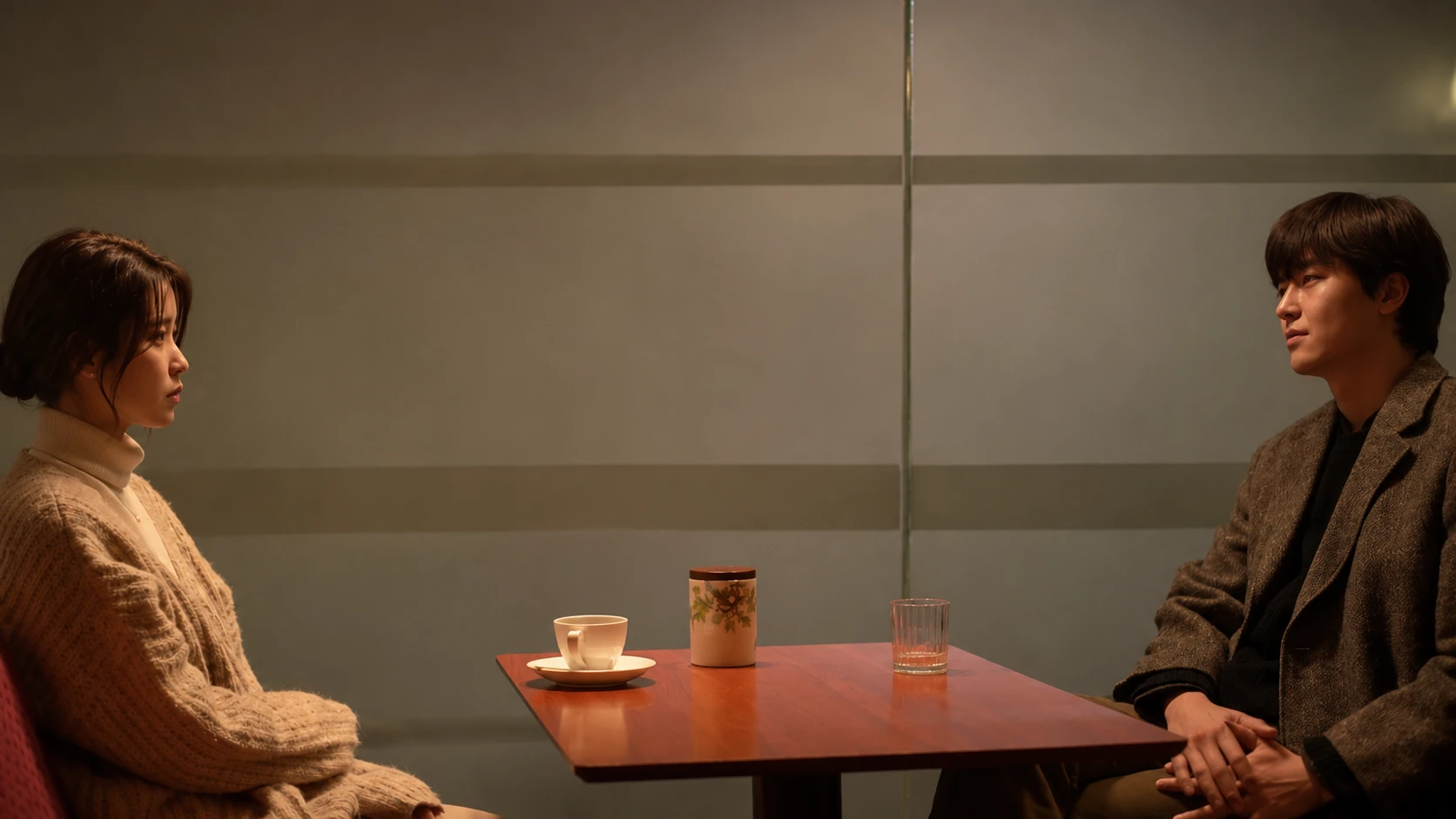
The first chapter belongs to Mi-young, played by IU, in an old café tucked inside a busy subway station. She dozes at her table and wakes to find a stranger across from her. Chang-seok behaves as if they had arranged this meeting. She does not recognise him, he tells her a story he has made up, and she is not especially amused, though she goes along with it. The scene runs about fifteen minutes on café-table talk alone. At one point the woman on screen changes from IU to Moon Sook, and that is the film’s first hint that this café exists partly outside ordinary time. Several critics read Mi-young as Chang-seok’s own mother, in the grip of dementia and living in the years before his father died. A different synopsis only says she longs for her dead husband. Both fit, and the film never states it outright.
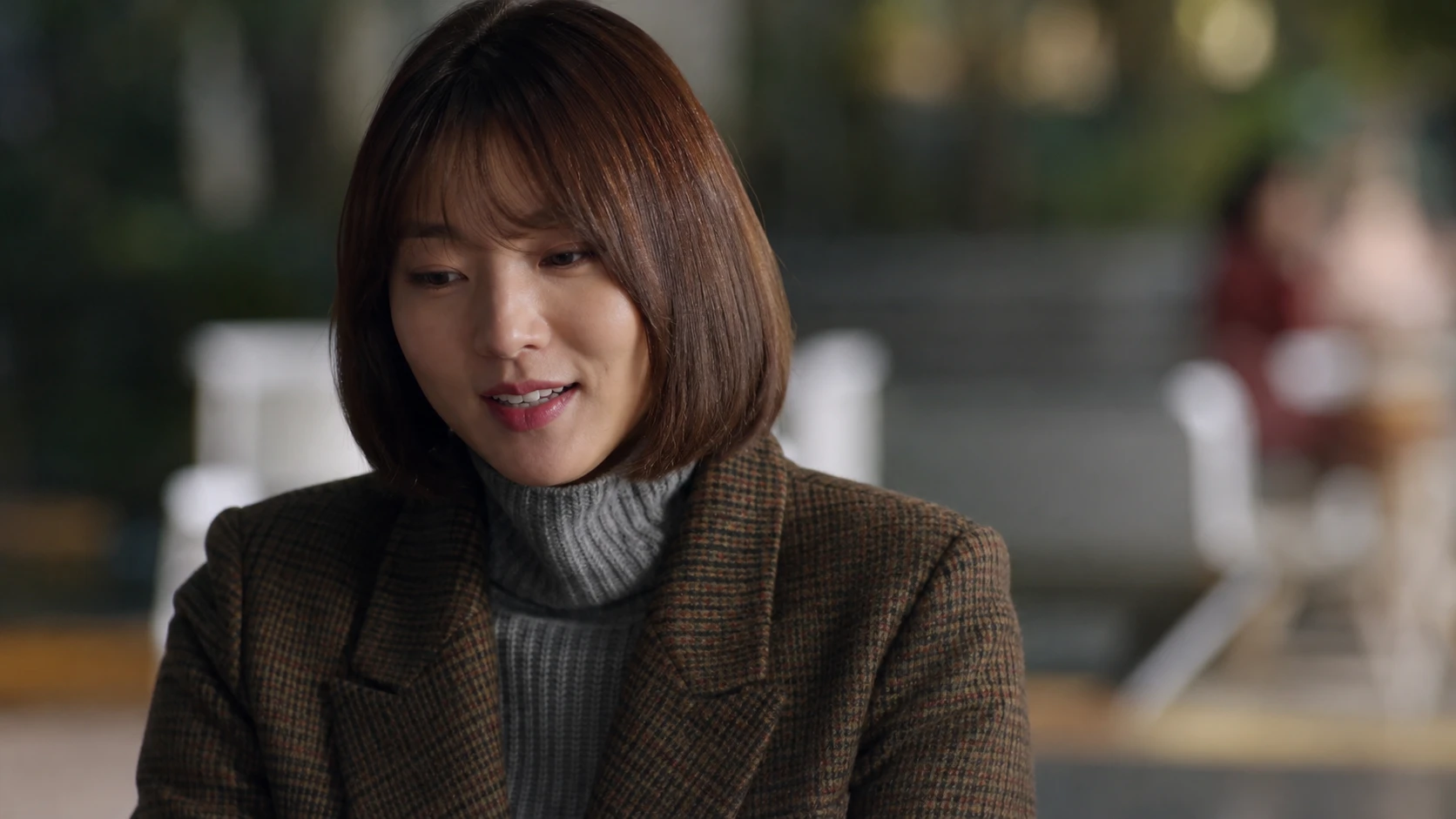
Yoo-jin comes next, a younger colleague from his old publishing house who now works on his book. They drink beer, then walk until the light is gone, and she tells him about a relationship with an Indonesian exchange student and about a pregnancy she ended. Two scenes in this stretch are worth keeping an eye on. They share a cigarette in near-darkness where only the glowing tips are visible, and they pass a man who talks to himself on the street. Yoo-jin’s tone is the plainest of the four, even bright at times, which makes the story sadder than it sounds in summary. One reviewer pulls two lines from her talk about not wanting to forget a name and about returning being worth more than going to the moon.
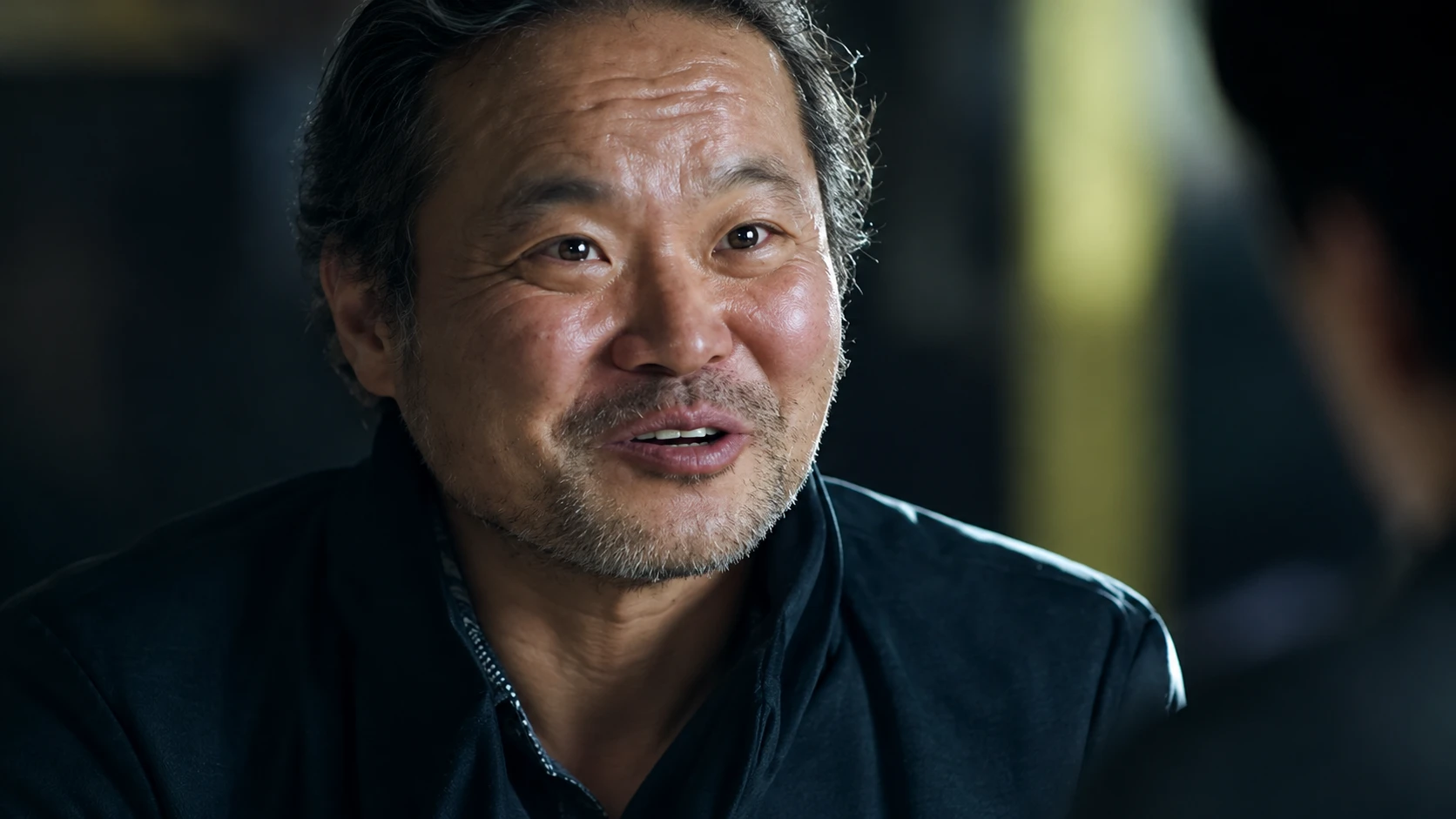
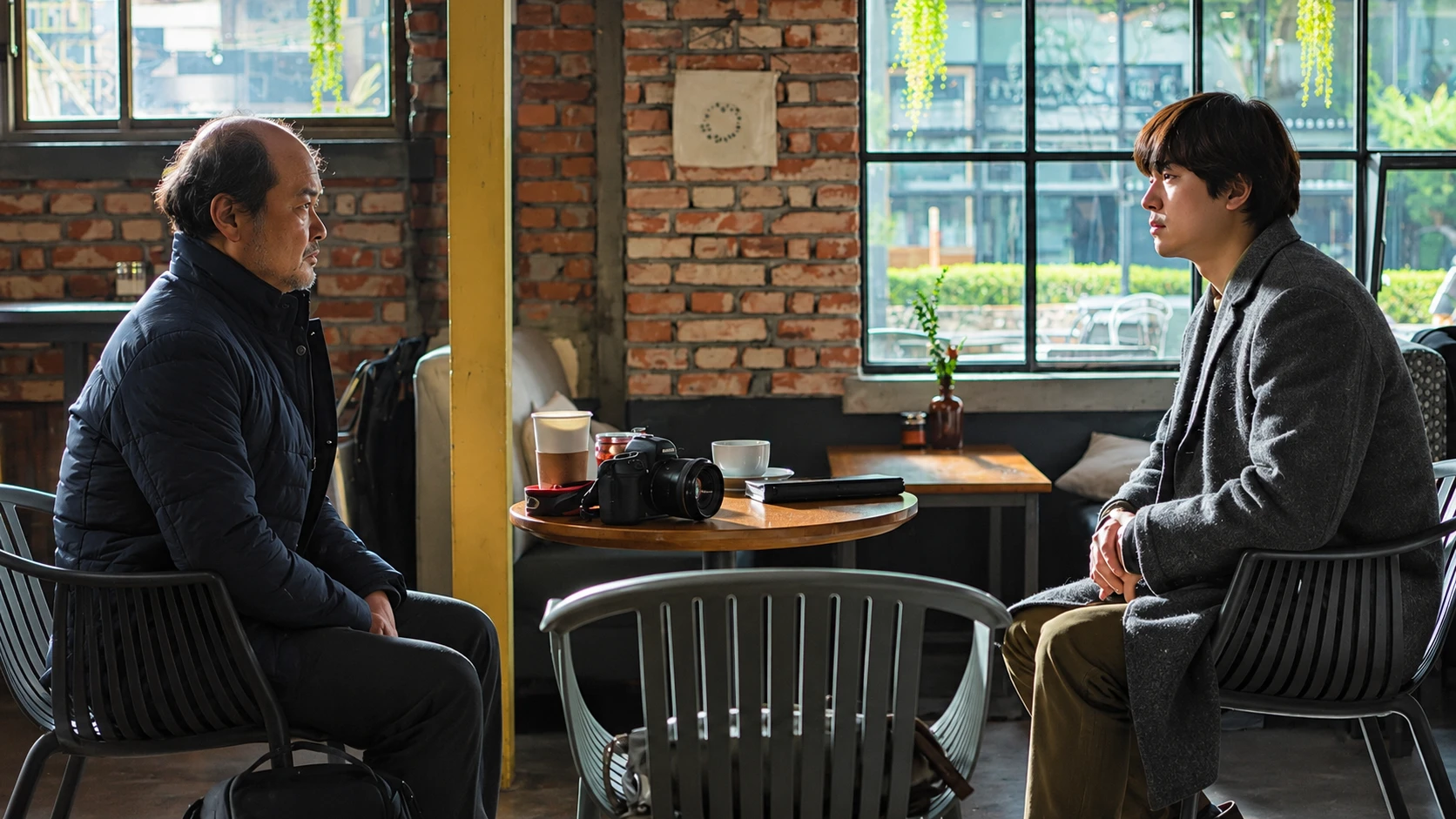
Chang-seok runs into Sung-ha by chance in a café in Bukchon. Sung-ha is a photographer, an older acquaintance, and he greets him as if the meeting were fate. His wife is gravely ill, reportedly with breast cancer. A monk has told him to head north and he will meet a benefactor, so when he sees Chang-seok he treats it as proof. He talks about miracles, and Chang-seok looks uncomfortable at being cast as a piece of someone else’s destiny. At one point Chang-seok asks him whether he is still doing good work, a line the director says he enjoyed because the old photographer must hear it constantly.
Then Sung-ha shows him a small bottle of cyanide and explains that he plans to follow his wife if she dies. When Sung-ha steps away to take a phone call, Chang-seok takes the bottle and hides it. One recap says the call announces that the wife has died and that Sung-ha heads for the hospital. A second source describes the vial being left behind and does not mention a death. I could confirm only that Chang-seok pockets the poison, so the rest of that scene stays uncertain here. The film does not explain why he does it, and it does not need to. A man who is quietly drowning removes a means of drowning from someone else’s hand.
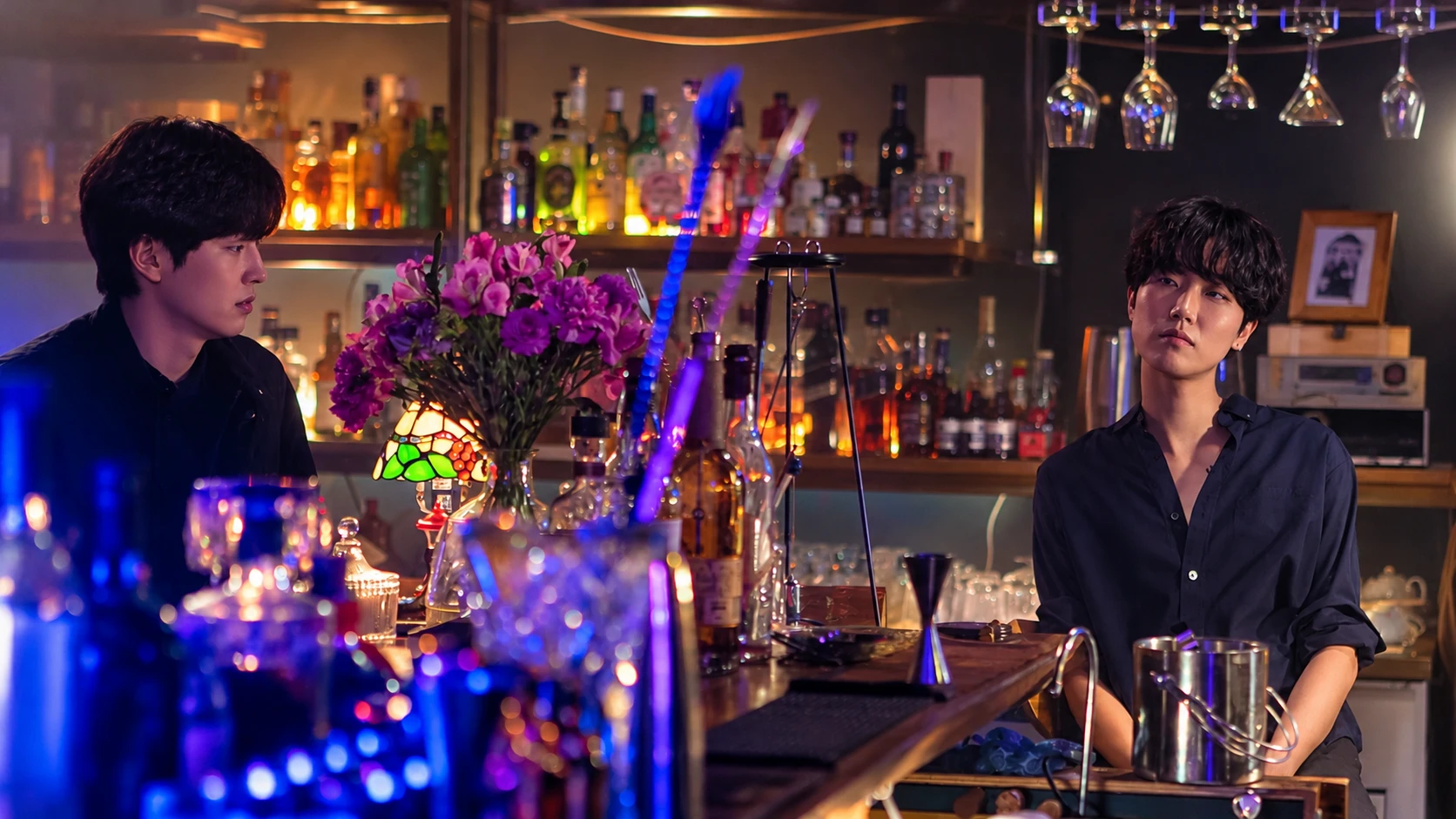
The fourth chapter is set late at night in a bar, with Ju-eun, played by Lee Zoo-young, behind the counter. A car accident took most of her memory, and she now buys other people’s memories with drinks and turns them into poems that she records. She trades a whisky for one of Chang-seok’s memories and recites something she has written about him, and the scene is the lightest and the most intimate in the film. After that the film leaves the conversation format. Chang-seok goes back to his room, to a vial on the desk and to a payphone in a deserted corner of the city, and what happens in those last scenes is where recaps begin to part ways. The Ending Explained section below lays out what each source reports.
🏁 Ending Explained
Full spoilers from this point — what happened, and why.
What actually happens at the end There is no showdown and no twist, so the plain answer is short: the film comes back to Chang-seok. After the four meetings he is alone in his room, and the cyanide he took from Sung-ha sits on the desk. He stands at the payphone in a quiet, rubbish-strewn corner of the city and calls his wife in England, and the call confirms that the relationship cannot be repaired. Back in the room he lies on the bed and weeps. Then, in most accounts, he is writing. The film closes on a brief run of images: the backs of a gentle elderly couple, a memory of a woman who is probably his mother, and a shift into black and white. Recaps differ on the order of these final images, so treat the sequence as approximate.
What the vial is doing there The most important object in the last act is a small bottle. Chang-seok took it from a man who was prepared to die after his wife, and the film puts it back on his own desk, as if it had been there all along. Critic Hwan-ya reads this as the clearest evidence that Sung-ha’s chapter is Chang-seok’s private anguish told through someone else. If so, the photographer’s plan to follow his wife is the writer’s own thought, given to a character, and the decision to take the bottle away is the writer’s attempt to answer himself. One source adds that Chang-seok mixes the poison into water but does not drink it. I could find that in only one place, so it stays a reading rather than a fact.
Why the bar scene matters more than it looks Ju-eun, who collects other people’s memories because she has none of her own, is a small model of what the film is doing. Chang-seok has listened to four people and now hands one of his own memories across the bar. By the time he is at the desk, writing, the exchange has shifted: what he got from the others becomes material, and what he keeps becomes a story. That fits the official summaries, which say he comes out of the meetings changed and starts writing again. The film never shows a finished book or any proof that the new story is better than the old one. It shows a man deciding to start.
Are they real? The theory about the title The Korean title means “Where Nobody Is,” and the director has called it ironic. One blog essay turns that irony into a theory: that the people Chang-seok meets may exist only inside his head, because the man who talks to himself on the street comes back in the black-and-white finale and because Yoo-jin’s lost foreign student and Sung-ha’s dying wife echo the husband and wife he left in England. The same essay concedes that the meetings could be real without losing any force. Reviewers of every stripe agree on one thing: the film plays with whether these encounters are events, dreams or sketches for a book, and it deliberately leaves the answer open. My own view is that it works either way, which is probably the point.
What the ending means Read as a whole, the last chapter turns a series of other people’s losses into one man’s. The film suggests that Chang-seok’s own tragedy, a marriage that ended alongside the death of a child, according to Korea Times, has been underneath every conversation, and that listening is the first thing he has been able to do with it. The black-and-white closing images could be hope or release, and the one critic who writes about it at length leans toward hope while finding the final montage a little too tidy in its comfort. What is not in dispute is the direction. He goes from silence to the page, and from an ending to a beginning. If you want certainty about what happens to him after the credits, there is none, and I would not trust any summary that claims otherwise.
✍️ KDramaWorlds Editor’s Take
Worth watching or not — our honest read, and who it’s for.
Shades of the Heart is a film you have to meet at its own speed. The opening café scene runs fifteen minutes with two actors at a table, no cutaways to plot, and it is where you learn whether the film is for you. Yeon Woo-jin carries it by listening. Chang-seok says little and absorbs a lot, and the actor does it with small glances and delays between answers instead of big reactions, which suits the material. A mood like this is related to Ditto, where a connection across distance is the whole story, though that film is warmer and this one is not interested in comfort.
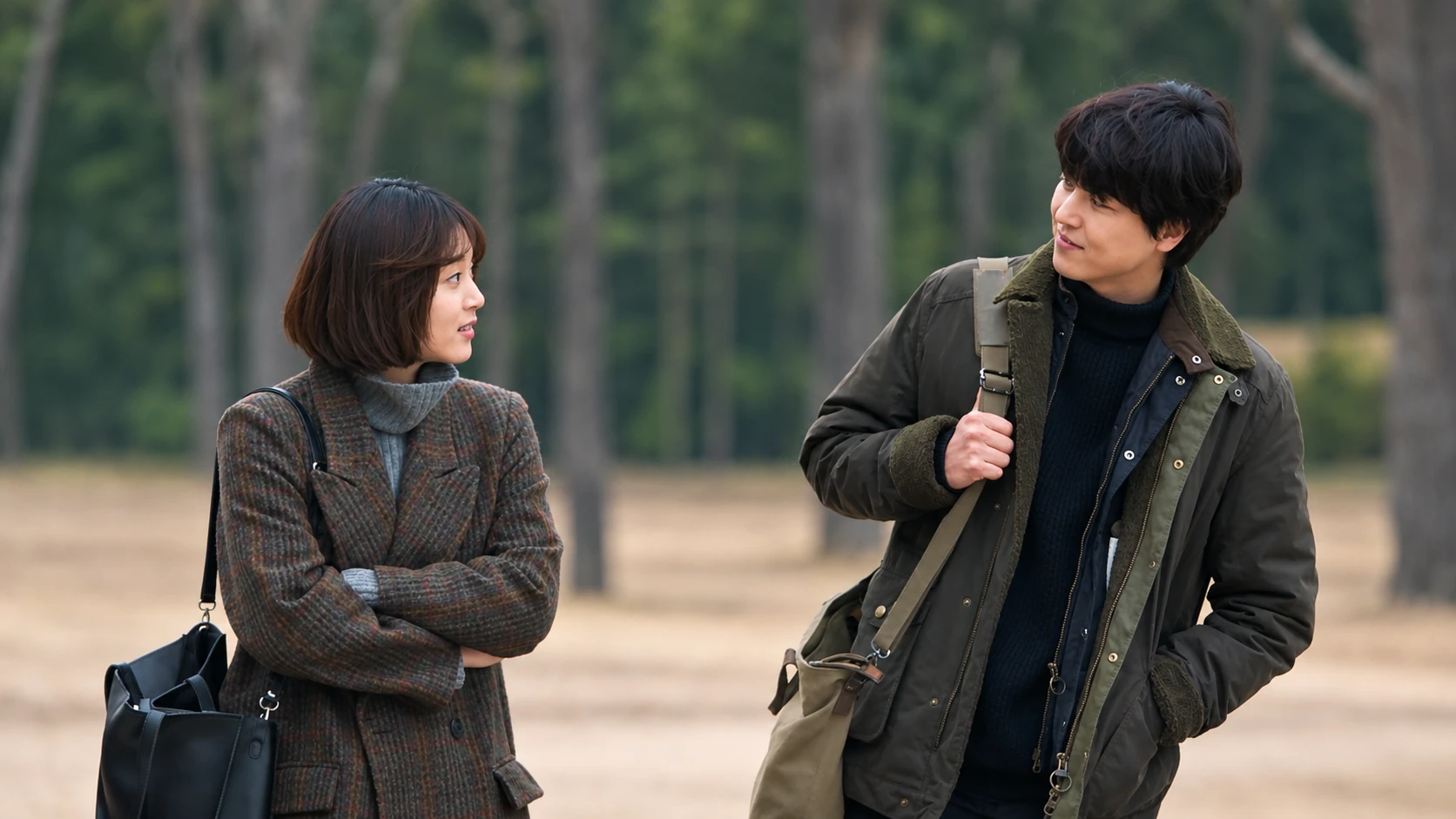
The other actors are each handed one conversation and use it well. IU works in a register that is almost somnambulant, and Korean reporting on the film credits Yeon Woo-jin with feeling that he was spending time with his mother instead of acting opposite a co-star. Kim Sang-ho plays the photographer with a gentle, fragile eagerness that makes the cyanide scene land. Yoon Hye-ree speaks about heartbreak in the plainest language of the group, and Lee Zoo-young’s bartender turns memory into a trade. Fans of the grief at the centre of Soulmate will recognise the same patient attention to what is lost between people.
The criticism is fair, and it is worth knowing. The dialogue is written in a literary register, and Philip Brasor in particular says it reads as if you are looking at a book instead of watching a film, with symbols and sound cues placed so carefully that they can distract. The later chapters are less inventive than the first, and one Korean critic finds the black-and-white finale a little too eager to comfort after so much ambiguity. The audience was small too: Wikipedia lists a box office of about $155,000, TMDB shows 6.6 from 13 votes, and Korean press noted the film passing 10,000 viewers in four days. None of that matters if the film’s low voice suits you. I would call it a good small film and an uneven one. Rewatch it once you know where it ends, because the cyanide, the payphone and the muttering stranger all start to talk to each other.
🎬 You Might Also Like
If you liked Shades of the Heart, these are your next three watches.
 Flex x Cop
Ahn Bo-hyunchaebol detective
Read Full Review →
|
 Kokdu: Season of Deity
comedycurse
Read Full Review →
|
 The Heavenly Idol
Body SwapFantasy Romance
Read Full Review →
|











Keep it kind, skip the harsh language, and please — no spoilers. Everyone's taste is different, and that's perfectly fine.
This space is for real reactions and discussion from other viewers. Help keep it comfortable for everyone by not giving away major plot details.
What do you think of this drama?
Login to share your review or leave a comment.
No email needed — just pick a username & password.