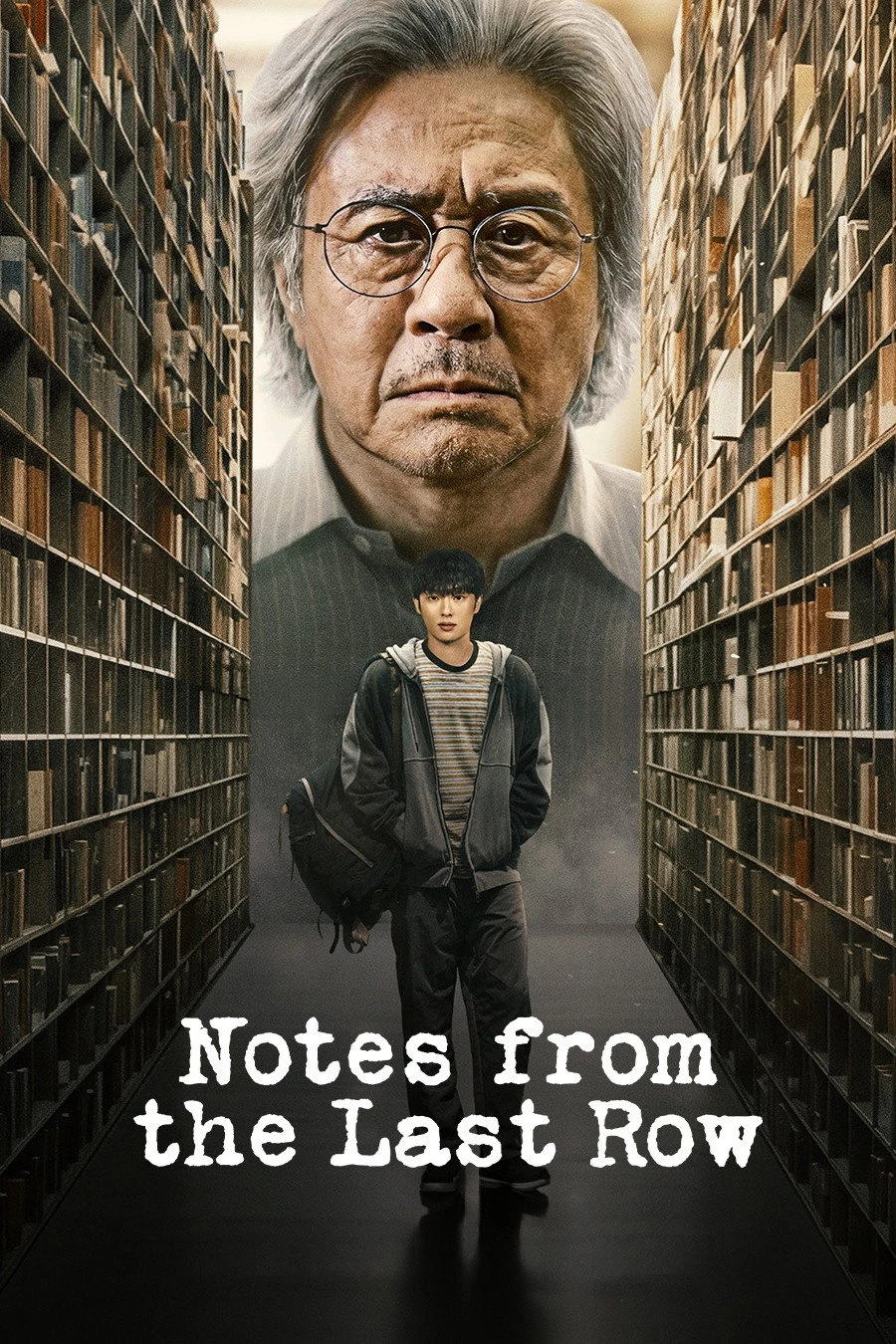
Notes from the Last Row
🎬 Netflix
⭐ 7.9 MDL
📺 TV-MA
📋 Drama Overview
Start here — the basics before the first scene.
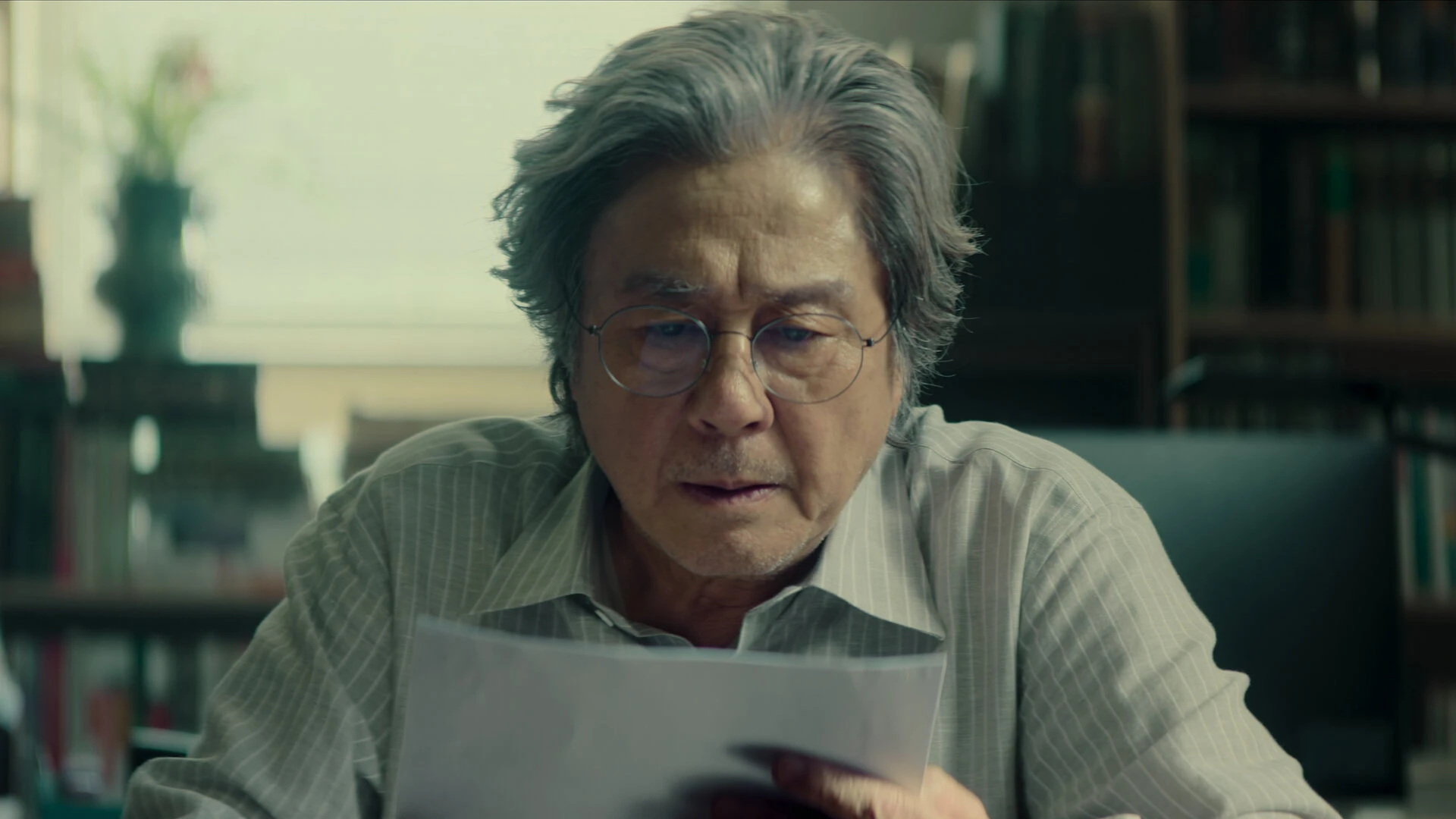
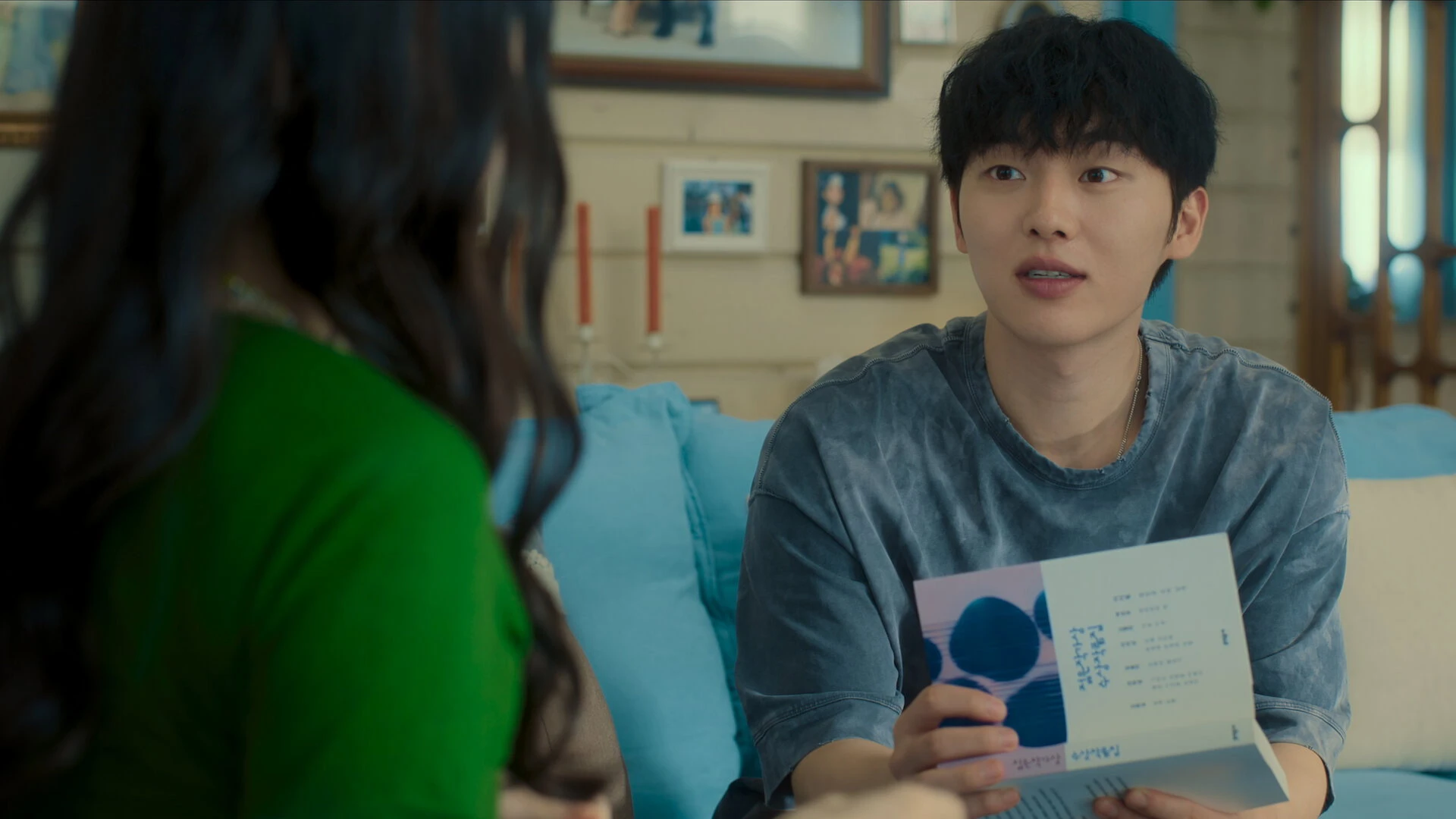
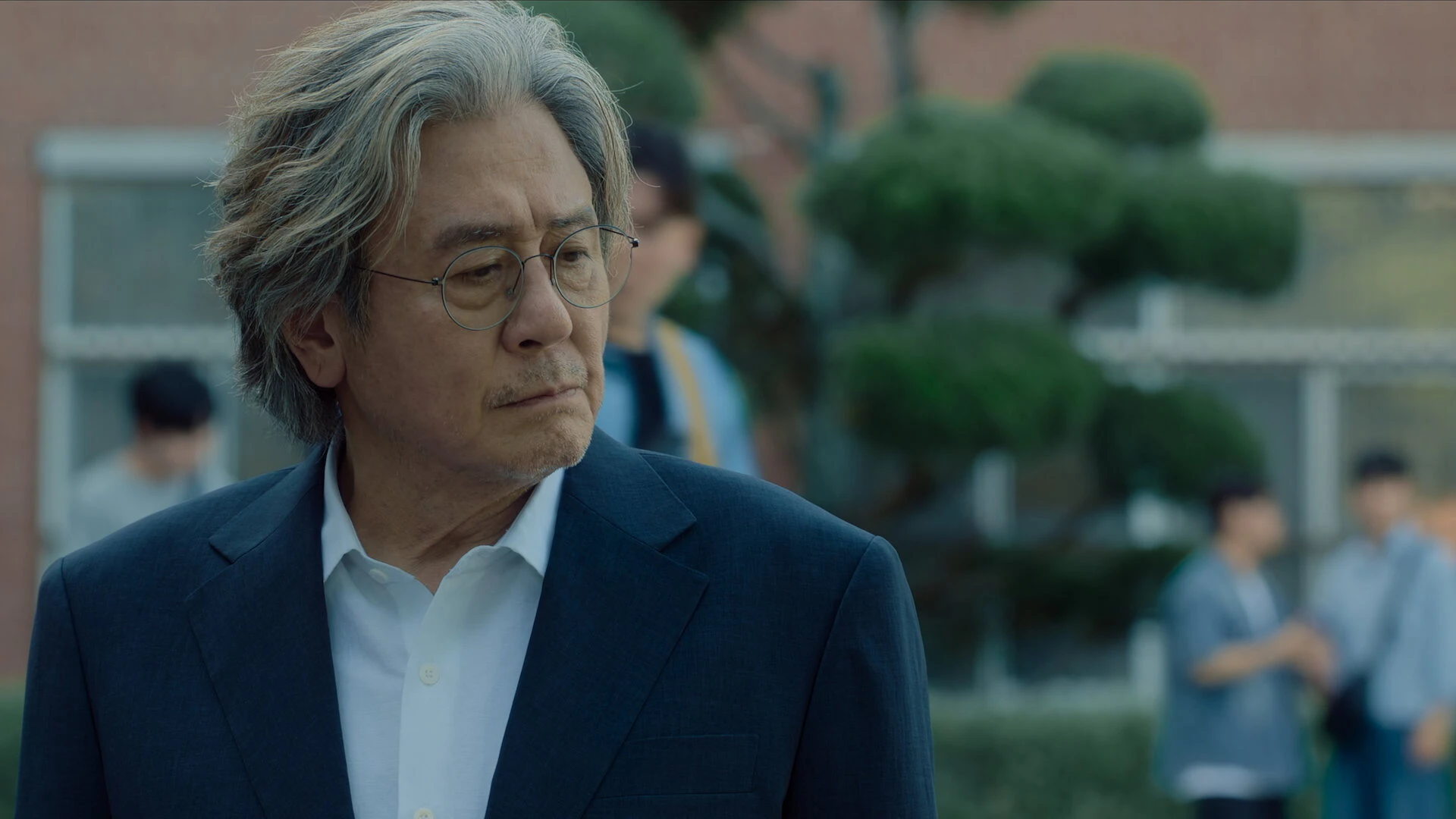
The drama begins with absence. Heo Mun-oh still stands at the front of classrooms and still grades student papers, but he hasn’t written anything that mattered in twenty years — haunted by a classmate’s critique that may have been accurate, which makes it worse. Then Lee Kang hands him a single page from the last row, and something that had been quiet for a very long time starts asking to be fed.
The problem isn’t that Kang’s writing is good. The problem is that Mun-oh, reading it, stops being a professor and starts being a reader again — the hungrier, less responsible condition. When he offers Kang private paid lessons, framing it as mentorship, the transaction makes the ethics explicit from the start: a professor buying access to a student’s imagination. What Kang is buying in return takes six episodes to fully reveal.
6 / 6 ✅ Completed
⚡ Quick Verdict
The TL;DR, boxed and ready.
MDL Score · Check MyDramaList for updated community rating
▶ Official Trailer
🎭 Cast & Characters
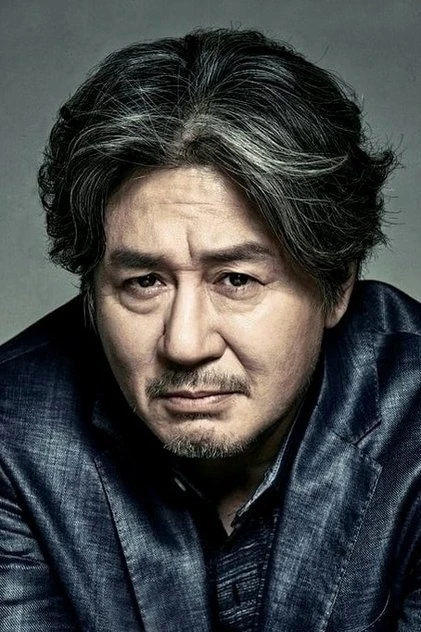
Choi Min-sik and Choi Hyun-wook anchor a tight six-person ensemble built for psychological tension over spectacle.
Lead

Lead
Supporting

Supporting

Supporting

Supporting
📺 Episode Guide
Just enough to stay oriented, episode by episode.
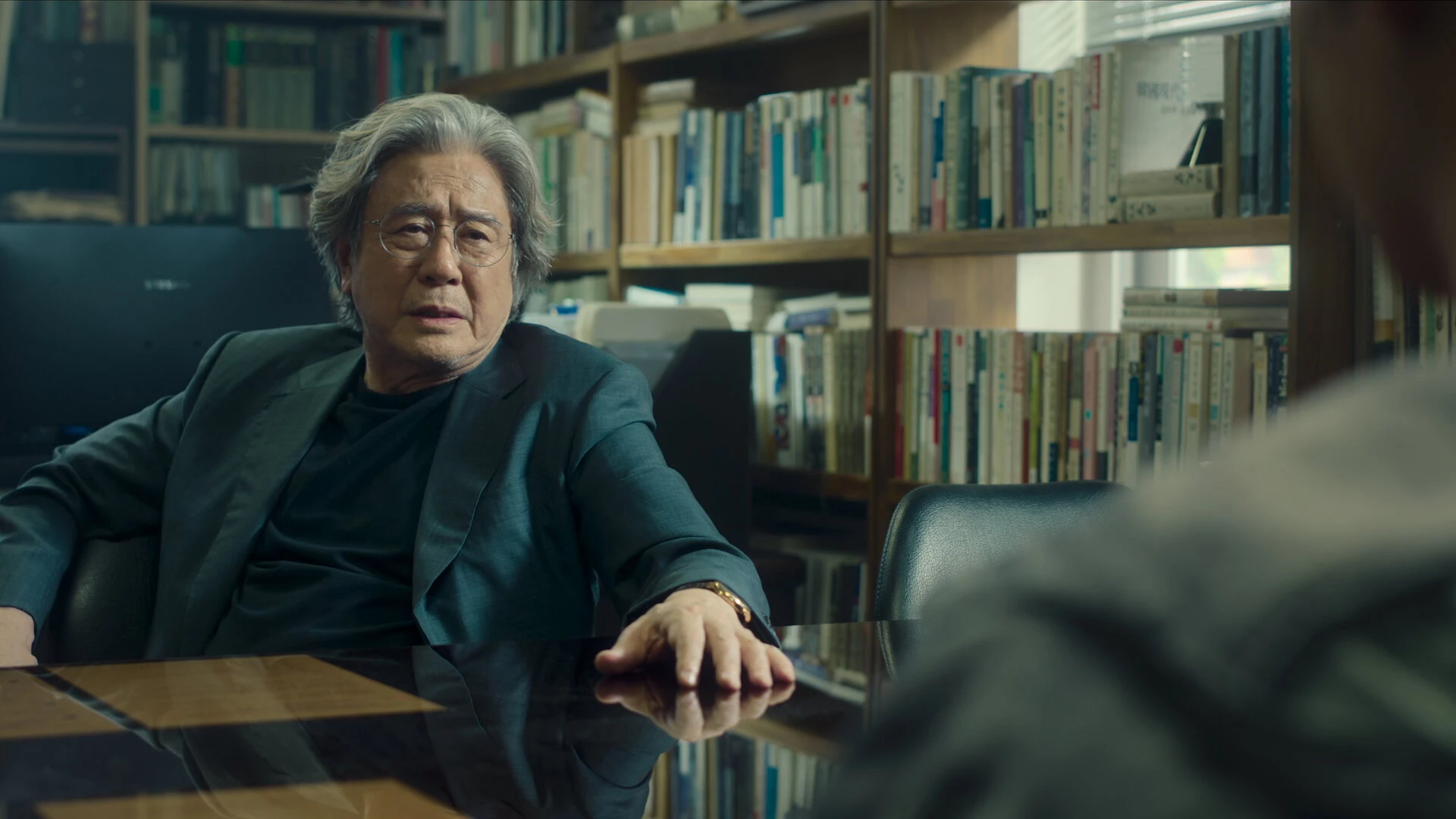

🏁 Ending Explained
Spoilers from here on — what actually happened, and why it lands.
Spoiler Warning — This section covers the full finale of Notes from the Last Row. Stop here if you haven’t finished the series.
What Lee Kang Actually Did. Kang destroys Heo Mun-oh completely — and then offers him another story. The finale delivers not a twist but a ledger: every private session was documentation, every page Kang shared was calibrated bait, every deliberate cliffhanger was an experiment measuring exactly how far Mun-oh would follow before he pulled back. He never pulled back. The file Kang sends to the university forum was not assembled in haste. It was assembled across the entire series.
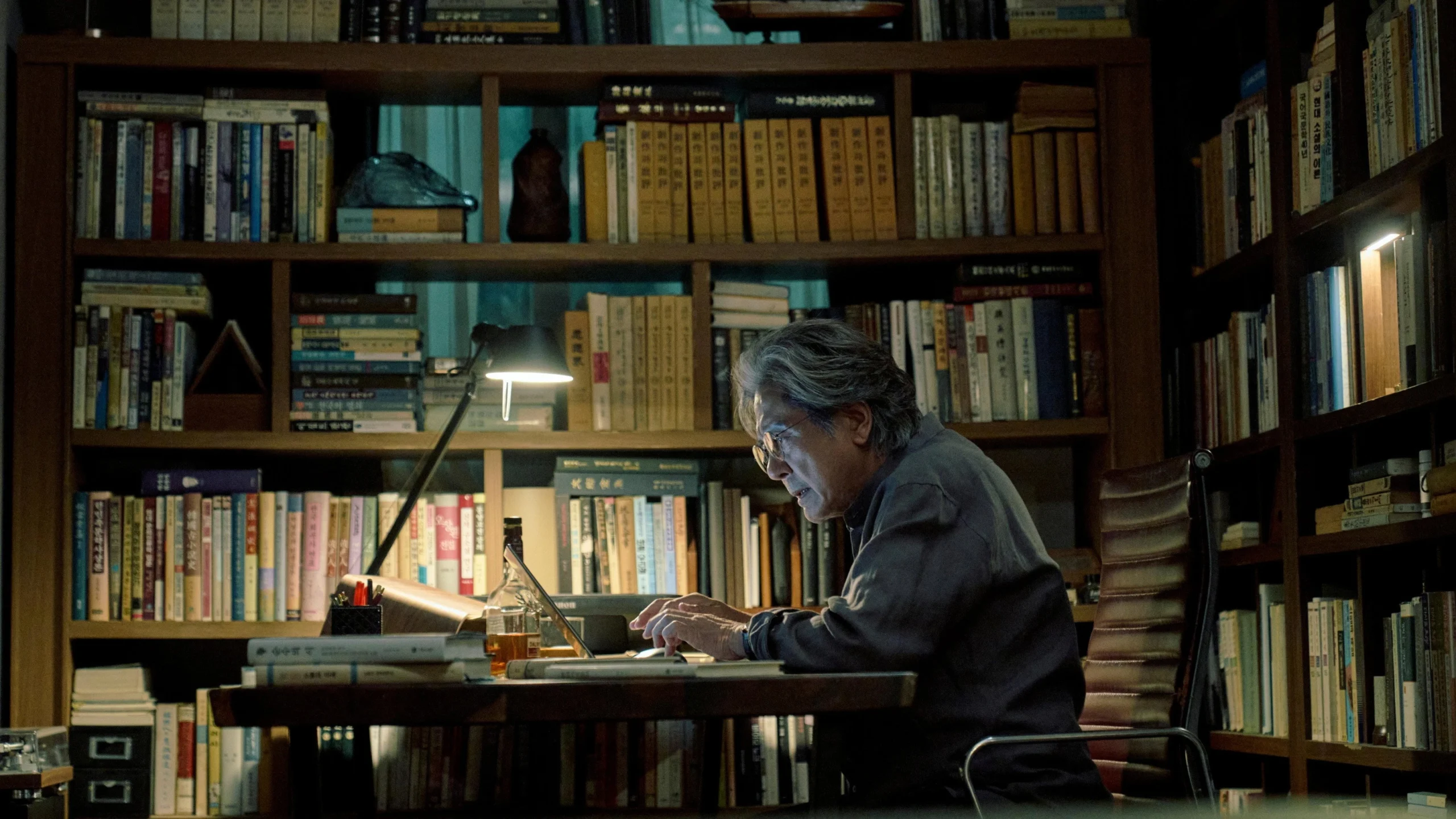
Is Mun-oh a Victim? Not entirely. The show refuses to fully exonerate him, and that refusal is the most honest thing about it. Mun-oh knew Kang was surveilling real people. He watched it escalate — Se-yun, then Su-hun, then the late-night meeting — and said nothing each time. Not because he couldn’t. Because the pages that arrived each week made him feel like a writer again, and that sensation was worth more to him than any of the people Kang was circling. He performed his complicity in front of the person collecting evidence. That’s the trap, and he walked into it with his eyes open.
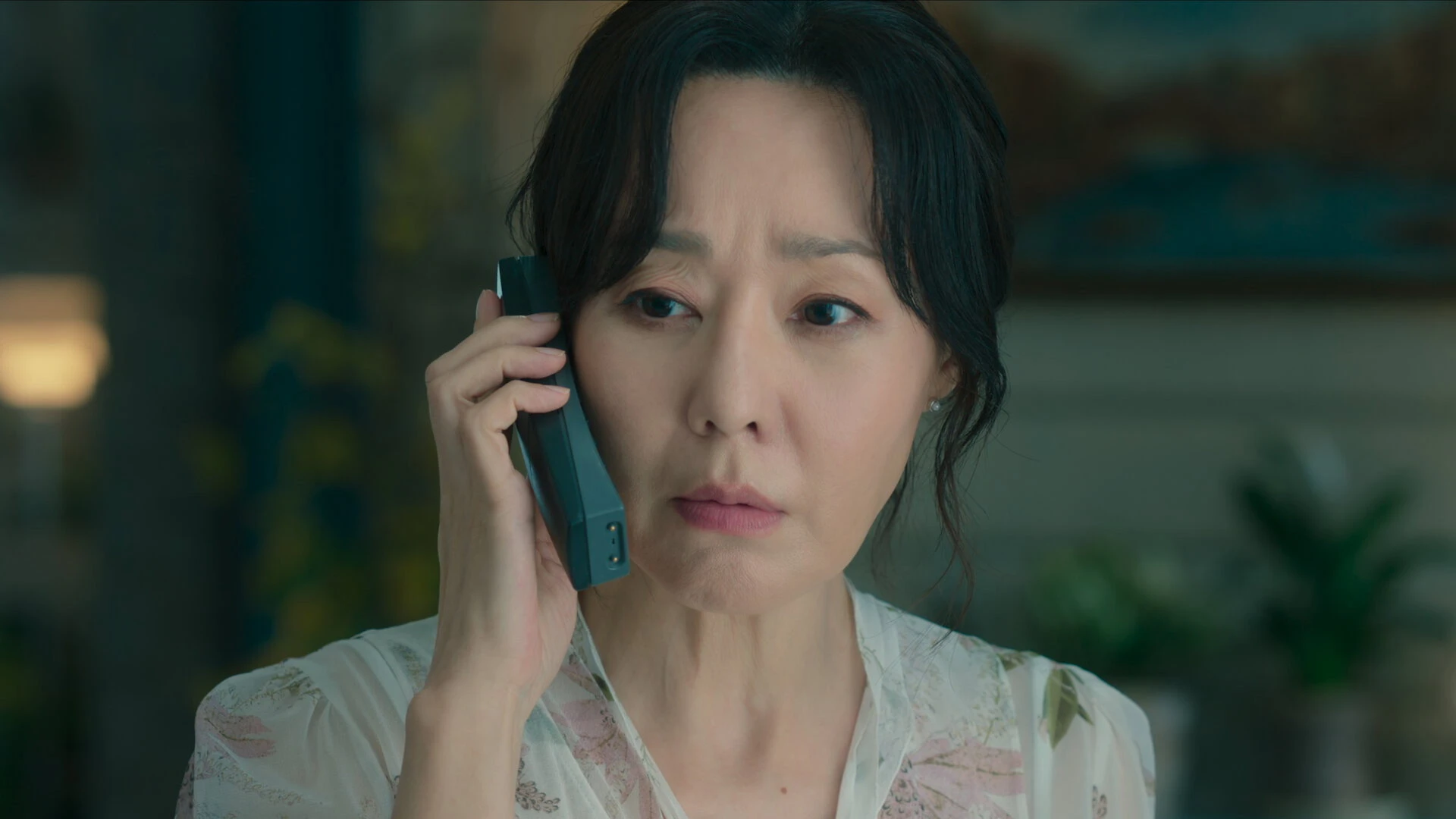
What Happens to Everyone Else. Kim Su-hun and Ahn Eun-joo emerge physically unharmed. Kang’s fictional world came close to their real lives but never fully breached them. Jo Hyeon-suk — Mun-oh’s wife, a psychological counselor who had watched his obsession consume their marriage in real time — leaves him. The series gives her departure one quiet scene. It’s enough. She had already done her grieving before the university forum post went live.
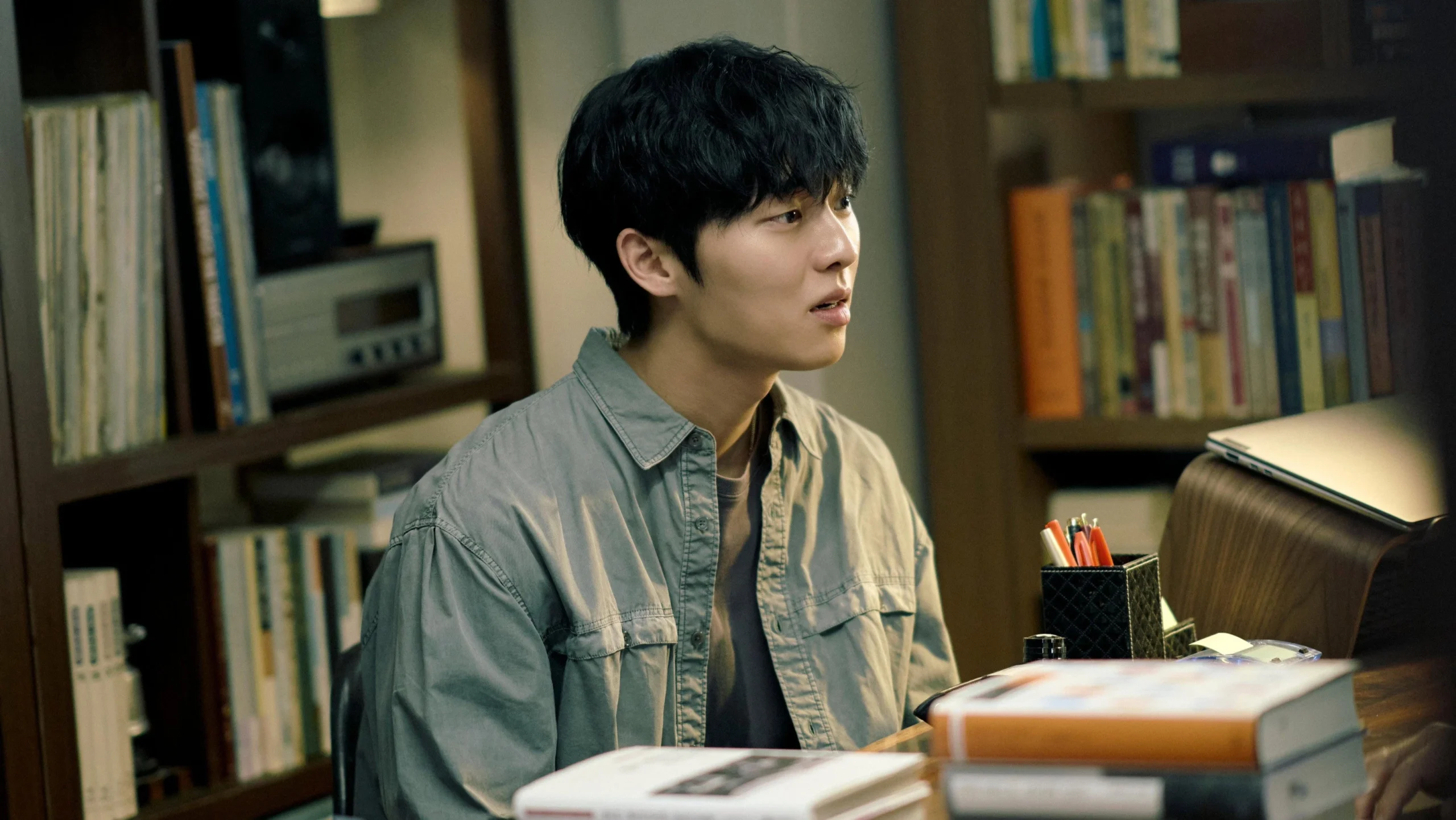
What Did Kang Actually Want? The show never says. This is either its most interesting choice or its most frustrating one, depending on your tolerance for negative space. If revenge, for what? If ambition, toward what? If experiment, then what did it prove? The series offers the silhouette of a motive without the substance — and holds that position to the last frame without blinking.
The Last Scene. Mun-oh, stripped of everything he had, sits alone in a library. Kang appears, returns a borrowed book with the specific calm of someone who was never in danger, and says he has a new story. Mun-oh asks what it’s about. That question is the ending. Not Kang’s answer. Not Mun-oh’s refusal. Just a ruined man, still asking. The hunger that cost him everything has not changed. Only the price tag has been made visible — and he’s still considering it.
✍️ KDramaWorlds Editor’s Take
Straight talk on whether this one’s worth watching, and for who.
🧠 Psychological Precision
📚 Literary Obsession
🌑 Slow Burn
🎭 Ambiguous Motives
Choi Min-sik has been the most dangerous actor in Korean cinema for thirty years — his range runs from Old Boy’s trapped rage to I Saw the Devil’s tactical calm. Notes from the Last Row asks him to play something narrower and, in some ways, harder: a man who is primarily hungry. Not ambitious, not desperate — hungry in the specific way of someone who once knew what it felt like to write something true and can no longer locate that feeling. The performance works through what Mun-oh doesn’t do. He doesn’t confide in his wife. He doesn’t push back when Kang crosses clear ethical lines. He doesn’t ask questions that would make him responsible for the answers. Min-sik plays that willful blindness not as weakness but as appetite — a much harder thing to make sympathetic, which he does anyway.

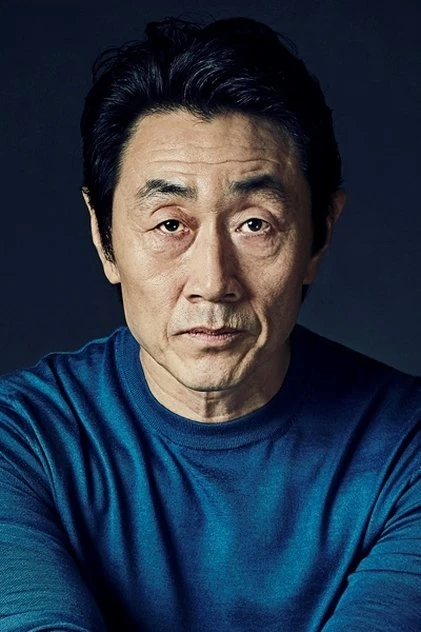
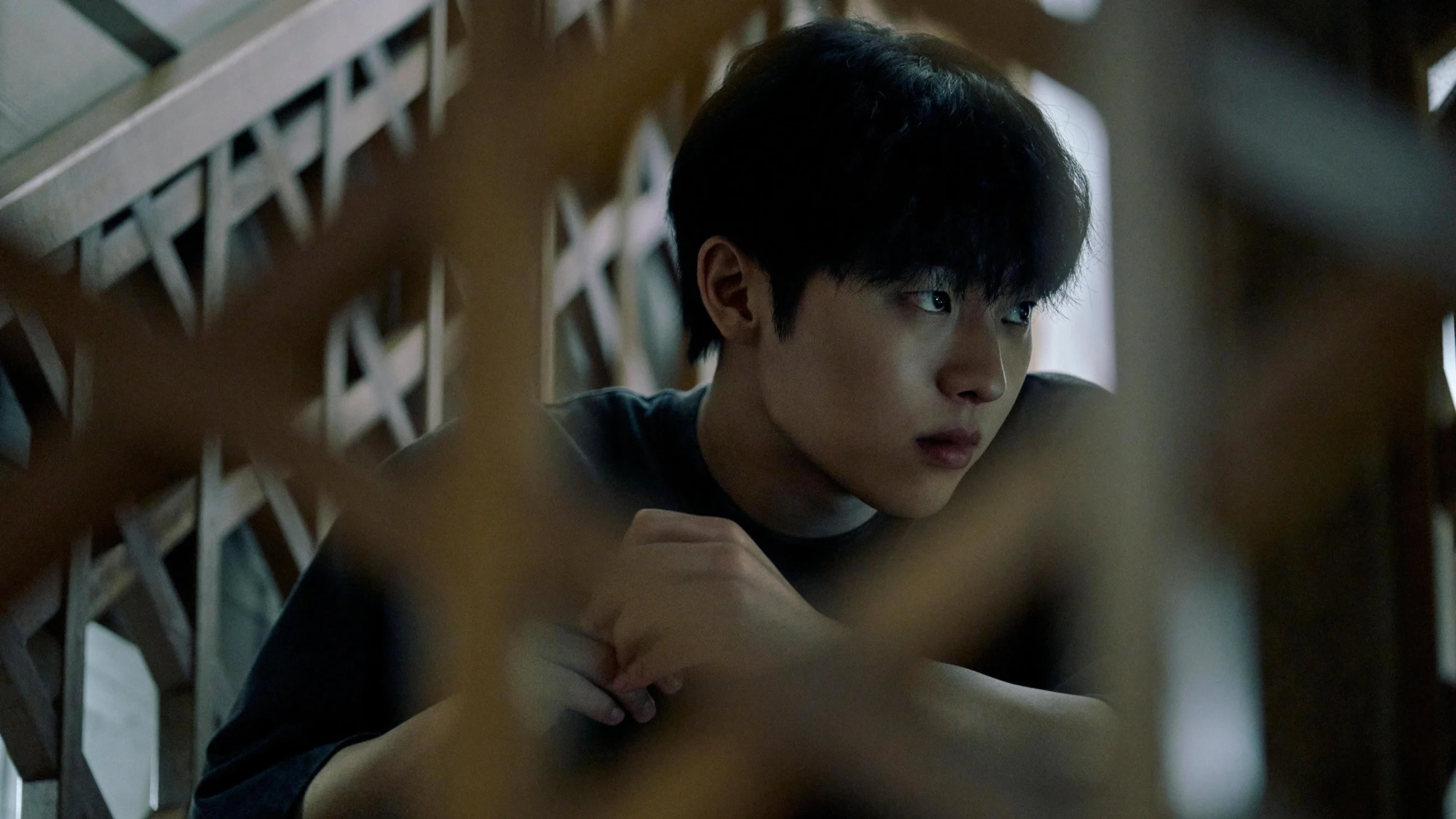
Choi Hyun-wook has been noteworthy since Bloodhounds — quick, physical, naturalistic. Notes from the Last Row gives him something harder: a character whose inner life the camera is not permitted to explain, across six full episodes, without ever letting him feel absent. Hyun-wook holds Kang’s blankness without making him feel hollow — a specific technical achievement that thriller antagonists usually don’t manage. Huh Joon-ho as Kim Su-hun adds a third register: a writer who succeeded where Mun-oh failed, played with the ease of a man who doesn’t know he’s being observed. The contrast between Su-hun’s settled confidence and Mun-oh’s coiled hunger is the drama’s sharpest structural irony, and it plays it completely straight.
The series’ limitation is also its architecture. Six episodes is exactly right for a story this controlled, but the narrowness means Jin Kyung’s Jo Hyeon-suk — Mun-oh’s wife, a psychological counselor watching his obsession from close range — exists at the periphery when she deserved to be at the center. Her reading of him is sharper than his reading of himself, and the drama knows it. The ending’s refusal to explain Kang feels correct; an explanation would have shrunk him. If The Glory showed how a meticulous long game becomes emotionally devastating when the perpetrator’s motivation is finally confessed, Notes from the Last Row shows what the same architecture looks like when the answer stays permanently sealed. Colder — and deliberately so.
Viewers who measure performance by what actors choose not to say
Psychological thriller fans with a taste for quiet menace over spectacle
Six episodes of controlled menace, anchored by a career-level Choi Min-sik performance and a premise that leaves the right questions unanswered.
🎬 You Might Also Like
If you liked Notes from the Last Row, these are your next three watches.
 A Shop for Killers (Season 2)
ActionAssassins
Read Full Review →
|
 The Scandal
Dangerous LiaisonsDrama
Read Full Review →
|
 Beyond Evil
Baeksang Award winner괴물
Read Full Review →
|















Keep it kind, skip the harsh language, and please — no spoilers. Everyone's taste is different, and that's perfectly fine.
This space is for real reactions and discussion from other viewers. Help keep it comfortable for everyone by not giving away major plot details.
1 Comment
A professor who hasn’t written anything that mattered in twenty years getting reawakened by a single page from a student sitting in the back row is such a quiet, specific kind of hook ✒️ — and the show being upfront that what Mun-oh is doing by offering private lessons is ethically compromised from the start, rather than dancing around it, makes the whole thing more uncomfortable in a good way. Curious what everyone made of what Kang was actually after.
What do you think of this drama?
Login to share your review or leave a comment.
No email needed — just pick a username & password.