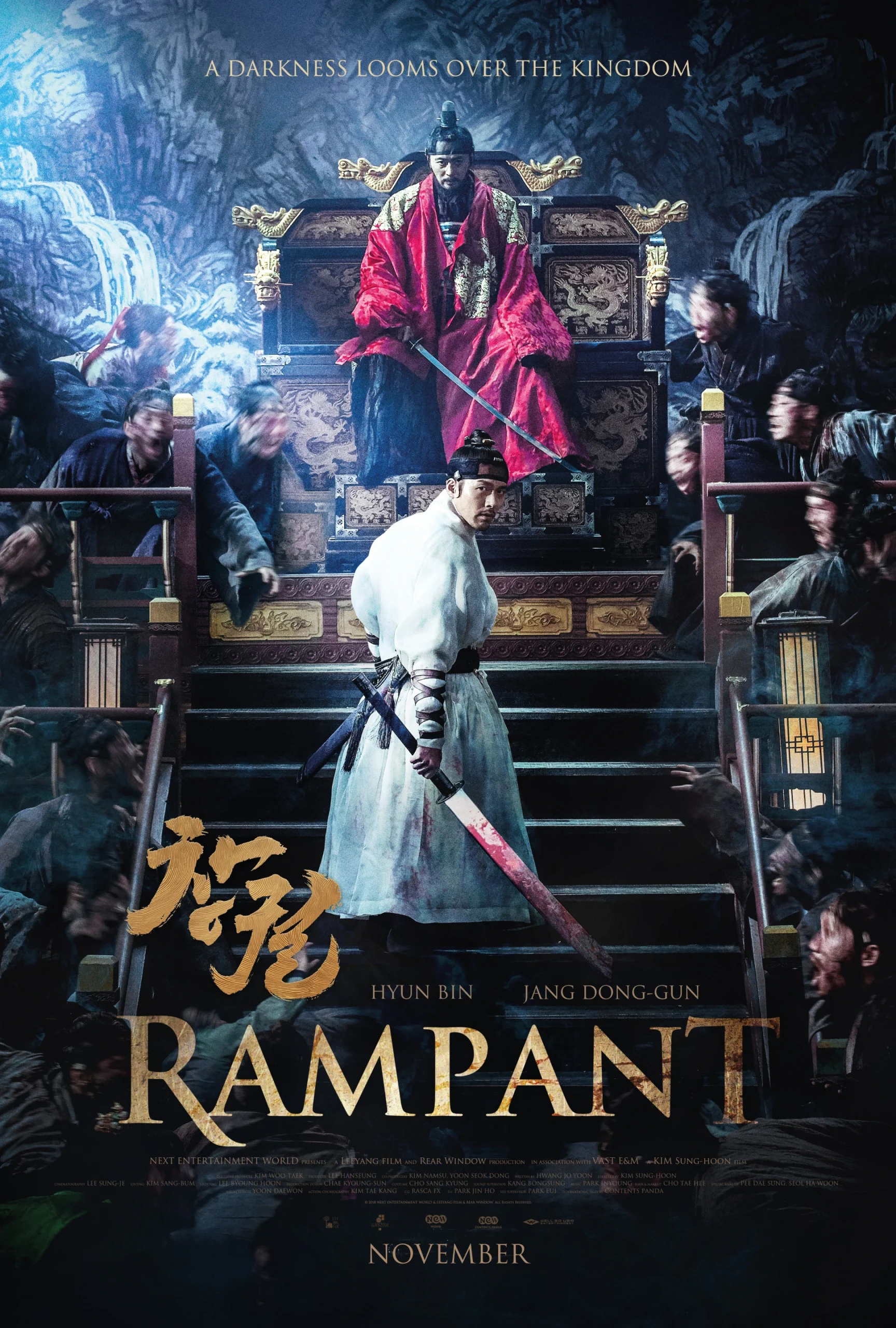
Rampant
🎬 Netflix · Viki · Tubi
⭐ 6.5 IMDb
📺 TV-14
🎬 Film Overview
🧟 Joseon Horror Pick
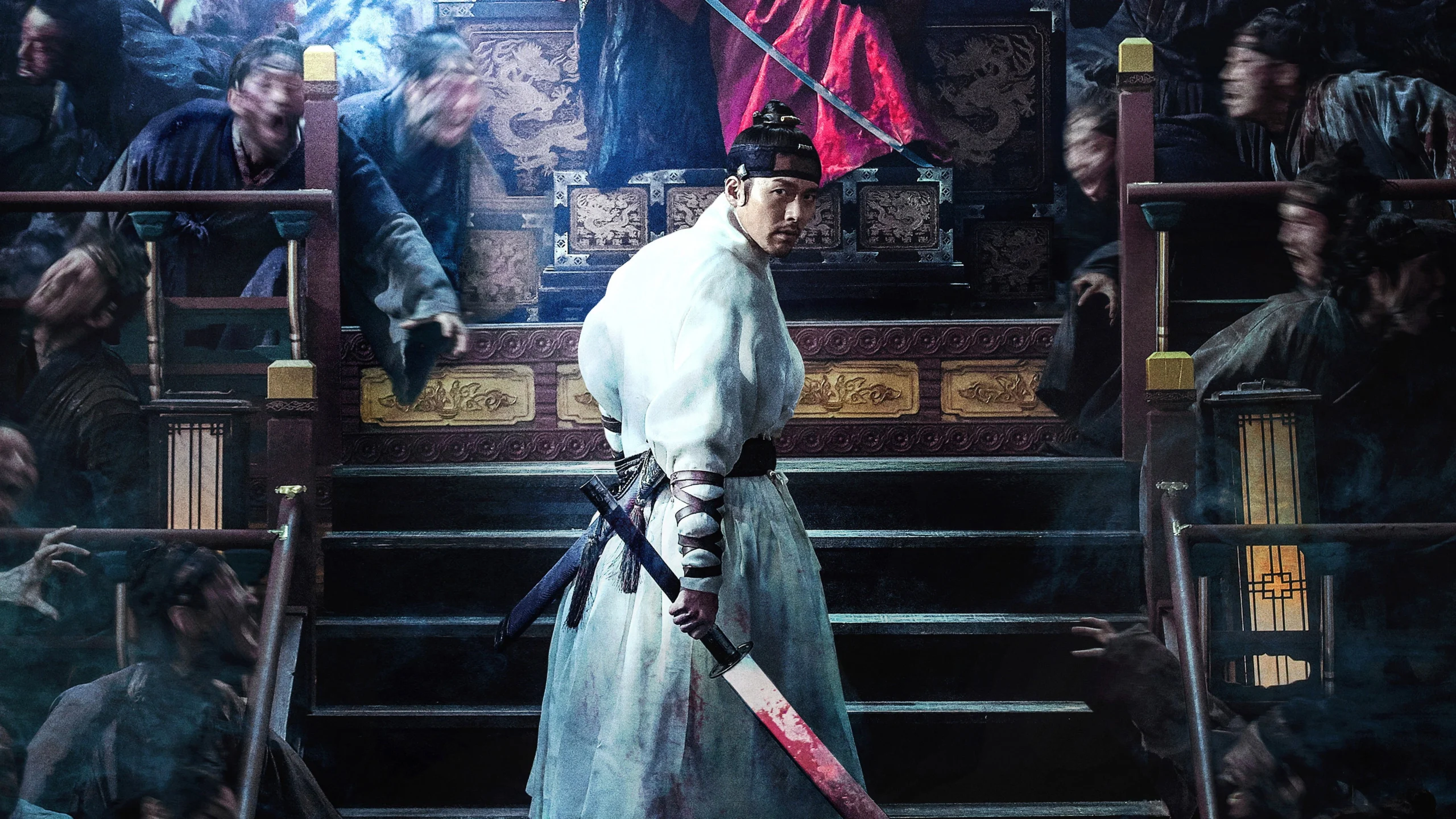
The film gives Hyun Bin a character who has spent years being strategically useless — a prince the Joseon court wrote off as a foreign casualty, free to drink and wager his way through Qing palaces precisely because no one expected him to return. When he does come back, what greets him is not a kingdom waiting to be rescued. It’s something closer to a disaster that has already decided who survives.
The Night Demons are the film’s most spectacular element, but not its most dangerous one. That role belongs to Minister Kim Ja-joon, who has constructed an architecture of political catastrophe so carefully that the zombie plague almost seems incidental. Lee Chung walks into a double crisis: one requiring a sword, one requiring the kind of political calculation he has spent his entire life refusing to develop. The film’s real question isn’t whether he can fight. It’s whether a man built for displacement can decide to stand still.
⚡ Quick Verdict
The TL;DR, boxed and ready.
IMDb Score · Check IMDb for updated community rating
▶ Official Trailer
🎭 Cast & Characters
Two men on opposite ends of power — one who refuses to want it, one who has spent years building toward it.

Lead

Villain

Supporting

Supporting

Supporting

Supporting

Supporting

Supporting

Supporting

Supporting

Supporting

Supporting
📖 The Story
Spoiler-light — the full picture, without the ending.
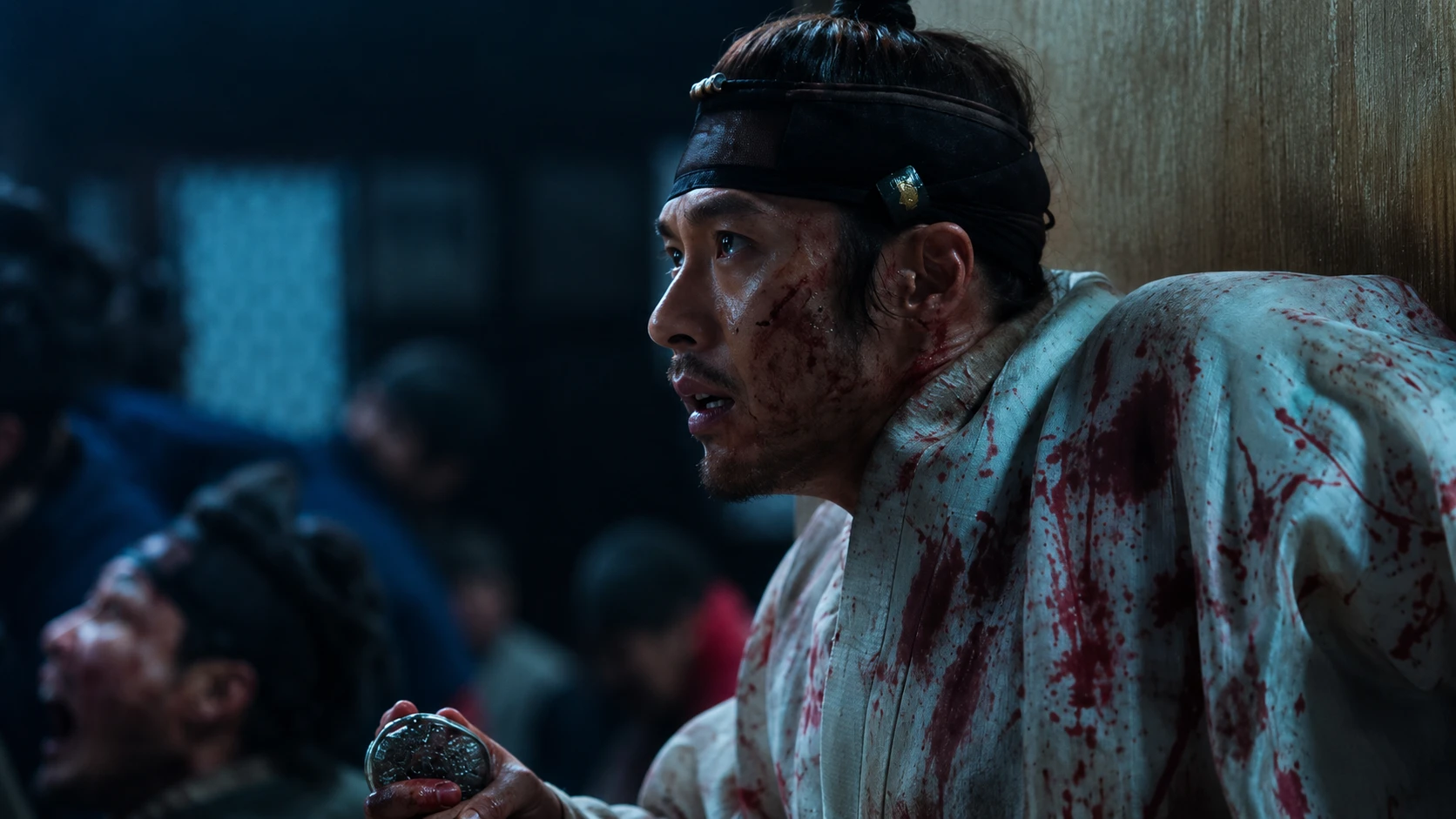
Prince Lee Chung has learned to survive by being irrelevant. Over a decade as a Qing political hostage has stripped away his Joseon prince identity and left behind something more useful: a man who moves through foreign courts without anyone caring what he does next. He gambles, he drinks, he argues with palace officials about horses. The skill he has developed isn’t swordsmanship — it’s invisibility, which means he has spent years building the perfect armor for a man who never intended to fight.
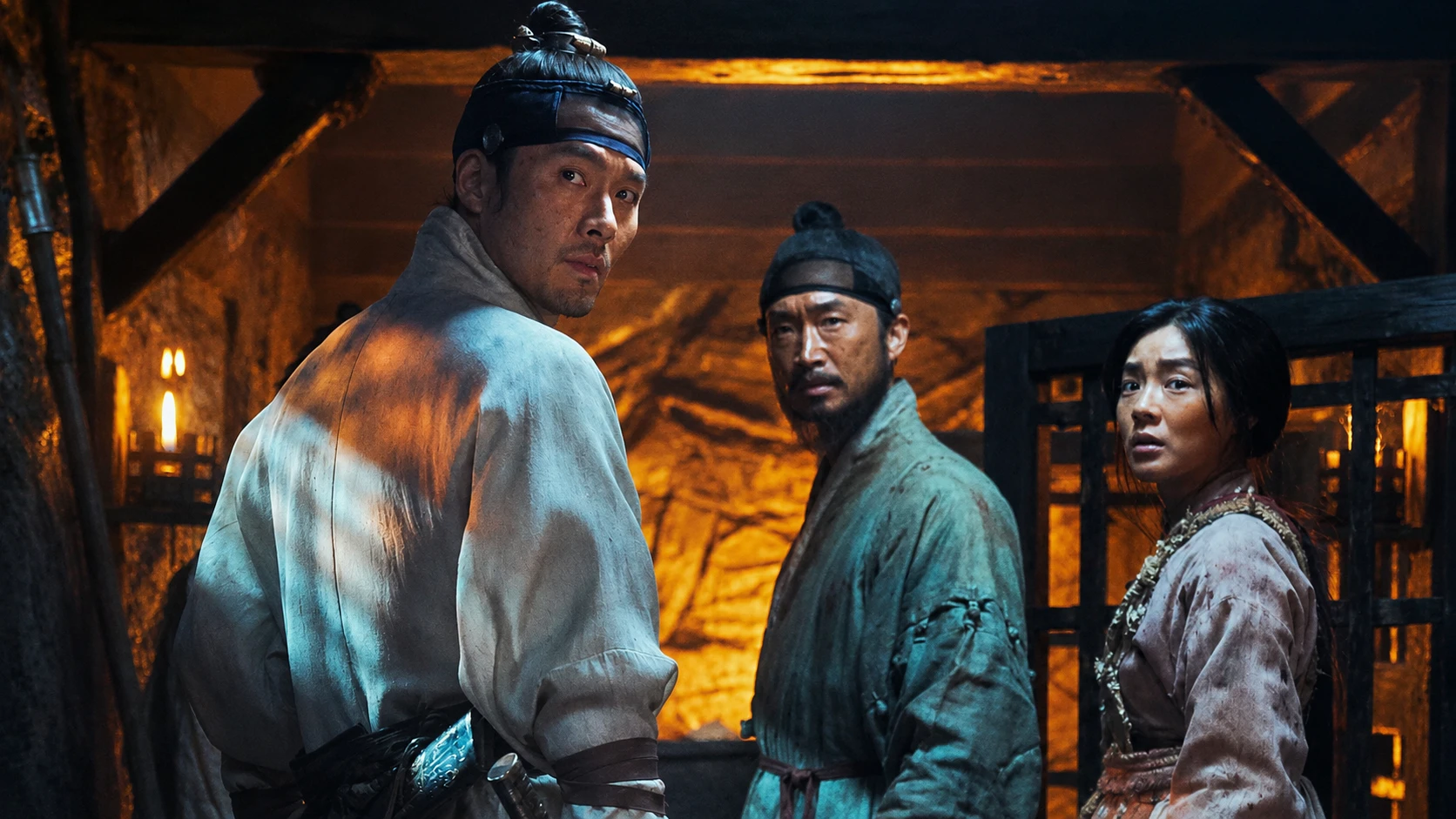
The summons back to Joseon arrives before he can arrange another reason to stay away. His older brother, Crown Prince Yi Yeong, has called for him — an act that carries more political danger than the message admits. Lee Chung crosses back into his homeland expecting tension and instead finds carnage. The Night Demons have arrived ahead of him, and the kingdom he barely remembered is unrecognizable. What no official report prepared him for: the darkness here doesn’t wait.
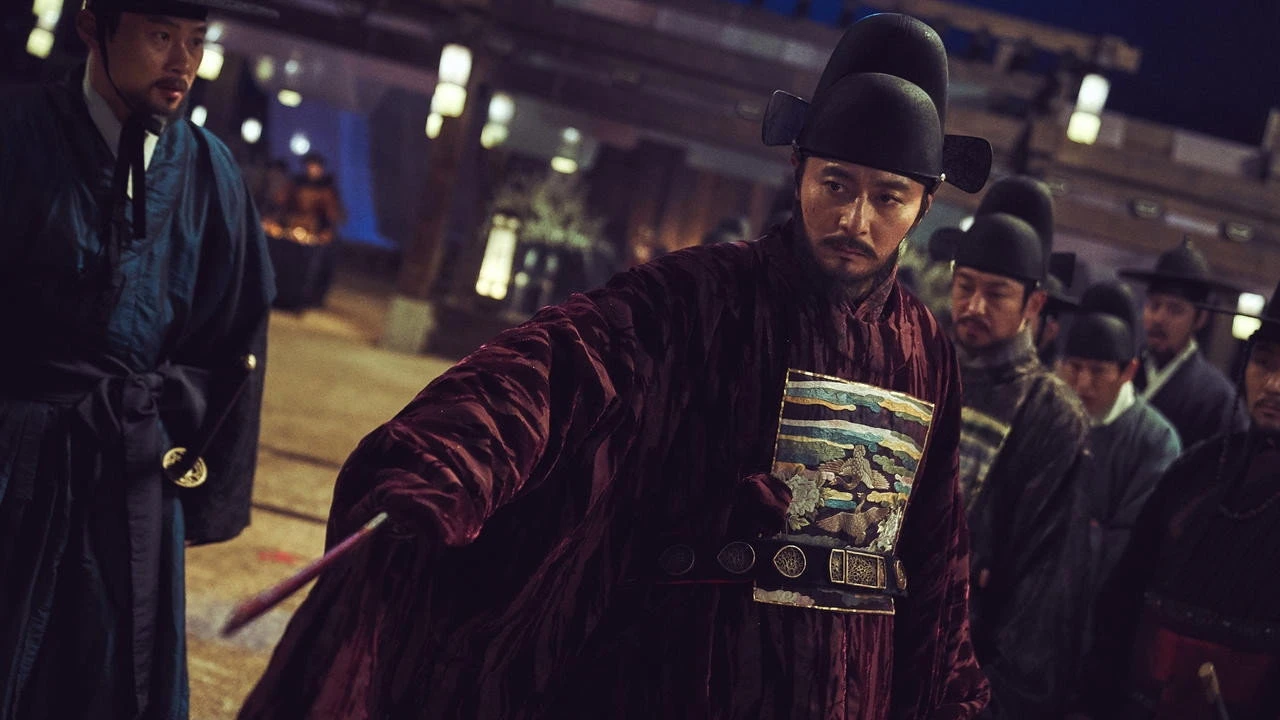
The creatures are the obvious threat. Kim Ja-joon is the quiet one. Jang Dong-gun plays the Minister of Military Affairs with the particular calm of a man who has already thought six moves ahead and is simply waiting for the board to catch up. His loyalty to the king is performed with such precision that the performance almost becomes convincing — until you notice that he never panics in moments when panic would be the only honest response.
Lee Chung finds allies he didn’t expect: Deok-hee, an archer with both the precision and the moral clarity to hold her ground when everything around her is collapsing, and Park Eul-ryong, a loyal officer whose institutional faith in Joseon keeps producing complications in a situation where no one in the chain of command can be fully trusted. These relationships don’t soften the film so much as give Lee Chung something he has never had — people who need him to function, not just survive.
What separates Rampant from the Joseon zombie genre it sits adjacent to is its commitment to the idea that the monsters are the second problem. Kim Ja-joon hasn’t simply exploited the plague — he’s implicated in its arrival. This means the question of who released the Night Demons into Joseon becomes as important as how to stop them. The film is asking something grimmer than most action-horror entries attempt: what if the humans coordinating the disaster and the creatures executing it are working toward the same outcome?
The choreography earns its reputation. Hyun Bin’s physicality in action sequences feels less like rehearsed combat and more like a man who has been fighting since adolescence because it was the only part of royal life that came naturally to him. The Night Demon sequences in torchlit corridors carry real momentum — the creatures move fast, the camera keeps up, and the film doesn’t flinch from the cost of each encounter.
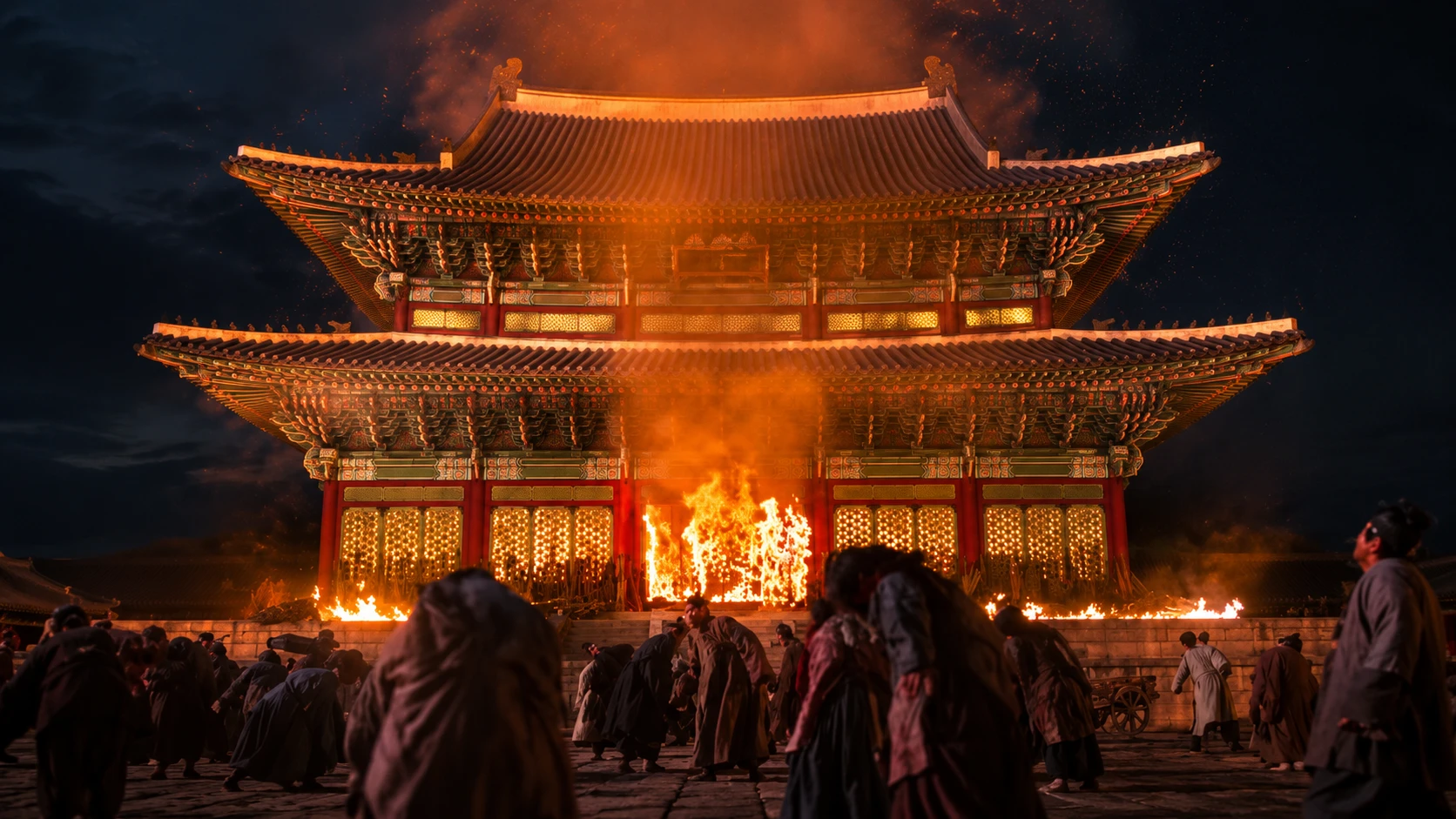
Rampant is set during one of Korean history’s most fraught periods, when Joseon existed as a tributary state of the Qing Dynasty. This transforms Lee Chung’s backstory from biographical detail into something more resonant. He has been a hostage since adolescence; Joseon itself has been a hostage for generations. When he returns to protect a kingdom he was taken from, the personal and the political compress into the same wound. The Night Demons arrived via a Dutch merchant vessel. The betrayal came from inside the palace. The film never lets you forget which one it finds more interesting.
🏁 Ending Explained
Full spoilers ahead — what actually happens and what it all means.
Spoiler Warning — This section covers the full finale of Rampant. Stop here if you haven’t seen the film.
What Happens in the Final Confrontation. Lee Chung leads the surviving soldiers and civilians in a two-front assault: against the Night Demons as dawn breaks, and against Kim Ja-joon’s forces moving to seize the throne before the chaos settles. The two battles converge. Kim Ja-joon finally acts openly — the measured loyalty he has performed throughout the film dissolves, and the political architecture beneath it becomes visible all at once. Lee Chung defeats him in direct combat. As morning light strips the Night Demons of their advantage, the immediate crisis ends. Lee Chung does not claim the throne. He restores the royal succession, turns toward the horizon, and leaves.

Why Lee Chung Walks Away. The ending is a refusal, and the refusal is the point. Lee Chung saves the kingdom precisely because he doesn’t want to rule it — his freedom from personal ambition is the moral quality the film has been constructing from its first scene. Kim Ja-joon, who coveted the highest seat and arranged everything around obtaining it, is the film’s definition of danger. Lee Chung — untethered from ambition, indifferent to power, constitutionally unable to perform loyalty for personal gain — is the only kind of person capable of stopping that. His departure is not defeat. It’s the film’s thesis made visible: some people are built to protect kingdoms, not to sit in them.
Is Lee Chung’s Exit a Happy Ending? Three readings exist simultaneously, and the film supports all of them without confirming any. The hopeful reading: Joseon has been cleansed of both supernatural and political infection and can now rebuild without the weight of Kim Ja-joon’s architecture. The bittersweet reading: Lee Chung has done everything that was required of him and receives nothing in return — not a home, not acknowledgment, not permanence. He wanders again, as he always has. The structural irony reading: the Night Demons arrived from outside Joseon on a Dutch merchant ship, but the kingdom’s near-total destruction came from inside the palace — which means the film’s real monster was always human ambition, and the undead plague was merely its cover story.
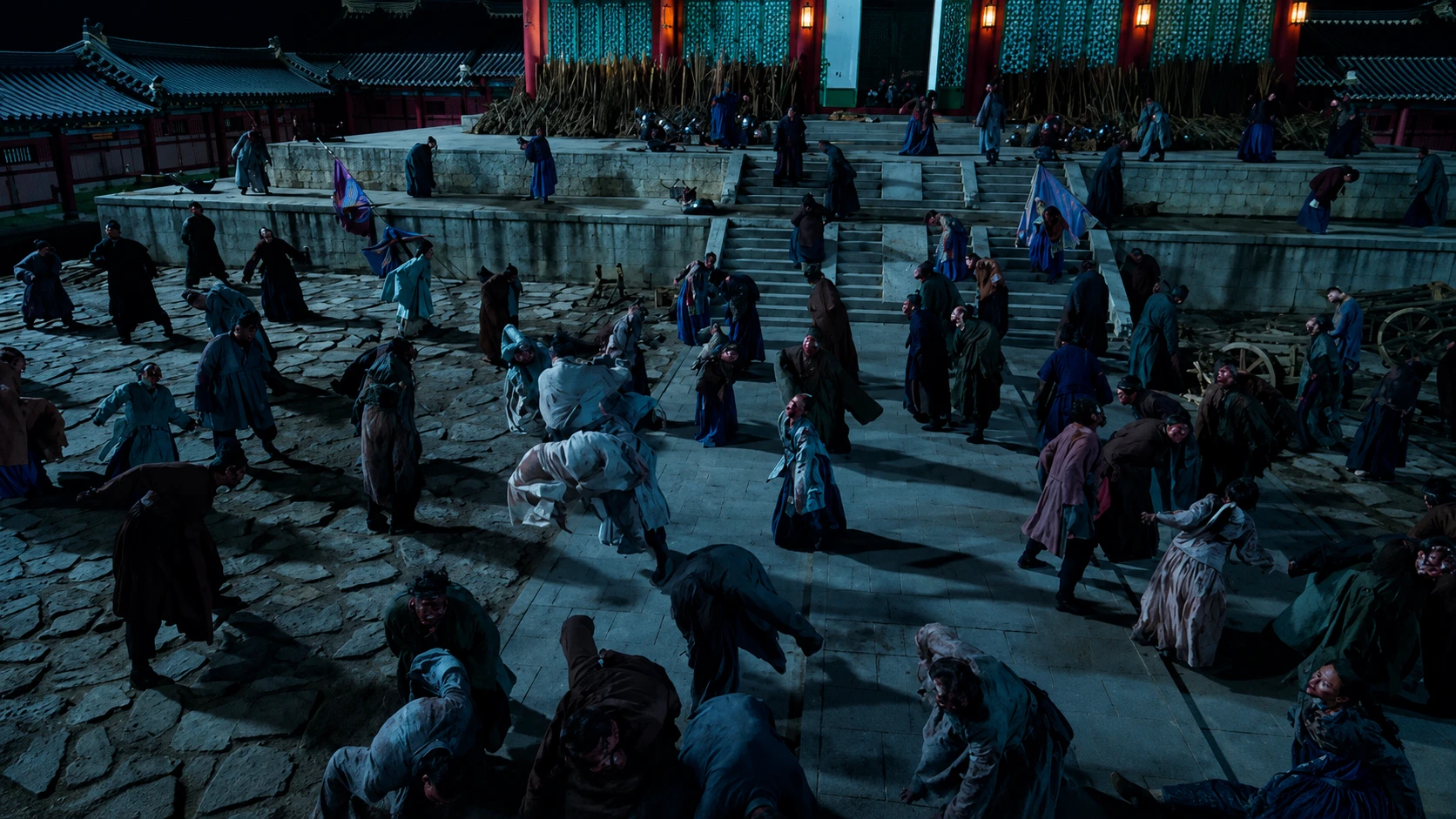
What the Ending Reveals About Lee Chung. The strongest reading is the second — bittersweet, deliberately so. The film has spent its entire runtime establishing that Lee Chung does not belong anywhere: not in Qing, not in Joseon, not among the living or the dead. His departure isn’t a surprise; it’s a confirmation. Displacement was never something that happened to him. It became who he is. He smiles when he leaves — not with triumph, but with the particular ease of someone who has finally done the one thing they were built for and can now return to being nobody. He didn’t reclaim what he lost. He didn’t want to.
What ‘창궐’ (Rampant) Actually Refers To. 창궐 (Changgwol) means to spread wildly, uncontrollably — like a plague that cannot be contained once it has started. The word fits the Night Demons: creatures that replicate through a single bite, spreading their infection through entire populations by morning. But Kim Ja-joon’s ambition is the other 창궐. His political treachery moves through the palace the same way — quietly at first, then everywhere at once, until no corner of power hasn’t been touched. The title belongs to both threats simultaneously. That’s how the film signals its thesis from the first frame: the zombie plague is rampant, but the corruption was rampant first.
✍️ KDramaWorlds Editor’s Take
Here’s our real take, and exactly who this one’s for.
Kim Sung-hoon
Known for: The Tower (2012) · Confidential Assignment (2017)
🧟 Zombie Action
⚔️ Political Betrayal
🌙 Night Terror
🔪 Anti-Hero
Hyun Bin has built a career on a specific character type: the competent man who is emotionally unavailable until someone forces the door. Lee Chung is a variation on that template, but one that works better than most iterations because the film gives him a structural reason for the unavailability that goes beyond trauma or pride. He has spent over a decade living as a hostage — as property, essentially — and what that does to a person’s capacity for attachment is something Rampant takes seriously. Hyun Bin communicates it mostly through posture and timing: the way Lee Chung occupies space like someone who has learned to take up as little of it as possible, the way humor arrives in moments where feeling would cost too much. It’s quieter work than the action sequences suggest, and it holds the film together in the stretches where the Night Demons have temporarily retreated. For fans who know him primarily from Crash Landing on You, Rampant is the version where the emotional restraint is doing structural work rather than just framing a romance.
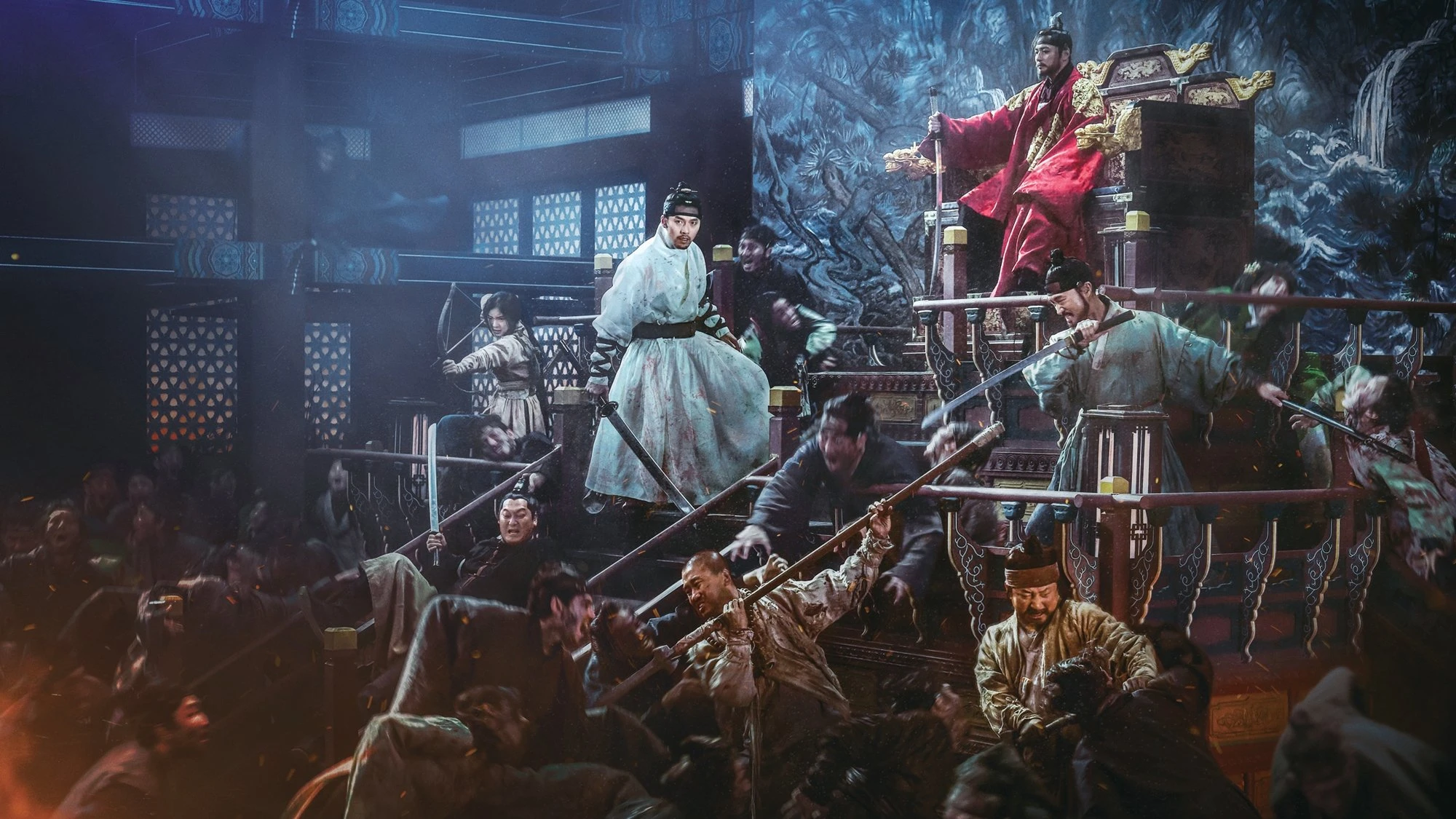
Jang Dong-gun is the film’s real center of gravity. He plays Kim Ja-joon with a stillness that becomes increasingly threatening the longer it holds — a man who never raises his voice, never breaks composure at moments when breaking it would be natural, never reveals that he already knows what comes next. In a film full of people screaming and dying, that control starts to read as something other than dignity. On rewatch, his early scenes with the king contain pauses that are slightly too long, smiles that are slightly too measured: a performance doing its best work in scenes audiences were not yet paying attention to. Viewers who found satisfaction in the palace-politics villain performances of Kingdom Season 1 will find Jang Dong-gun operating at exactly the same controlled frequency.
The film’s structural challenge is that it wants to be three things simultaneously: a zombie action film, a political thriller, and a character study of a man who refuses his own destiny. The three ambitions pull against each other in ways the 122-minute runtime can’t fully resolve — the middle section, where the conspiracy and the plague compete for screen time without fully integrating, is where the pacing loses momentum it never quite recovers. That said: the first third and the finale are genuinely gripping, the night-terror action sequences earn their budget, and Rampant remains one of the more formally ambitious entries in Joseon horror. A film trying to do something harder than most of its contemporaries. That effort shows in both directions.
Historical K-content viewers ready for horror
Asian zombie film genre completionists
A film reaching for more than its genre usually attempts — and catching most of what it aimed for.
🎬 You Might Also Like
If you liked Rampant, these are your next three watches.
 The King's Affection
cross-dressingFirst Love
Read Full Review →
|
 Under the Queen's Umbrella
Black ComedyChoi Won Young
Read Full Review →
|
 The Red Sleeve
based on novelcourt lady
Read Full Review →
|












Keep it kind, skip the harsh language, and please — no spoilers. Everyone's taste is different, and that's perfectly fine.
This space is for real reactions and discussion from other viewers. Help keep it comfortable for everyone by not giving away major plot details.
What do you think of this drama?
Login to share your review or leave a comment.
No email needed — just pick a username & password.