
Melo Movie
🎬 Netflix
⭐ 8.1 MDL
📺 15+
📋 Drama Overview
The essentials — before you press play.
💗 Film Romance Pick
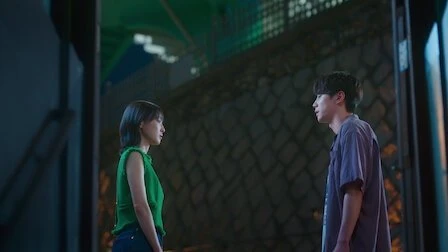
Ko Gyeom spent five years becoming the kind of film critic who could articulate exactly what was missing from a movie’s third act — and none of that training helped him figure out what to say to Kim Moo-bi after he disappeared from her life without explanation. They were mid-sentence when he left. When she finds him as her new neighbor, they are still mid-sentence.
On the periphery of that reunion: Hong Si-joon and Son Joo-ah, who have the rarer and more complicated problem of knowing too well why their relationship ended. Melo Movie runs two parallel stories about people who understand love as a concept while struggling to practice it — and sets both of them inside the film industry, where the gap between what you can analyze and what you can actually do tends to be most visible.
10 / 10 ✅ Completed
⚡ Quick Verdict
Everything worth knowing, distilled into one box.
MDL Score · Check MyDramaList for updated community rating
▶ Official Trailer
🎭 Cast & Characters
Two actors playing the same emotional restraint from opposite positions — one who withholds out of guilt, one who withholds out of self-protection.

Lead

Lead

Supporting

Supporting

Supporting
Supporting
📺 Episode Guide
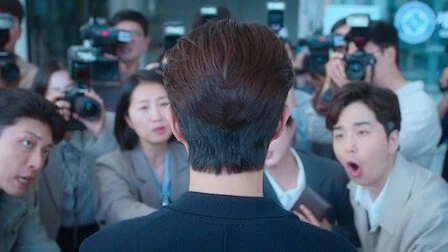
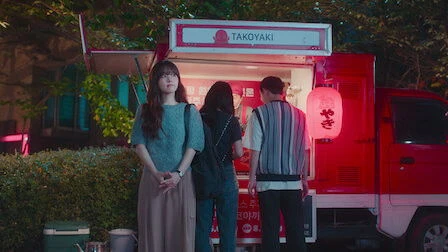
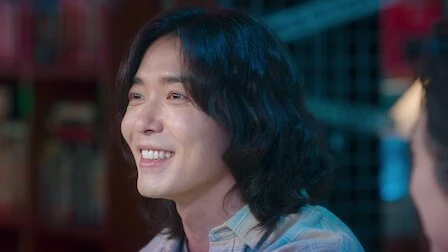
Quick recaps per episode — just enough to stay caught up.






🏁 Ending Explained
From here on, full spoilers — the ending, unpacked.
Spoiler Warning — This section covers the full finale of Melo Movie. Stop here if you haven’t finished the series.
What Actually Happens in the Finale. The finale delivers two conclusions simultaneously. Ko Gyeom tells Kim Moo-bi he wants to stay — not as an apology for the five years, but as a clear choice he’s making for the first time. Hong Si-joon and Son Joo-ah reach a different answer: they sit with what they meant to each other and decide a respectful ending is more honest than a forced continuation. The drama holds both outcomes in the same frame without asking you to mourn one and celebrate the other.

What Ko Gyeom Finally Allows Himself. Ko Gyeom has been operating in survival mode since before the drama begins — a man who learned to absorb other people’s needs while treating his own as optional. His final movement is small by the standards of most K-drama finales: he stops editing himself. He lets Kim Moo-bi see a version of him that doesn’t pre-emptively minimize. For Choi Woo-shik, who has been threading this restraint through ten episodes, the payoff lives in what he doesn’t do — the absence of the usual withholding.
What Hong Si-joon and Son Joo-ah Choose. Their goodbye is the finale’s most structurally interesting moment. Hong Si-joon and Son Joo-ah have done real work across the season — he’s moved past his defensive ego, she’s found her footing without needing validation from him — and the drama’s conclusion is that this growth means they no longer require each other in the same way. It’s a rare outcome for a secondary couple: not reconciliation, not bitterness, but two people leaving a relationship with more than they brought to it.
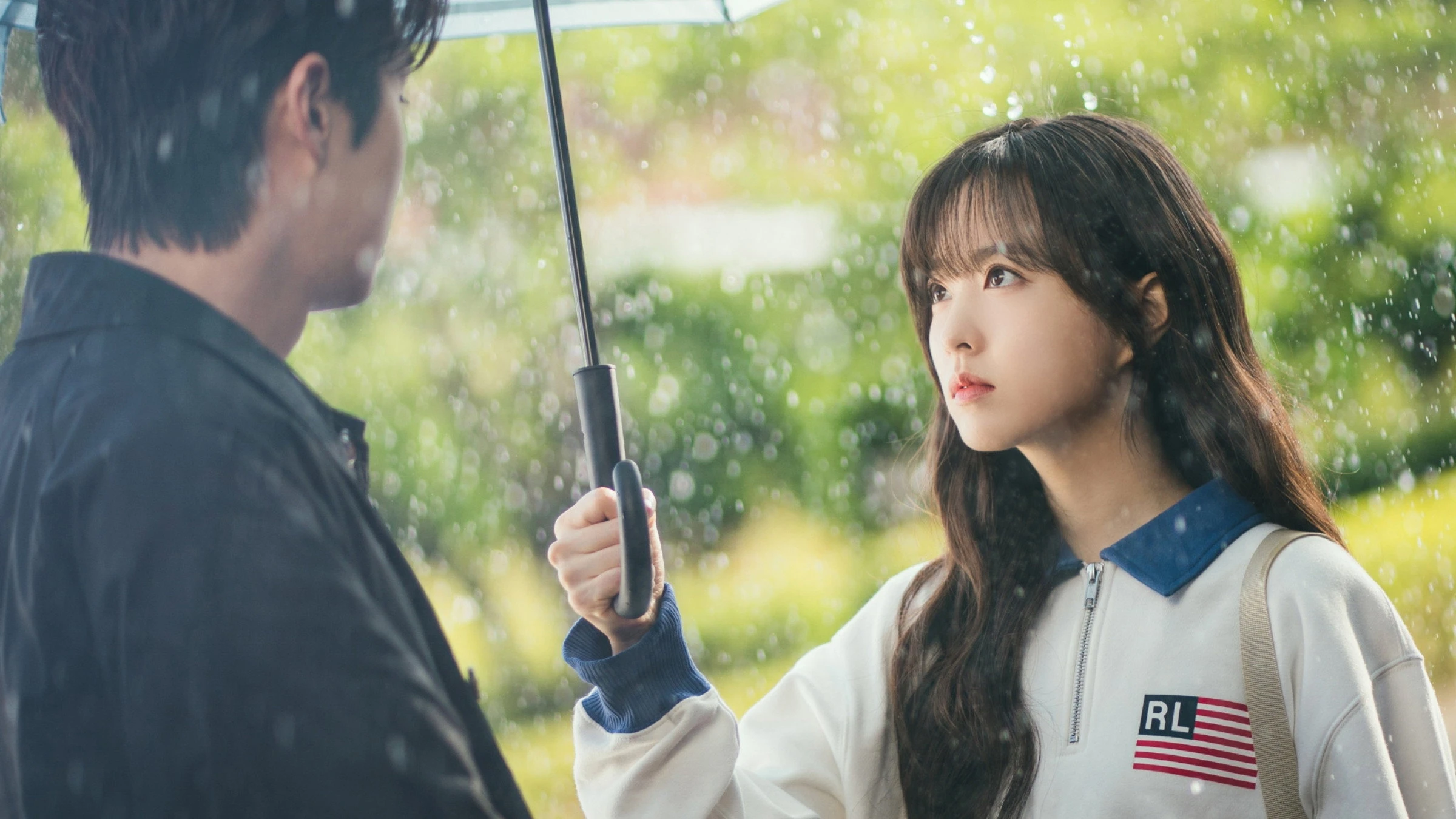
Is the Ending Open or Resolved? For Ko Gyeom and Kim Moo-bi: mostly resolved. The original wound — what caused the five-year separation — gets named and acknowledged, though the drama is careful not to over-explain it. What they choose in the finale is based on who they are now, not on whether the past has been fully processed. The show earns that distinction. Not every ending is about getting answers. Some are about deciding to stop requiring them.
What “Melo Movie” Actually Refers To. The title names two things simultaneously. Ko Gyeom is a film critic who makes his living analyzing melodramas; Kim Moo-bi is a director who wants to make films and has spent five years keeping her own emotional life at the same critical distance she’d apply to someone else’s script. The occupation selects for the irony: the ability to read other people’s stories clearly is exactly the skill that makes it easiest to misread your own. A film critic knows every way an ending can feel earned or false — and that knowledge turns out to be no help at all when the ending is yours.

✍️ KDramaWorlds Editor’s Take
Here’s our honest verdict, and who’s going to love it.
🎬 Film Industry Setting
🌙 Slow Burn
💗 Emotional Healing
😌 Understated Performances
Choi Woo-shik came to drama after Parasite — one of the most scrutinized actors in Korean cinema, carrying an association with quiet, precise, slightly unsettling brilliance that most projects would try to soften. Melo Movie doesn’t soften it. Ko Gyeom’s kindness is slightly too calibrated, his restraint slightly too maintained, and Woo-shik finds the exact frequency where that reads as a man who has learned to manage himself rather than one who is simply quiet by nature. The moment in Episode 4 where he asks for help is small by the scale of most drama scenes — no swelling score, no confession speech — and it works precisely because of that. Compare the register to the more openly wounded hero in our guide to Summer Strike (2022) — a different kind of emotional withholding, and a useful contrast.

Park Bo-young has built a career on the collision between warmth and defensiveness — she plays characters who are clearly open to connection and equally clearly afraid of what it costs. Kim Moo-bi is the most technically interesting version of this she’s delivered in some time: a woman who would rather critique someone else’s film than let herself be read in the scene she’s actually in. Bo-young plays the professional coolness without letting it become a barrier — you see through it early, which means every crack in it feels earned rather than sudden. She’s not performing composure. She’s someone who built composure into her personality and has forgotten it’s still a structure. That distinction matters, and it’s what makes My Youth (2025) worth pairing with this one — both dramas are about the specific difficulty of healing while still inside the situation that caused the wound.
Where Melo Movie works against itself is in the film-industry framing: it’s more backdrop than architecture, present as flavor rather than as something that changes the characters’ structural options. A drama set in this world has the opportunity to let the industry’s specific pressures shape the story’s logic in ways the show only partly takes. The mid-series episodes also lose momentum when the secondary couple widens at precisely the moment Ko Gyeom and Moo-bi’s story still has unanswered questions you’d rather stay with. None of this is fatal. The leads are good enough to carry what the structure doesn’t quite earn, and the finale lands exactly where it should. Come for Choi Woo-shik and Park Bo-young in the same frame. Stay because the show turns out to have more to say about critical distance and self-knowledge than the premise initially suggests.
Viewers drawn to stories set in creative and film industries
Anyone who finds Choi Woo-shik and Park Bo-young individually worth watching
A slow, honest romance carried by two of the best performers working in Korean drama right now — at its best when the film-industry premise stops being backdrop and starts being argument.
🎬 You Might Also Like
If you liked Melo Movie, these are your next three watches.
 A Love Other Than Yours
Ahn Eun-jinEmotional Drama
Read Full Review →
|
 Cinderella Game
ChaebolChoi Shang
Read Full Review →
|
 The Light in Your Eyes
Alzheimer'sfamily
Read Full Review →
|













Keep it kind, skip the harsh language, and please — no spoilers. Everyone's taste is different, and that's perfectly fine.
This space is for real reactions and discussion from other viewers. Help keep it comfortable for everyone by not giving away major plot details.
What do you think of this drama?
Login to share your review or leave a comment.
No email needed — just pick a username & password.